

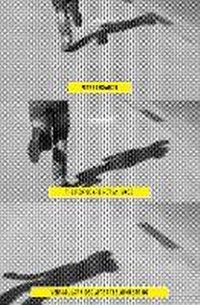
The People Are Not an Image
Vernacular Video After the Arab Spring
Published on 29. September 2020
Book
Paperback/Softback
304 pages
978-1-78873-316-8 (ISBN)
Description
The wave of uprisings and revolutions that swept the Middle East and North Africa between 2010 and 2012 were most vividly transmitted throughout the world not by television or even social media, but in short videos produced by the participants themselves and circulated anonymously on the internet.
In The People Are Not An Image, Snowdon explores this radical shift in revolutionary self-representation, showing that the political consequences of these videos cannot be located without reference to their aesthetic form. Looking at videos from Tunisia, Bahrain, Syria, Libya, and Egypt, Snowdon attends closely to the circumstances of both their production and circulation, drawing on a wide range of historical and theoretical material, to discover what they can tell us about the potential for revolution in our time and the possibilities of video as a genuinely decentralized and vernacular medium.
In The People Are Not An Image, Snowdon explores this radical shift in revolutionary self-representation, showing that the political consequences of these videos cannot be located without reference to their aesthetic form. Looking at videos from Tunisia, Bahrain, Syria, Libya, and Egypt, Snowdon attends closely to the circumstances of both their production and circulation, drawing on a wide range of historical and theoretical material, to discover what they can tell us about the potential for revolution in our time and the possibilities of video as a genuinely decentralized and vernacular medium.
Reviews / Votes
Throughout the book, Snowdon practices an ethics of close reading that rejects critical habits of regarding images with suspicion. The People Are Not an Image charts hopeful trajectories for several areas of inquiry, from the politics of protest media and self-representation to networked distribution, operational images, and the digital remaking of subjectivity. Yet Snowdon's ultimate project is more ambitious-to reshape his readers' political imaginaries. -- Sasha Crawford-Holland * Critical Inquiry * Peter Snowdon provides a radical philosophical approach to the daily videos produced by the ordinary people of the Arab spring -- Habib A. Moghimi * Visual Studies * The People Are Not an Image has significance for scholars but will also find wider audience appeal with, for example, digital media activists, filmmakers, and human rights advocates. It will be especially relevant to digital media and communication scholars and students with an interest in activism, social movements, and visual politics. -- Kelly Lewis * E-International Relations * This book makes a much-needed intervention in media studies in the Arab regions since 2011, and is a crucial read for all students of media and film studies. -- Zaher Omareen * Screen *More details
Language
English
Place of publication
London
United Kingdom
Dimensions
Height: 234 mm
Width: 153 mm
Thickness: 20 mm
Weight
348 gr
ISBN-13
978-1-78873-316-8 (9781788733168)
Copyright in bibliographic data and cover images is held by Nielsen Book Services Limited or by the publishers or by their respective licensors: all rights reserved.
Schweitzer Classification
Other editions
Additional editions
E-Book
09/2020
Verso Books
€33.99
Available for download
Person
Peter Snowdon is a filmmaker and researcher. His feature-length film The Uprising, based entirely on YouTube videos from the Arab revolutions, was awarded the Opus Bonum Award for best world documentary at the Jihlava International Documentary Film Festival and has screened at more than 30 festivals around the world. From 1997 to 2000 he lived in Cairo, where he was on the staff of Al-Ahram Weekly, and his writing on Arab politics and film has appeared in Open Democracy and Le Monde diplomatique. Peter has lived and worked in Egypt, Palestine, and France, and is currently based in Belgium, where he teaches filmmaking in the visual anthropology programme at Leiden University.