

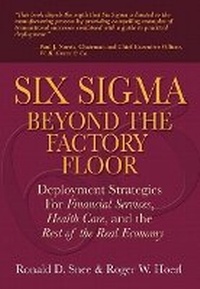
Six Sigma Beyond the Factory Floor
Deployment Strategies for Financial Services, Health Care, and the Rest of the Real Economy
Published on 16. April 2009
Book
Paperback/Softback
352 pages
978-0-13-714535-5 (ISBN)
More details
Persons
Six Sigma Beyond the Factory FloorAbout the Authors
Dr. Ronald D. Snee is principal in Tunnell Consulting's Performance Excellence Practice, which offers Six Sigma consulting, training, facilitation, and implementation, in addition to other process improvement approaches. Dr. Snee is a winner of the American Society for Quality's highest honor, the Shewhart Medal, and has served as a member of the Malcolm Baldrige National Quality Award Criteria Team. He designed DuPont's first company-wide continuous improvement curriculum.
Dr. Roger W. Hoerl is a long-time leader in GE's renowned Six Sigma initiative. As manager of GE's Applied Statistics Lab, he partners on R&D with GE businesses ranging from NBC and GE Capital to GE Aircraft Engines. He has implemented Six Sigma in a wide range of GE processes, ranging from corporate audit to delinquent credit card tracking. He recently won the American Society of Quality's 2002 Brumbaugh Award.
Snee and Hoerl are coauthors of Leading Six Sigma (Financial Times-Prentice Hall, 2003), the best-selling executive's guide to Six Sigma. They also cowrote Statistical Thinking: Improving Business Performance (Duxbury Thomson Learning, 2002), an innovative guide to the strategic use of data and statistics in solving business problems.
(c) Copyright Pearson Education. All rights reserved.
Dr. Ronald D. Snee is principal in Tunnell Consulting's Performance Excellence Practice, which offers Six Sigma consulting, training, facilitation, and implementation, in addition to other process improvement approaches. Dr. Snee is a winner of the American Society for Quality's highest honor, the Shewhart Medal, and has served as a member of the Malcolm Baldrige National Quality Award Criteria Team. He designed DuPont's first company-wide continuous improvement curriculum.
Dr. Roger W. Hoerl is a long-time leader in GE's renowned Six Sigma initiative. As manager of GE's Applied Statistics Lab, he partners on R&D with GE businesses ranging from NBC and GE Capital to GE Aircraft Engines. He has implemented Six Sigma in a wide range of GE processes, ranging from corporate audit to delinquent credit card tracking. He recently won the American Society of Quality's 2002 Brumbaugh Award.
Snee and Hoerl are coauthors of Leading Six Sigma (Financial Times-Prentice Hall, 2003), the best-selling executive's guide to Six Sigma. They also cowrote Statistical Thinking: Improving Business Performance (Duxbury Thomson Learning, 2002), an innovative guide to the strategic use of data and statistics in solving business problems.
(c) Copyright Pearson Education. All rights reserved.
Content
Preface.
I. THE CASE FOR SIX SIGMA BEYOND THE FACTORY FLOOR.
1. A Holistic View of Six Sigma.
The Impact of Six Sigma Beyond the Factory Floor.
Intangible Impact.
Integration of Process Design, Process Improvement, and Process Control.
The Essence of Six Sigma.
Deployment Aspects.
Improvement Projects.
Six Sigma Methods and Tools.
Roles of Six Sigma Leaders.
The Rest of the Story.
Summary.
References.
2. Addressing the Fundamental Barrier: "We're Different!"
Why Six Sigma Hasn't Been Deployed Holistically.
Some Potential Root Causes.
The Fundamental Barrier.
What's Different?
Conceptual Differences.
Technical Differences.
What's Similar?
What Is Process Thinking?
Summary.
References.
II. ENSURING SUCCESSFUL DEPLOYMENT.
3. Deployment Case Studies.
The Bank of America Story.
Deployment Strategy.
Next Steps.
Commonwealth Health Corporation.
Getting Started.
Deployment Strategy and Initial Results.
Expansion of the Effort and Current Status.
Motorola Finance.
Deployment Within the Audit Staff.
Broader Deployment Within Finance.
GE Research and Development.
Corporate Research Gets Into the Act.
A Strategy Takes Form.
Design for Six Sigma.
Some Unique Challenges.
Key Deployment Lessons Learned.
Summary.
References.
4. A Proven Deployment Road Map.
Keys to Success.
Committed and Involved Leadership.
Top Talent.
Supporting Infrastructure.
Road Map for Leading Six Sigma.
Launching the Initiative.
Managing the Effort.
Sustaining Momentum and Growing.
The Way We Work.
Tailoring the Road Map for Your Organization.
Deployment Plan Elements.
Strategy and Goals.
Process Performance Measures.
Project Selection Criteria.
Project Identification and Prioritization System.
Deployment Processes for Leaders.
Roles of Leadership and Others.
Curricula and Training System.
Project and Six Sigma Initiative Review Schedule.
Project Reporting and Tracking System.
Audit System for Previously Closed Projects.
Reward and Recognition Plan.
Communication Plan.
Application to Specific Businesses and Functions.
Specific Business Application Areas.
Specific Functions.
Pitfalls to Avoid.
"Begin with the End in Mind"-Take a Systems View.
Summary.
References.
III. ENSURING PROJECT SUCCESS.
5. Project Case Studies.
A Six Sigma Approach to Predicting Corporate Defaults.
Define.
Measure.
Analyze.
Design.
Verify.
Conclusion.
An Application to Legal Litigation.
Background.
Define.
Measure.
Analyze.
Improve.
Control.
Conclusion.
The Batch Records Case.
Define.
Measure.
Analyze.
Improve.
Control.
Conclusion.
Summary.
References.
6. Improvement Happens Project by Project.
Keys to Completing Successful Projects.
Selecting Good Six Sigma Projects.
Selecting the Right People.
Using the Right Methodology.
Management Project Reviews.
Guidance from MBBs.
Right Involvement by Functional Groups.
Project Closure-Moving On to the Next Project.
How Projects Can Fail.
Failures in Specific Project Phases.
A Holistic Model for Improvement.
Integrating Process Improvement and Control.
Creating the Improvement System.
Using the DMADV and DMAIC Improvement Models.
DMAIC Process Improvement Model.
Solution-Known Projects.
Training for Project Improvement.
Training Beyond the Factory Floor.
Summary.
References.
IV. OVERCOMING METHODS AND TOOLS CHALLENGES.
7. Unique Technical Challenges in Applying the Methods and Tools.
How to Think About the Tools.
Additional Guidance for Real Economy Applications.
Key Tools Beyond the Factory Floor.
Tool Integration.
Individual Tools.
Some Additional Tools Particularly Useful Beyond the Factory Floor.
Unique Technical Challenges Beyond the Factory Floor.
Non-Normal Data Distributions.
The Truth About the Normal Distribution and the Normality Assumption.
Strategies For Handling Non-Normal Data.
What About Discrete Data?
Lean Services?
Summary.
References.
8. Making Six Sigma Your Strategic Signature.
The Strategic Signature.
New Ways of Thinking.
Use Six Sigma as a Leadership Development Tool.
Not Only a Methodology, but Also an Infrastructure.
Use Six Sigma Across All Functions, Including Customers and Suppliers.
Use Six Sigma to Create a Common Corporate Culture.
Manage Six Sigma Projects As a Portfolio.
Think Improvement, Not Training.
Putting a Stamp on the Organization.
Summary.
References.
Appendix - List of Acronyms.
I. THE CASE FOR SIX SIGMA BEYOND THE FACTORY FLOOR.
1. A Holistic View of Six Sigma.
The Impact of Six Sigma Beyond the Factory Floor.
Intangible Impact.
Integration of Process Design, Process Improvement, and Process Control.
The Essence of Six Sigma.
Deployment Aspects.
Improvement Projects.
Six Sigma Methods and Tools.
Roles of Six Sigma Leaders.
The Rest of the Story.
Summary.
References.
2. Addressing the Fundamental Barrier: "We're Different!"
Why Six Sigma Hasn't Been Deployed Holistically.
Some Potential Root Causes.
The Fundamental Barrier.
What's Different?
Conceptual Differences.
Technical Differences.
What's Similar?
What Is Process Thinking?
Summary.
References.
II. ENSURING SUCCESSFUL DEPLOYMENT.
3. Deployment Case Studies.
The Bank of America Story.
Deployment Strategy.
Next Steps.
Commonwealth Health Corporation.
Getting Started.
Deployment Strategy and Initial Results.
Expansion of the Effort and Current Status.
Motorola Finance.
Deployment Within the Audit Staff.
Broader Deployment Within Finance.
GE Research and Development.
Corporate Research Gets Into the Act.
A Strategy Takes Form.
Design for Six Sigma.
Some Unique Challenges.
Key Deployment Lessons Learned.
Summary.
References.
4. A Proven Deployment Road Map.
Keys to Success.
Committed and Involved Leadership.
Top Talent.
Supporting Infrastructure.
Road Map for Leading Six Sigma.
Launching the Initiative.
Managing the Effort.
Sustaining Momentum and Growing.
The Way We Work.
Tailoring the Road Map for Your Organization.
Deployment Plan Elements.
Strategy and Goals.
Process Performance Measures.
Project Selection Criteria.
Project Identification and Prioritization System.
Deployment Processes for Leaders.
Roles of Leadership and Others.
Curricula and Training System.
Project and Six Sigma Initiative Review Schedule.
Project Reporting and Tracking System.
Audit System for Previously Closed Projects.
Reward and Recognition Plan.
Communication Plan.
Application to Specific Businesses and Functions.
Specific Business Application Areas.
Specific Functions.
Pitfalls to Avoid.
"Begin with the End in Mind"-Take a Systems View.
Summary.
References.
III. ENSURING PROJECT SUCCESS.
5. Project Case Studies.
A Six Sigma Approach to Predicting Corporate Defaults.
Define.
Measure.
Analyze.
Design.
Verify.
Conclusion.
An Application to Legal Litigation.
Background.
Define.
Measure.
Analyze.
Improve.
Control.
Conclusion.
The Batch Records Case.
Define.
Measure.
Analyze.
Improve.
Control.
Conclusion.
Summary.
References.
6. Improvement Happens Project by Project.
Keys to Completing Successful Projects.
Selecting Good Six Sigma Projects.
Selecting the Right People.
Using the Right Methodology.
Management Project Reviews.
Guidance from MBBs.
Right Involvement by Functional Groups.
Project Closure-Moving On to the Next Project.
How Projects Can Fail.
Failures in Specific Project Phases.
A Holistic Model for Improvement.
Integrating Process Improvement and Control.
Creating the Improvement System.
Using the DMADV and DMAIC Improvement Models.
DMAIC Process Improvement Model.
Solution-Known Projects.
Training for Project Improvement.
Training Beyond the Factory Floor.
Summary.
References.
IV. OVERCOMING METHODS AND TOOLS CHALLENGES.
7. Unique Technical Challenges in Applying the Methods and Tools.
How to Think About the Tools.
Additional Guidance for Real Economy Applications.
Key Tools Beyond the Factory Floor.
Tool Integration.
Individual Tools.
Some Additional Tools Particularly Useful Beyond the Factory Floor.
Unique Technical Challenges Beyond the Factory Floor.
Non-Normal Data Distributions.
The Truth About the Normal Distribution and the Normality Assumption.
Strategies For Handling Non-Normal Data.
What About Discrete Data?
Lean Services?
Summary.
References.
8. Making Six Sigma Your Strategic Signature.
The Strategic Signature.
New Ways of Thinking.
Use Six Sigma as a Leadership Development Tool.
Not Only a Methodology, but Also an Infrastructure.
Use Six Sigma Across All Functions, Including Customers and Suppliers.
Use Six Sigma to Create a Common Corporate Culture.
Manage Six Sigma Projects As a Portfolio.
Think Improvement, Not Training.
Putting a Stamp on the Organization.
Summary.
References.
Appendix - List of Acronyms.