

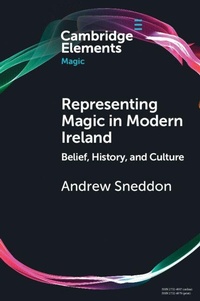
Representing Magic in Modern Ireland
Belief, History, and Culture
Published on 19. May 2022
Book
Paperback/Softback
90 pages
978-1-108-94927-9 (ISBN)
Description
This Element argues that Ireland did not experience a disenchanted modernity, nor a decline in magic. It suggests that beliefs, practices and traditions concerning witchcraft and magic developed and adapted to modernity to retain cultural currency until the end of the twentieth century. This analysis provides the backdrop for the first systematic exploration of how historic Irish trials of witches and cunning-folk were represented by historians, antiquarians, journalists, dramatists, poets, and novelists in Ireland between the late eighteenth and late twentieth century. It is demonstrated that this work created an accepted narrative of Irish witchcraft and magic which glossed over, ignored, or obscured the depth of belief in witchcraft, both in the past and in contemporary society. Collectively, their work gendered Irish witchcraft, created a myth of a disenchanted, modern Ireland, and reinforced competing views of Irishness and Irish identity. These long-held stereotypes were only challenged in the late twentieth-century.
More details
Series
Language
English
Place of publication
Cambridge
United Kingdom
Product notice
Paperback (trade)
Illustrations
Worked examples or Exercises
Dimensions
Height: 229 mm
Width: 152 mm
Thickness: 5 mm
Weight
145 gr
ISBN-13
978-1-108-94927-9 (9781108949279)
Copyright in bibliographic data and cover images is held by Nielsen Book Services Limited or by the publishers or by their respective licensors: all rights reserved.
Schweitzer Classification
Other editions
Additional editions
E-Book
05/2022
Cambridge University Press
€15.49
Available for download
E-Book
05/2022
Cambridge University Press
€15.49
Available for download
Person
Content
1. Introduction; 2. Witchcraft and Magic in Modern Ireland; 3. Writing the History of Irish Witchcraft; 4. Reimagining Irish Witchcraft: Literature and the Press; 5. Conclusion.