

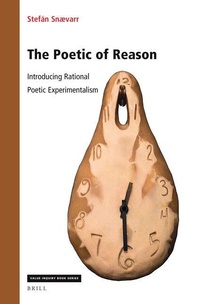
The Poetic of Reason: Introducing Rational Poetic Experimentalism
Published on 29. September 2022
Book
Hardback
476 pages
978-90-04-52380-7 (ISBN)
Description
This book makes the attempt to wed reason and the poetic. The tool for this attempt is Rational Poetic Experimentalism (RPE), which is introduced and explored in this book. According to RPE, it makes sense to look for poetic elements in human reality (including reason), outside of the realm of imaginative literature. Provocatively, RPE contends that philosophy's search for truth has not been a great success so far. So, why not experiment with philosophical concepts and look for thought-provoking ideas by employing the principles of RPE, instead of fruitlessly searching for truths using conventional methods?
More details
Series
Language
English
Place of publication
Leiden
Netherlands
Target group
Professional and scholarly
Product notice
sewn/stitched
Cloth over boards
Dimensions
Height: 235 mm
Width: 155 mm
Thickness: 36 mm
Weight
917 gr
ISBN-13
978-90-04-52380-7 (9789004523807)
Copyright in bibliographic data and cover images is held by Nielsen Book Services Limited or by the publishers or by their respective licensors: all rights reserved.
Schweitzer Classification
Person
Stefan Snaevarr is Professor of Philosophy at the Norway Inland University, Lillehammer, Norway. His main professional interests lie broadly within the field of aesthetics. His last book in English was Metaphors, Narratives, Emotions. Their Interplay and Impact (Rodopi, 2010).
Content
Preface??
Part A?
Rational Poetic Experimentalism??
Section I
Introducing the ?rpe???
Introduction to Section i, Part a????
1???Experimental Philosophy and the Literary??
?Introducing the Literary
?Experiments and Philosophy
?Responses and Rejoinders
?Conclusion
2???rpe? and Its Methodology?????
?Nozick's Pluralist and Aesthetic View of Philosophy
?The Proliferation of Possibilities and the Destab
?Quasi-induction and Inference to the Least Bad Explanation
?Objections and Responses
?Conclusion
Conclusion and Summary of Section ?i?, Part a??
section II
Philosophy and Literature: The No-Gap Theory??
Introduction to Section ii?, Part a??
1???Discussing Definitions ?Preparing the Ground for the No-Gap Theory???
?The Concept of Philosophy
?The Concepts of the Literary and Imaginative Literature
?The Institutional Theory
?Amoebaean Concepts
?Conclusion
2???Fleshing Out the No-Gap Theory??
?The Indicators
?The Similarities between Philosophy and Literature
?Conclusion
3???The No-Gap Theory and the Problem of Progress??
?Cognitive Progress
?Williamson on Progress in Philosophy
?Other Thinkers on Progress
?Progress and the Proliferation of Possibilities
?Rejoinders and Responses
?Conclusion
Conclusion and Summary of Section ii?, Part a??
section III
Destabing and the Literary Factors??
Introduction to Section ?iii?, Part a??
1???The Might of Metaphors ?On Metaphorism???
?Introduction to Metaphors and Max Black's Theories
?The Tropical Side of Language
?Goodman on Metaphors
?Metaphorism: Generative Metaphorics
?Ricoeur: Live Metaphors and Split Reference
?Ricoeur: Emotions, Creativity, and Imagination
?Ricoeur: The Cognitive Function of Metaphors
?The Alethetic Theory of Metaphoric Understanding
?Metaphors only Shadows of Literal Meaning?
?Conclusion
2???In the Beginning Was the Story ?On Narrativism???
?Introducing Narratives and Stories
?The Narrativist Argument: Carr
?The Narrative Realist Argument: Dray and Schapp
?Blending Theory and Narrativism
?Mink and Narration as Cognition
?Ricoeur and the Rule of Narratives
?The rpe? and Narrativism
?Lamarque's Criticism of Narrativism
?Conclusion
3???Is Reality a Fiction? ?On Fictionalism???
?Introducing Fictionalism (and Its Forefathers)
?Walton and Make-Believe
?Different Kinds of Fictionalism
?Make-Believe and Mathematics
?Fictionalism and the rpe???
?A Note on Imagination and Creativity
?Critical Comments
?Conclusion
Conclusion and Summary of Section iii?, Part a???
Part b?
The Poetic of Reason??
section i
Introducing the Poetic of Reason??
Introduction to Section ?i?, Part b??
1???Preliminary Notes on Reason??
?Reason, Truth, and Evaluation
?Logic and Reason
?Induction and Abduction
?More about Deduction
?Rejoinders and Replies
?Conclusion
2???Linguistic Rationalism and the Nobel Art of Destabing??
?Preparatory Notes on Some Analytical Schools
?Habermas, Apel, Reason, and Language
?Is Reason Really Rational?
?First Destabing: Language
?Second Destabing: Linguistic Rationalism
?Third Destabing: Practical Reason
?Rejoinders and Responses
?Conclusion
3???The Poetic of Models??
?Metaphors and Models
?A Note on Metaphors, Causal Reference, and Generalizations
?Critics of Models and Metaphors
?Models as Fictions
?Models and Narratives: The Poetic of Science
?Responses to Possible Objections
?Conclusion
4???Relativism and Conceptual Schemes??
?Relativism and Incommensurability
?Davidson's Criticism of Incommensurabilism
?Defending Schemism
?Conclusion
5???The Reasons of Relativism, the Relativity of Reason??
?Goodman and the Plurality of Worlds
?Margolis and Relativism
?Rorty and Relativism
?Lingualism, Science, Reality, Skepticism
?Conclusion
6???Rhetoric, Science, and Literature??
?The Rhetoric of Science (Destabing Science)
?Novels as Models, Multivalentism and Literature
?Conclusion
Conclusion and Summary of Section ?i?, Part b??
section ii
The Poetic of Reason (?ii?): Feelings, Disclosure, Background??
Introduction to Section ii?, Part b??
1???Feelings??
?Emotions and Feelings: Cognitive Theories
?Goldie on Emotions, the Body, and Subjectivity
?Taylor's Hermeneutic Cognitivism
?Feeling, Cognition, Art, Science, Values
?Intuition and Imagination
?Conclusion
2???The Poetic of Emotions??
?Emotions and Metaphors
?Narratives and Emotions
?Fictions and the Meeting Places of the Threesome
?Conclusion
3???Deflated Disclosure??
?Heidegger's World Disclosure
?Introducing Deflated Disclosure
?Literature and f-d-e-Disclosing
?Disclosism and Rationality
?Conclusion
4???Background and Literature??
?The Background
?The Literary Factors, Artworks, and the Ineffable
?Conclusion
5???The Amoebae of Reason Concluding Comments on Rationality??
?Reason and the Poetic
?Rationality Again
?The Crossword Puzzle of Reason
?Conclusion
Conclusion and Summary of Section ?ii?, Part b??
Concluding the Book??
Concluding the Experiments, Concluding the Book??
?Conclusion of the Conclusion
A Concluding Personal Note??
Bibliography??
Index??
Part A?
Rational Poetic Experimentalism??
Section I
Introducing the ?rpe???
Introduction to Section i, Part a????
1???Experimental Philosophy and the Literary??
?Introducing the Literary
?Experiments and Philosophy
?Responses and Rejoinders
?Conclusion
2???rpe? and Its Methodology?????
?Nozick's Pluralist and Aesthetic View of Philosophy
?The Proliferation of Possibilities and the Destab
?Quasi-induction and Inference to the Least Bad Explanation
?Objections and Responses
?Conclusion
Conclusion and Summary of Section ?i?, Part a??
section II
Philosophy and Literature: The No-Gap Theory??
Introduction to Section ii?, Part a??
1???Discussing Definitions ?Preparing the Ground for the No-Gap Theory???
?The Concept of Philosophy
?The Concepts of the Literary and Imaginative Literature
?The Institutional Theory
?Amoebaean Concepts
?Conclusion
2???Fleshing Out the No-Gap Theory??
?The Indicators
?The Similarities between Philosophy and Literature
?Conclusion
3???The No-Gap Theory and the Problem of Progress??
?Cognitive Progress
?Williamson on Progress in Philosophy
?Other Thinkers on Progress
?Progress and the Proliferation of Possibilities
?Rejoinders and Responses
?Conclusion
Conclusion and Summary of Section ii?, Part a??
section III
Destabing and the Literary Factors??
Introduction to Section ?iii?, Part a??
1???The Might of Metaphors ?On Metaphorism???
?Introduction to Metaphors and Max Black's Theories
?The Tropical Side of Language
?Goodman on Metaphors
?Metaphorism: Generative Metaphorics
?Ricoeur: Live Metaphors and Split Reference
?Ricoeur: Emotions, Creativity, and Imagination
?Ricoeur: The Cognitive Function of Metaphors
?The Alethetic Theory of Metaphoric Understanding
?Metaphors only Shadows of Literal Meaning?
?Conclusion
2???In the Beginning Was the Story ?On Narrativism???
?Introducing Narratives and Stories
?The Narrativist Argument: Carr
?The Narrative Realist Argument: Dray and Schapp
?Blending Theory and Narrativism
?Mink and Narration as Cognition
?Ricoeur and the Rule of Narratives
?The rpe? and Narrativism
?Lamarque's Criticism of Narrativism
?Conclusion
3???Is Reality a Fiction? ?On Fictionalism???
?Introducing Fictionalism (and Its Forefathers)
?Walton and Make-Believe
?Different Kinds of Fictionalism
?Make-Believe and Mathematics
?Fictionalism and the rpe???
?A Note on Imagination and Creativity
?Critical Comments
?Conclusion
Conclusion and Summary of Section iii?, Part a???
Part b?
The Poetic of Reason??
section i
Introducing the Poetic of Reason??
Introduction to Section ?i?, Part b??
1???Preliminary Notes on Reason??
?Reason, Truth, and Evaluation
?Logic and Reason
?Induction and Abduction
?More about Deduction
?Rejoinders and Replies
?Conclusion
2???Linguistic Rationalism and the Nobel Art of Destabing??
?Preparatory Notes on Some Analytical Schools
?Habermas, Apel, Reason, and Language
?Is Reason Really Rational?
?First Destabing: Language
?Second Destabing: Linguistic Rationalism
?Third Destabing: Practical Reason
?Rejoinders and Responses
?Conclusion
3???The Poetic of Models??
?Metaphors and Models
?A Note on Metaphors, Causal Reference, and Generalizations
?Critics of Models and Metaphors
?Models as Fictions
?Models and Narratives: The Poetic of Science
?Responses to Possible Objections
?Conclusion
4???Relativism and Conceptual Schemes??
?Relativism and Incommensurability
?Davidson's Criticism of Incommensurabilism
?Defending Schemism
?Conclusion
5???The Reasons of Relativism, the Relativity of Reason??
?Goodman and the Plurality of Worlds
?Margolis and Relativism
?Rorty and Relativism
?Lingualism, Science, Reality, Skepticism
?Conclusion
6???Rhetoric, Science, and Literature??
?The Rhetoric of Science (Destabing Science)
?Novels as Models, Multivalentism and Literature
?Conclusion
Conclusion and Summary of Section ?i?, Part b??
section ii
The Poetic of Reason (?ii?): Feelings, Disclosure, Background??
Introduction to Section ii?, Part b??
1???Feelings??
?Emotions and Feelings: Cognitive Theories
?Goldie on Emotions, the Body, and Subjectivity
?Taylor's Hermeneutic Cognitivism
?Feeling, Cognition, Art, Science, Values
?Intuition and Imagination
?Conclusion
2???The Poetic of Emotions??
?Emotions and Metaphors
?Narratives and Emotions
?Fictions and the Meeting Places of the Threesome
?Conclusion
3???Deflated Disclosure??
?Heidegger's World Disclosure
?Introducing Deflated Disclosure
?Literature and f-d-e-Disclosing
?Disclosism and Rationality
?Conclusion
4???Background and Literature??
?The Background
?The Literary Factors, Artworks, and the Ineffable
?Conclusion
5???The Amoebae of Reason Concluding Comments on Rationality??
?Reason and the Poetic
?Rationality Again
?The Crossword Puzzle of Reason
?Conclusion
Conclusion and Summary of Section ?ii?, Part b??
Concluding the Book??
Concluding the Experiments, Concluding the Book??
?Conclusion of the Conclusion
A Concluding Personal Note??
Bibliography??
Index??