

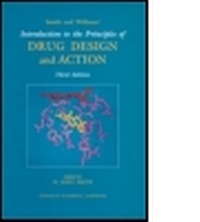
Smith and Williams' Introduction to the Principles of Drug Design and Action, Third Edition
3rd Edition
Published on 15. May 1998
Book
Hardback
568 pages
978-90-5702-037-7 (ISBN)
Description
The third edition of this popular textbook builds on the excellent foundations laid down by the earlier editions. It provides a thorough introduction to the principles of rational drug design, adopting a 'from the bench to the market place' approach.
As knowledge of biological systems has expanded and the number of techniques available for exploring and visualizing their components has increased, it has become possible to design drugs specifically for a given target. This unique insight has revolutionized the process of drug development for specific disease states, and in this textbook both novel and established approaches are incorporated.
The introductory text explains the principles of drug design using real examples. These illustrate the discovery of 'lead' compounds and their manipulation to produce non-toxic drug candidates that will be successfully metabolized to interact with target receptors in a predicted fashion. In addition to fully updating the contents of the previous edition, the Editor has included important new sections on the pharmacological consequences of drug chirality, agonists and antagonists of neurotransmitters, and the process involved in proceeding from program sanction to clinical trials
As knowledge of biological systems has expanded and the number of techniques available for exploring and visualizing their components has increased, it has become possible to design drugs specifically for a given target. This unique insight has revolutionized the process of drug development for specific disease states, and in this textbook both novel and established approaches are incorporated.
The introductory text explains the principles of drug design using real examples. These illustrate the discovery of 'lead' compounds and their manipulation to produce non-toxic drug candidates that will be successfully metabolized to interact with target receptors in a predicted fashion. In addition to fully updating the contents of the previous edition, the Editor has included important new sections on the pharmacological consequences of drug chirality, agonists and antagonists of neurotransmitters, and the process involved in proceeding from program sanction to clinical trials
More details
Edition
3rd New edition
Language
English
Place of publication
London
United Kingdom
Target group
College/higher education
Edition type
New edition
Dimensions
Height: 254 mm
Width: 178 mm
Weight
1397 gr
ISBN-13
978-90-5702-037-7 (9789057020377)
Copyright in bibliographic data and cover images is held by Nielsen Book Services Limited or by the publishers or by their respective licensors: all rights reserved.
Schweitzer Classification
Other editions
New editions
H. John Smith | Hywel Williams
Smith and Williams' Introduction to the Principles of Drug Design and Action
Book
10/2005
4th Edition
CRC Press
€186.30
Shipment within 15-20 days
Additional editions

H. John Smith | Hywel Williams
Smith and Williams' Introduction to the Principles of Drug Design and Action
Book
05/1998
3rd Edition
Taylor & Francis
€31.13
Article exhausted; check for reprint
Previous edition
H. John Smith | Hywel Williams
Introduction to the Principles of Drug Design
Book
09/1988
2nd Edition
Butterworth-Heinemann
€40.24
Article exhausted; check for reprint
Persons
Content
Processes of Drug Handling by the Body. The Design of Drug Delivery Systems. Intermolecular Forces and Molecular Modeling. Drug Chirality and its Pharmacological Consequences. Quantitative Structure-Activity Relationships and Drug Design. From Program Sanction to Clinical Trials: A Partial View of the Quest for Arimidex , a Potent, Selective Inhibitor of Aromatase. Pro-Drugs. Design of Enzyme Inhibitors as Drugs. The Chemotherapy of Cancer. Neurotransmitters, Agonists and Antagonists. Design of Antimicrobial Chemotherapeutic Agents. Recombinant DNA technology: Monoclonal Antibodies. Bio-inorganic Chemistry and its Pharmaceutical Applications.