

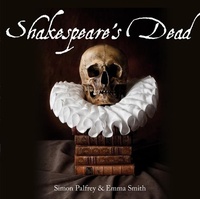
Shakespeare's Dead
Stages of Death in Shakespeare's Playworlds
Published on 22. April 2016
Book
Paperback/Softback
192 pages
978-1-85124-247-4 (ISBN)
Description
Pyramus: 'Now die, die, die, die, die.'[Dies]
A Midsummer Night's Dream
'Shakespeare's Dead' reveals the unique ways in which Shakespeare brings dying, death, and the dead to life. It establishes the cultural, religious and social contexts for thinking about early modern death, with particular reference to the plague which ravaged Britain during his lifetime, and against the divisive background of the Reformation. But it also shows how death on stage is different from death in real life. The dead come to life, ghosts haunt the living, and scenes of mourning are subverted by the fact that the supposed corpse still breathes.
Shakespeare scripts his scenes of dying with extraordinary care. Famous final speeches - like Hamlet's 'The rest is silence', Mercutio's 'A plague o' both your houses', or Richard III's 'My kingdom for a horse' - are also giving crucial choices to the actors as to exactly how and when to die. Instead of the blank finality of death, we get a unique entrance into the loneliness or confusion of dying.
'Shakespeare's Dead' tells of death-haunted heroes such as Macbeth and Hamlet, and death-teasing heroines like Juliet, Ophelia, and Cleopatra. It explores the fear of 'something after death', and characters' terrifying visions of being dead. But it also uncovers the constant presence of death in Shakespeare's comedies, and how the grinning jester might be a leering skull in disguise.
This book celebrates the paradox: the life in death in Shakespeare.
A Midsummer Night's Dream
'Shakespeare's Dead' reveals the unique ways in which Shakespeare brings dying, death, and the dead to life. It establishes the cultural, religious and social contexts for thinking about early modern death, with particular reference to the plague which ravaged Britain during his lifetime, and against the divisive background of the Reformation. But it also shows how death on stage is different from death in real life. The dead come to life, ghosts haunt the living, and scenes of mourning are subverted by the fact that the supposed corpse still breathes.
Shakespeare scripts his scenes of dying with extraordinary care. Famous final speeches - like Hamlet's 'The rest is silence', Mercutio's 'A plague o' both your houses', or Richard III's 'My kingdom for a horse' - are also giving crucial choices to the actors as to exactly how and when to die. Instead of the blank finality of death, we get a unique entrance into the loneliness or confusion of dying.
'Shakespeare's Dead' tells of death-haunted heroes such as Macbeth and Hamlet, and death-teasing heroines like Juliet, Ophelia, and Cleopatra. It explores the fear of 'something after death', and characters' terrifying visions of being dead. But it also uncovers the constant presence of death in Shakespeare's comedies, and how the grinning jester might be a leering skull in disguise.
This book celebrates the paradox: the life in death in Shakespeare.
More details
Language
English
Place of publication
United Kingdom
Product notice
With flaps
Illustrations
70 Illustrations, color
Dimensions
Height: 211 mm
Width: 207 mm
Thickness: 22 mm
Weight
713 gr
ISBN-13
978-1-85124-247-4 (9781851242474)
Copyright in bibliographic data and cover images is held by Nielsen Book Services Limited or by the publishers or by their respective licensors: all rights reserved.
Schweitzer Classification
Persons
Emma Smith is Professor of Shakespeare Studies at Hertford College, Oxford.
Simon Palfrey is Professor of English Literature and Tutorial Fellow at Brasenose College, Oxford.
Simon Palfrey is Professor of English Literature and Tutorial Fellow at Brasenose College, Oxford.