

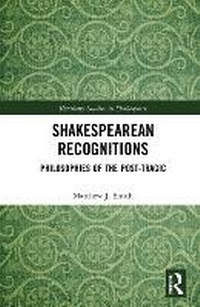
Shakespearean Recognitions
Philosophies of the Post-Tragic
1st Edition
Will be published approx. on 9. December 2026
Book
Hardback
288 pages
978-1-041-33781-2 (ISBN)
Description
Shakespearean Recognitions: Philosophies of the Post-Tragic explores Shakespeare's unique contribution to the history of recognition as both a narrative trope and a moral event. Recognition, central to classical anagnorisis and modern moral philosophy, also has deep roots in medieval Christian devotion, where salvation often hinged on reciprocal recognition with God. Shakespeare inherited this "medieval theater of recognition," a cultural and dramaturgical framework that infused classical discovery scenes with new spiritual and social dimensions. This book argues that Shakespeare's plays dramatize the aporia of mutual recognition-a moment of moral reckoning that resonates across classical poetics, medieval devotion, and modern philosophy. Scenes of reunion, discovery, and loss in Shakespeare's works are not merely poetic devices but sites of profound moral and philosophical inquiry. By engaging with thinkers like Hobbes, Hegel, Levinas, and Cavell, the book demonstrates how Shakespeare's recognition scenes interrogate freedom, forgiveness, and the struggle for moral clarity. Shakespearean Recognitions bridges the gap between poetic and philosophical theories of recognition, showing how early modern theater transformed classical anagnorisis into a powerful exploration of human freedom and moral responsibility. This study reveals Shakespeare's enduring relevance to debates about identity, morality, and the human condition.
More details
Series
Language
English
Place of publication
London
United Kingdom
Publishing group
Taylor & Francis Ltd
Target group
College/higher education
Professional and scholarly
Academic and Postgraduate
Dimensions
Height: 229 mm
Width: 152 mm
ISBN-13
978-1-041-33781-2 (9781041337812)
Copyright in bibliographic data and cover images is held by Nielsen Book Services Limited or by the publishers or by their respective licensors: all rights reserved.
Schweitzer Classification
Person
Michael J. Smith is President of the college and Professor of Liberal Arts at Hildegard College in California.
Content
Introduction
PART 1: THE MEDIEVAL THEATER OF RECOGNITION
Chapter 1. Shakespeare's Romances and the Elevation of God
Chapter 2. Recognition as Blessing in Post-Resurrection Drama and The Winter's Tale
PART 2: AN EARLY MODERN POETICS OF RECOGNITION
Chapter 3. The Course of Recognition in Cymbeline
Chapter 4. Clowning with Tragedy in Romeo and Juliet
PART 3: RECOGNITION IN THE SPIRIT OF THE FESTIVE
Chapter 5. Misrecognition: Shakespeare's Undead Bodies
Chapter 6. Reconciling The Tempest
Afterword
PART 1: THE MEDIEVAL THEATER OF RECOGNITION
Chapter 1. Shakespeare's Romances and the Elevation of God
Chapter 2. Recognition as Blessing in Post-Resurrection Drama and The Winter's Tale
PART 2: AN EARLY MODERN POETICS OF RECOGNITION
Chapter 3. The Course of Recognition in Cymbeline
Chapter 4. Clowning with Tragedy in Romeo and Juliet
PART 3: RECOGNITION IN THE SPIRIT OF THE FESTIVE
Chapter 5. Misrecognition: Shakespeare's Undead Bodies
Chapter 6. Reconciling The Tempest
Afterword