

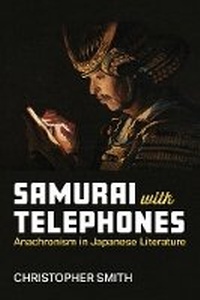
Samurai with Telephones
Anachronism in Japanese Literature
Published on 11. July 2024
Book
Paperback/Softback
242 pages
978-0-472-05687-3 (ISBN)
Description
What is going on when a graphic novel has a twelfth-century samurai pick up a telephone to make a call, or a play has an ancient aristocrat teaching in a present-day schoolroom? Rather than regarding such anachronisms as errors, Samurai with Telephones develops a theory of how texts can use different types of anachronisms to challenge or rewrite history, play with history, or open history up to new possibilities. By applying this theoretical framework of anachronism to several Japanese literary and cultural works, author Christopher Smith demonstrates how different texts can use anachronism to open up history for a wide variety of different textual projects.
From the modern period, this volume examines literature by Mori Ogai and Oe Kenzaburo, manga by Tezuka Osamu, art by Murakami Takashi, and a variety of other pop cultural works. Turning to the Early Modern period (Edo period, 1600-1868), which produced a literature rich with playful anachronism, he also examines several Kabuki and Bunraku plays, kibyoshi comic books, and gokan illustrated novels. In analyzing these works, he draws a distinction between anachronisms that attempt to hide their work on history and convincingly rewrite it and those conspicuous anachronisms that highlight and disrupt the construction of historical narratives.
From the modern period, this volume examines literature by Mori Ogai and Oe Kenzaburo, manga by Tezuka Osamu, art by Murakami Takashi, and a variety of other pop cultural works. Turning to the Early Modern period (Edo period, 1600-1868), which produced a literature rich with playful anachronism, he also examines several Kabuki and Bunraku plays, kibyoshi comic books, and gokan illustrated novels. In analyzing these works, he draws a distinction between anachronisms that attempt to hide their work on history and convincingly rewrite it and those conspicuous anachronisms that highlight and disrupt the construction of historical narratives.
More details
Series
Language
English
Place of publication
Ann Arbor
United States
Target group
Professional and scholarly
Illustrations
12 photographs, cartoons, and drawings
Dimensions
Height: 229 mm
Width: 152 mm
ISBN-13
978-0-472-05687-3 (9780472056873)
Copyright in bibliographic data and cover images is held by Nielsen Book Services Limited or by the publishers or by their respective licensors: all rights reserved.
Schweitzer Classification
Person
Christopher Smith is Assistant Professor of Modern Japanese Literature and Culture at the University of Florida.
Content
Introduction: Seeing Anachronism Structure of the book Chapter 1: Towards a Theory of Anachronism
Chapter 2: From Monologic to Dialogic Samurai as Modern Subject in Mori Ogai's "Abe ichizoku"
Bushi and Bourgeois: Monologic Marxism in Kamui-den
A Riot of Anachronism: History and power in Man'en gannen no futtoboru
Resistance to Monologue
Dreaming in anachronism Chapter 3: Gags With An Agenda: Anachronism In Tezuka Osamu's Hi No Tori Dismantling National Myth with Anachronism
Benkei and the Denaturing of Loyalty Chapter 4: Speaking The Same Language: Anachronisms Of Interoperability In Contemporary Popular Culture The City of the Future is Edo: Seiba marionetto J
Anachronistic Interoperability of State Institutions in Naruto
Samurai who read Shonen Jump in Gintama
Hip-Hop and Anachronistic Marginality in Samurai chanpuru
Riffs on Tradition: Interoperability in Visual Art
The Severing of Tradition in the Works of Murakami Takashi
Defiantly Appropriating the Past in the Paintings of Tenmyouya Hisashi
Displacing the Samurai in the Works of Noguchi Tetsuya Chapter 5: Playing With Samurai: Anachronism In Edo Literature Omu-gaeshi bunbu no futamichi
Daihi no senrokuhon
Nise Murasaki inaka Genji Chapter 6: Acting Out The Past: Anachronism In Edo Theatre Metadramatic anachronism
Appropriating Samurai Heroes in Sukeroku yukari no Edo-zakura
The mago-deshi of the Ancients: Sugawara denju tenarai kagami
Sexy Heroes in Yoshitsune senbon zakura Conclusion
Bibliography
Chapter 2: From Monologic to Dialogic Samurai as Modern Subject in Mori Ogai's "Abe ichizoku"
Bushi and Bourgeois: Monologic Marxism in Kamui-den
A Riot of Anachronism: History and power in Man'en gannen no futtoboru
Resistance to Monologue
Dreaming in anachronism Chapter 3: Gags With An Agenda: Anachronism In Tezuka Osamu's Hi No Tori Dismantling National Myth with Anachronism
Benkei and the Denaturing of Loyalty Chapter 4: Speaking The Same Language: Anachronisms Of Interoperability In Contemporary Popular Culture The City of the Future is Edo: Seiba marionetto J
Anachronistic Interoperability of State Institutions in Naruto
Samurai who read Shonen Jump in Gintama
Hip-Hop and Anachronistic Marginality in Samurai chanpuru
Riffs on Tradition: Interoperability in Visual Art
The Severing of Tradition in the Works of Murakami Takashi
Defiantly Appropriating the Past in the Paintings of Tenmyouya Hisashi
Displacing the Samurai in the Works of Noguchi Tetsuya Chapter 5: Playing With Samurai: Anachronism In Edo Literature Omu-gaeshi bunbu no futamichi
Daihi no senrokuhon
Nise Murasaki inaka Genji Chapter 6: Acting Out The Past: Anachronism In Edo Theatre Metadramatic anachronism
Appropriating Samurai Heroes in Sukeroku yukari no Edo-zakura
The mago-deshi of the Ancients: Sugawara denju tenarai kagami
Sexy Heroes in Yoshitsune senbon zakura Conclusion
Bibliography