

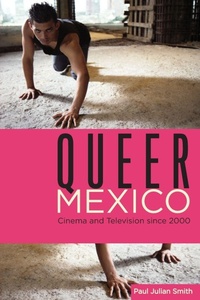
Queer Mexico
Cinema and Television Since 2000
Published on 31. October 2017
Book
Paperback/Softback
240 pages
978-0-8143-4274-9 (ISBN)
Description
Explores the rich and varied LGBT cinema and television of Mexico since the new millennium.
Queer Mexico: Cinema and Television since 2000 provides critical analysis of both mainstream and independent audiovisual works, many of them little known, produced in Mexico since the turn of the twenty-first century. In the book, author Paul Julian Smith aims to tease out the symbiotic relationship between culture and queerness in Mexico. Smith begins with the year 2000 because of the political shift that happened within the government-the Institutional Revolutionary Party (PRI) was voted out of national office after over seventy years in power. Judicial and social changes for LGBT Mexicans came in the wake of what was known at the time as simply ""the change"" (""el cambio"") at the start of the millennium, bringing about an increased visibility and acknowledgment of the LGBT community.
Divided into five chapters, Queer Mexico demonstrates the diversity of both representation and production processes in the Mexican film and television industry. It attempts also to reconstruct a queer cultural field for Mexico that incorporates multiple genres and techniques. The first chapter looks at LGBT festivals, porn production, and a web-distributed youth drama, claimed by its makers to be the first wholly gay series made in Mexico. The second chapter examines selected features and shorts by Mexico's sole internationally distributed art house director, Julian Hernandez. The third chapter explores the rising genre of documentary on transgender themes. The fourth chapter charts the growing trend of a gay, lesbian, or trans-focused mainstream cinema. The final chapter addresses the rich and diverse history of queer representation in Mexico's dominant television genre and, arguably, national narrative: the telenovela.
The first book to come out of the Queer Screens series, Queer Mexico is a groundbreaking monograph for anyone interested in media or LGBT studies, especially as it relates to the culture of Latin America.
Queer Mexico: Cinema and Television since 2000 provides critical analysis of both mainstream and independent audiovisual works, many of them little known, produced in Mexico since the turn of the twenty-first century. In the book, author Paul Julian Smith aims to tease out the symbiotic relationship between culture and queerness in Mexico. Smith begins with the year 2000 because of the political shift that happened within the government-the Institutional Revolutionary Party (PRI) was voted out of national office after over seventy years in power. Judicial and social changes for LGBT Mexicans came in the wake of what was known at the time as simply ""the change"" (""el cambio"") at the start of the millennium, bringing about an increased visibility and acknowledgment of the LGBT community.
Divided into five chapters, Queer Mexico demonstrates the diversity of both representation and production processes in the Mexican film and television industry. It attempts also to reconstruct a queer cultural field for Mexico that incorporates multiple genres and techniques. The first chapter looks at LGBT festivals, porn production, and a web-distributed youth drama, claimed by its makers to be the first wholly gay series made in Mexico. The second chapter examines selected features and shorts by Mexico's sole internationally distributed art house director, Julian Hernandez. The third chapter explores the rising genre of documentary on transgender themes. The fourth chapter charts the growing trend of a gay, lesbian, or trans-focused mainstream cinema. The final chapter addresses the rich and diverse history of queer representation in Mexico's dominant television genre and, arguably, national narrative: the telenovela.
The first book to come out of the Queer Screens series, Queer Mexico is a groundbreaking monograph for anyone interested in media or LGBT studies, especially as it relates to the culture of Latin America.
More details
Series
Language
English
Place of publication
Detroit, MI
United States
Target group
Professional and scholarly
Illustrations
15 Black and white images
Dimensions
Height: 229 mm
Width: 152 mm
Thickness: 10 mm
Weight
265 gr
ISBN-13
978-0-8143-4274-9 (9780814342749)
Copyright in bibliographic data and cover images is held by Nielsen Book Services Limited or by the publishers or by their respective licensors: all rights reserved.
Schweitzer Classification
Other editions
Additional editions
E-Book
10/2017
Wayne State University Press
€36.99
Available for download
Person
Paul Julian Smith is distinguished professor at the Graduate Center, City University of New York. He is the author of nineteen books, including Mexican Screen Fiction: Between Cinema and Television, Amores Perros, and Desire Unlimited: The Cinema of Pedro Almodovar. He was a juror at the Morelia and San Sebastian International Film Festivals and is a columnist at Film Quarterly.