

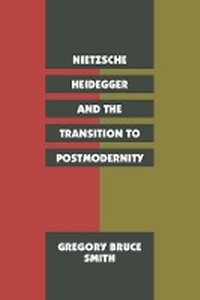
Nietzsche, Heidegger, and the Transition to Postmodernity
Published on 15. February 1996
Book
Paperback/Softback
376 pages
978-0-226-76340-8 (ISBN)
Description
Smith argues that, while much of postmodern thought is rooted in Nietzsche and Heidegger, it has ironically attempted, whether unwittingly or by design, to deflect their philosophy back onto a modern path. Other alternative paths emanating from both Nietzschean and Heideggerian thought that might more powerfully speak to postmodern culture have been ignored. Nietzsche and Heidegger, Smith suggests, have made possible a far more revolutionary critique of modernity then even their most ardent postmodern admirers have realized. Smith contends that the influences on the postmodern in the thought of Nietzsche and Heidegger are founded in a new vision of praxis liberated from theory. Ultimately, these philosophers do transcend the nihilism often found in the guise of postmodernism. Their thought is, moreover, consistent with the possibility of limited constitutional government and the rule of law. Smith's book takes a step toward recovering these possibilities and posing the fundamental questions of politics and ethics in ways that have heretofore been closed off by late-modern thought.
More details
Language
English
Place of publication
Chicago
United States
Publishing group
The University of Chicago Press
Target group
College/higher education
Professional and scholarly
Dimensions
Height: 23 mm
Width: 15 mm
Thickness: 2 mm
Weight
567 gr
ISBN-13
978-0-226-76340-8 (9780226763408)
Copyright in bibliographic data and cover images is held by Nielsen Book Services Limited or by the publishers or by their respective licensors: all rights reserved.
Schweitzer Classification