

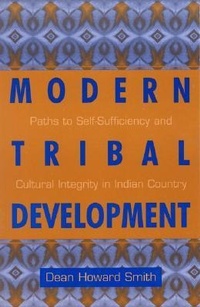
Modern Tribal Development
Paths to Self-Sufficiency and Cultural Integrity in Indian Country
Published on 14. June 2000
Book
Hardback
240 pages
978-0-7425-0409-7 (ISBN)
Description
First Nations people know that a tribe must have control over its resources and sustain its identity as a distinct civilization for economic development to make sense. With an integrated approach to tribal societies that defines development as a means to the end of sustaining tribal character, Dean Howard Smith offers both conceptual and practical tools for making self-determination and self-sufficiency a reality for Native American Nations. Through a century of changes in federal policy, tribal development has typically been viewed through mainstream society's goals and system, or according to some pan-Indian framework. Instead, Smith argues that any development prospectus must be created and evaluated within the dictums of the individual indigenous social structure. Otherwise, a tribe must choose between cultural integrity and economic development. Smith draws from his extensive experience as a consultant, teacher, and instructor to offer a wide variety of detailed case studies, and readers will learn from both successful and failed development initiatives. While focused on the United States, his work will be applicable for indigenous peoples in many parts of the world. In addition to tribal employees and communities, Modern Tribal Development will be important reading for scholars and students in Native American studies, development studies, community planning, and cross-cultural studies.
Reviews / Votes
[The author's] thesis, that development will help sustain tribal identity and tribal soverignty, as long as it happens within the cultural context of a particular tribe, has been well-articulated ... His evidence, based on his own experiences in consultations for the Center for American Indian Economic Development with reservation leadership ... supports his thesis ... The book is important and useful because it is up-to-date, and because tribal attempts to strengthen their self-determination are as timely and important as they have ever been. -- Jaakko Puisto, (University of Turku, Finland) * Indigenous Native Studies *More details
Series
Language
English
Place of publication
California
United States
Product notice
Laminated cover
Dimensions
Height: 236 mm
Width: 153 mm
Thickness: 13 mm
Weight
349 gr
ISBN-13
978-0-7425-0409-7 (9780742504097)
Copyright in bibliographic data and cover images is held by Nielsen Book Services Limited or by the publishers or by their respective licensors: all rights reserved.
Schweitzer Classification
Other editions
Additional editions
Dean Howard Smith
Modern Tribal Development
Paths to Self-Sufficiency and Cultural Integrity in Indian Country
E-Book
06/2000
1st Edition
AltaMira Press
€44.99
Available for download
Person
Dean Smith is associate professor of economics at Northern Arizona University. He is Mohawk. His family comes from the Grand River reserve of the Six Nations in Ontario. He received his Ph.D. from Texas A&M University. He works with the Center for American Indian Economic Development and is on the teaching faculty of the National Executive Education Program for Native American Leadership. He is the faculty advisor for the Native American Business Organization. His publications primarily focus on economic development on Indian reservations, but he has also published papers on pricing strategies and environmental issues.
Content
Chapter 1 Preface Chapter 2 The Potentials for Indian Country Chapter 3 A Social Paradigm for Development Chapter 4 Legacies of Federal Policies Chapter 5 Pre-Contact Native American Economic Activity Chapter 6 A Jacobs Paradigm for Development Chapter 7 Cultural Integrity and Economic Development Chapter 8 Economic Development and Cultural Integrity Chapter 9 The Environment and Natural Resources: Some Native Ideas Chapter 10 Managing Tribal Assets: Developing Long-Term Strategic Plans Chapter 11 An Example for the Rosebud Sioux Tribe Chapter 12 An Example from the Ft. Belknap Indian Community Chapter 13 Developing Tribal Resources Chapter 14 The Pernicious Triad Chapter 15 Conclusion: Thoughts and Hopes