

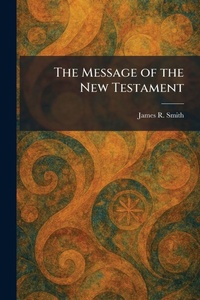
The Message of the New Testament
Description
"The Message of the New Testament" offers a comprehensive exploration of the foundational texts of the Christian faith. Written by James R. Smith, this work seeks to distill the core spiritual and ethical teachings found within the Gospels, the Acts of the Apostles, the Epistles, and the Book of Revelation. The book provides an analytical yet reverent examination of the life and ministry of Jesus Christ, emphasizing the transformative power of his message and its enduring relevance to the human experience.
Through careful thematic organization, the work guides the reader through the historical and social contexts of the first-century Mediterranean world, shedding light on the challenges faced by the early disciples and the subsequent growth of the early Church. Smith delves into the theological insights of the Apostle Paul and the overarching themes of redemption, grace, and discipleship that permeate the scripture. "The Message of the New Testament" serves as both an educational resource and a spiritual guide, designed to deepen the reader's understanding of the New Testament's structural unity and its profound impact on Western thought. This insightful study remains a valuable tool for anyone seeking to grasp the essential truths and narratives that define the New Testament canon.
This work has been selected by scholars as being culturally important, and is part of the knowledge base of civilization as we know it. This work was reproduced from the original artifact, and remains as true to the original work as possible. Therefore, you may see the original copyright references, library stamps (as most of these works have been housed in our most important libraries around the world), and other notations in the work.
This work is in the public domain in the United States of America, and possibly other nations. Within the United States, you may freely copy and distribute this work, as no entity (individual or corporate) has a copyright on the body of the work.
As a reproduction of a historical artifact, this work may contain missing or blurred pages, poor pictures, errant marks, etc. Scholars believe, and we concur, that this work is important enough to be preserved, reproduced, and made generally available to the public. We appreciate your support of the preservation process, and thank you for being an important part of keeping this knowledge alive and relevant.