

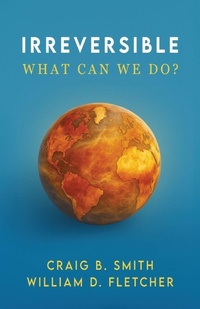
Irreversible
What Can We Do?
Published on 16. February 2026
Book
Paperback/Softback
216 pages
978-1-967213-15-3 (ISBN)
Description
Irreversible: What Can We Do? provides a clear, evidence-based examination of climate change, global warming, and the challenges they present.
Drawing on extensive experience in engineering and energy systems, the authors present complex climate science in a structured and accessible manner. The book explains the key factors driving rising global temperatures, sea level change, and other environmental impacts, supported by current data and scientific analysis.
In addition to outlining the science of climate change, the book examines the technical, economic, and policy challenges that complicate efforts to address global warming. It also identifies practical approaches and potential solutions that could influence future outcomes.
This work is intended for readers seeking a factual, clearly organized understanding of climate change, including students, professionals, and those interested in environmental policy and scientific analysis.
The book is particularly suited to analytical readers looking for a data-driven perspective on one of the most significant global issues of our time.
More details
Persons
Craig B. Smith is a retired president and chairman of DMJM H+N, an international architecture, engineering, and construction management firm. He began his career as an assistant professor of engineering at UCLA and later co-founded ANCO Engineers, Inc. He held senior leadership roles at AECOM Technology Corporation, including executive vice president and chief operating officer.Smith has extensive experience in energy and power systems, having worked on a wide range of electrical generation facilities, including nuclear, hydroelectric, geothermal, and solar. He is the author of more than 100 technical papers and multiple books on engineering and energy. He holds degrees in electrical and nuclear engineering from Stanford University and UCLA, including a Ph.D. in engineering.