

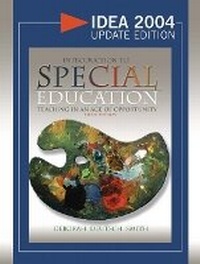
Introduction to Special Education
Teaching in the Age of Opportunity, IDEA 2004 Update Edition
5th Edition
Published on 23. May 2005
Book
Hardback
624 pages
978-0-205-47033-4 (ISBN)
Description
What is an IDEA 2004 Update Edition? Special Education has been updated to reflect this long-anticipated legislation in two ways:
Relevant discussion throughout the book has been revised to reflect IDEA `04. These revisions have been made while still preserving the original pagination of the text, so no changes to lecture notes or reading assignments are necessary, and all supplementary materials (and page references therein) remain accurate. An "IDEA 2004" icon appears in the margins adjacent to the updates.
A Guide to IDEA 2004 has been included as an appendix in the Update Edition. This clear, comprehensive, jargon-free appendix gives a brief side-by-side comparison of IDEA '04 versus the previous '97 legislation for each of the statutes, and, when a little friendly "background" would help the reader better understand the practical implications of the law, an additional note is provided.
The Fifth Edition returns to its roots with a strong orientation toward practical classroom material, methods, and topics, continuing its commitment to presenting the voices of people with disabilities and their perspectives throughout the book, and providing clear and concise discussion of the nature and characteristics of exceptional students.
It provides a problem-solving approach by presenting current special education dilemmas and challenging students to think about their solutions.
The new edition retains its consistent outline in the categorical chapters and improves upon it with the addition of new recurring headings, creating a powerful learning tool for students. No book delivers the nuts and bolts of inclusive practice better, with practical interventions in every chapter.
Relevant discussion throughout the book has been revised to reflect IDEA `04. These revisions have been made while still preserving the original pagination of the text, so no changes to lecture notes or reading assignments are necessary, and all supplementary materials (and page references therein) remain accurate. An "IDEA 2004" icon appears in the margins adjacent to the updates.
A Guide to IDEA 2004 has been included as an appendix in the Update Edition. This clear, comprehensive, jargon-free appendix gives a brief side-by-side comparison of IDEA '04 versus the previous '97 legislation for each of the statutes, and, when a little friendly "background" would help the reader better understand the practical implications of the law, an additional note is provided.
The Fifth Edition returns to its roots with a strong orientation toward practical classroom material, methods, and topics, continuing its commitment to presenting the voices of people with disabilities and their perspectives throughout the book, and providing clear and concise discussion of the nature and characteristics of exceptional students.
It provides a problem-solving approach by presenting current special education dilemmas and challenging students to think about their solutions.
The new edition retains its consistent outline in the categorical chapters and improves upon it with the addition of new recurring headings, creating a powerful learning tool for students. No book delivers the nuts and bolts of inclusive practice better, with practical interventions in every chapter.
More details
Edition
5th edition
Language
English
Place of publication
United States
Publishing group
Pearson Education (US)
Target group
Professional and scholarly
Dimensions
Height: 282 mm
Width: 225 mm
Thickness: 27 mm
Weight
1546 gr
ISBN-13
978-0-205-47033-4 (9780205470334)
Copyright in bibliographic data and cover images is held by Nielsen Book Services Limited or by the publishers or by their respective licensors: all rights reserved.
Schweitzer Classification
Other editions
New editions
Book
03/2006
6th Edition
Pearson
€84.36
Article is exhausted; no reprint
Previous edition
Book
07/2000
4th Edition
Pearson
€65.79
Article exhausted; check for reprint
Content
All chapters begin with "Personal Perspective," "Advance Organizers," and "Opportunities for a Better Future." All chapters conclude with "In Conclusion," "Meeting the Standards and Preparing for Licensure Exams," " Supplementary Resources," and " VideoWorkshop Extra."
Preface.
1. The Context of Special Education: A Time of Opportunity.
The Essence of Disabilities.
Origins of Special Education.
Necessity for National Intervention.
Special Education Today.
Opportunities for a Better 21st Century.
2. Individualized Special Educational Programs: Planning and Delivering Services.
Special Education Services.
Individualized Special Education Programs.
3. Multicultural and Bilingual Special Education.
Multicultural and Bilingual Special Education Defined.
History of the Field.
Prevalence.
Characteristics.
Early Childhood Education.
Elementary Through High School.
Collaboration for Inclusion.
Transition Through Adulthood.
Families.
4. Learning Disabilities.
Learning Disabilities Defined.
History of the Field.
Prevalence.
Characteristics.
Early Childhood Education.
Elementary Through High School.
Collaboration for Inclusion.
Transition Through Adulthood.
Families.
Technology.
5. Speech or Language Impairments.
Speech or Language Impairments Defined.
History of the Field.
Prevalence.
Causes and Prevention.
Early Childhood Education.
Elementary Through High School.
Collaboration for Inclusion.
Transition Through Adulthood.
Families.
Technology.
6. Mental Retardation.
Mental Retardation Defined.
History of the Field.
Prevalence.
Causes and Prevention.
Characteristics.
Early Childhood Education.
Elementary Through High School.
Collaboration for Inclusion.
Transition Through Adulthood.
Families.
Technology.
7. Giftedness and Talent Development.
Giftedness and Talents Defined.
Early Childhood Education.
Elementary Through High School.
Collaboration for Inclusion.
Transition Through Adulthood.
Families.
Technology.
8. Emotional or Behavioral Disorders.
Emotional or Behavioral Disorders Defined.
History of the Field.
Prevalence.
Causes and Prevention.
Characteristics.
Early Childhood Education.
Elementary Through High School.
Collaboration for Inclusion.
Transition Through Adulthood.
9. Physical Impairments and Special Health Care Needs.
Physical Impairments and Special Health Care Needs Defined.
History of the Field.
Prevalence.
Causes and Prevention.
Characteristics.
Early Childhood Education.
Elementary Through High School.
Transition Through Adulthood.
Families.
Technology.
10. Deafness and Hard of Hearing.
Deafness and Hard of Hearing Defined.
History of the Field.
Prevalence.
Causes and Prevention.
Characteristics.
Early Childhood Education.
Elementary Through High School.
Collaboration for Inclusion.
Transition Through Adulthood.
Families.
Technology.
11. Low Vision or Blindness.
Visual Disabilities Defined.
History of the Field.
Prevalence.
Causes and Prevention.
Characteristics.
Early Childhood Education.
Elementary Through High School.
Collaboration for Inclusion.
Transition Through Adulthood.
Families.
Technology.
12. Autistic Spectrum Disorders.
Autistic Spectrum Disorders (ASD) Defined.
History of the Field.
Prevalence.
Causes of Autism.
Characteristics.
Early Childhood Education.
Elementary Through High School.
Collaboration for Inclusion.
Transition Through Adulthood.
Families.
Technology.
13. Very Low Incidence Disabilities: Multiple-Severe Disabilities, Deafblindness, and Traumatic Brain Injury.
Multiple-Severe Disabilities.
Multiple-Severe Disabilities Defined.
Prevalence.
Causes and Prevention.
Characteristics of Multiple-Severe Disabilities.
Deafblindness.
Deafblindness Defined.
Prevalence.
Causes and Prevention.
Characteristics of Deafblindness.
Traumatic Brain Injury.
TBI Defined.
Prevalence.
Causes and Prevention.
Characteristics of TBI.
Very Low Incidence Disabilities.
Early Childhood Through High School.
Collaboration for Inclusion.
Transition Through Adulthood.
Families.
Technology.
Glossary.
Appendix: What Every Teacher Should Know About IDEA 2004.
References.
Name Index.
Subject Index.
Preface.
1. The Context of Special Education: A Time of Opportunity.
The Essence of Disabilities.
Origins of Special Education.
Necessity for National Intervention.
Special Education Today.
Opportunities for a Better 21st Century.
2. Individualized Special Educational Programs: Planning and Delivering Services.
Special Education Services.
Individualized Special Education Programs.
3. Multicultural and Bilingual Special Education.
Multicultural and Bilingual Special Education Defined.
History of the Field.
Prevalence.
Characteristics.
Early Childhood Education.
Elementary Through High School.
Collaboration for Inclusion.
Transition Through Adulthood.
Families.
4. Learning Disabilities.
Learning Disabilities Defined.
History of the Field.
Prevalence.
Characteristics.
Early Childhood Education.
Elementary Through High School.
Collaboration for Inclusion.
Transition Through Adulthood.
Families.
Technology.
5. Speech or Language Impairments.
Speech or Language Impairments Defined.
History of the Field.
Prevalence.
Causes and Prevention.
Early Childhood Education.
Elementary Through High School.
Collaboration for Inclusion.
Transition Through Adulthood.
Families.
Technology.
6. Mental Retardation.
Mental Retardation Defined.
History of the Field.
Prevalence.
Causes and Prevention.
Characteristics.
Early Childhood Education.
Elementary Through High School.
Collaboration for Inclusion.
Transition Through Adulthood.
Families.
Technology.
7. Giftedness and Talent Development.
Giftedness and Talents Defined.
Early Childhood Education.
Elementary Through High School.
Collaboration for Inclusion.
Transition Through Adulthood.
Families.
Technology.
8. Emotional or Behavioral Disorders.
Emotional or Behavioral Disorders Defined.
History of the Field.
Prevalence.
Causes and Prevention.
Characteristics.
Early Childhood Education.
Elementary Through High School.
Collaboration for Inclusion.
Transition Through Adulthood.
9. Physical Impairments and Special Health Care Needs.
Physical Impairments and Special Health Care Needs Defined.
History of the Field.
Prevalence.
Causes and Prevention.
Characteristics.
Early Childhood Education.
Elementary Through High School.
Transition Through Adulthood.
Families.
Technology.
10. Deafness and Hard of Hearing.
Deafness and Hard of Hearing Defined.
History of the Field.
Prevalence.
Causes and Prevention.
Characteristics.
Early Childhood Education.
Elementary Through High School.
Collaboration for Inclusion.
Transition Through Adulthood.
Families.
Technology.
11. Low Vision or Blindness.
Visual Disabilities Defined.
History of the Field.
Prevalence.
Causes and Prevention.
Characteristics.
Early Childhood Education.
Elementary Through High School.
Collaboration for Inclusion.
Transition Through Adulthood.
Families.
Technology.
12. Autistic Spectrum Disorders.
Autistic Spectrum Disorders (ASD) Defined.
History of the Field.
Prevalence.
Causes of Autism.
Characteristics.
Early Childhood Education.
Elementary Through High School.
Collaboration for Inclusion.
Transition Through Adulthood.
Families.
Technology.
13. Very Low Incidence Disabilities: Multiple-Severe Disabilities, Deafblindness, and Traumatic Brain Injury.
Multiple-Severe Disabilities.
Multiple-Severe Disabilities Defined.
Prevalence.
Causes and Prevention.
Characteristics of Multiple-Severe Disabilities.
Deafblindness.
Deafblindness Defined.
Prevalence.
Causes and Prevention.
Characteristics of Deafblindness.
Traumatic Brain Injury.
TBI Defined.
Prevalence.
Causes and Prevention.
Characteristics of TBI.
Very Low Incidence Disabilities.
Early Childhood Through High School.
Collaboration for Inclusion.
Transition Through Adulthood.
Families.
Technology.
Glossary.
Appendix: What Every Teacher Should Know About IDEA 2004.
References.
Name Index.
Subject Index.