

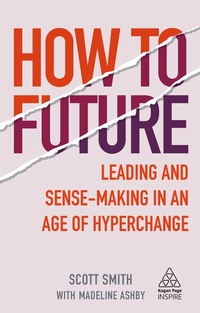
How to Future
Leading and Sense-making in an Age of Hyperchange
1st Edition
Published on 10. September 2020
Book
Hardback
248 pages
978-1-78966-472-0 (ISBN)
Description
Approach the future as a conversation, not a declaration.
How can you be prepared for what's next when emerging trends constantly threaten to turn your strategic plan on its head? The world of business is experiencing a state of hyperchange influenced by global movements, disruptive technologies, political uprisings and new consumer expectations. If your world is turned upside down, will you know how to pivot and thrive, or will you be roadkill in the 'adapt or die' business race? Futuring is the art of anticipating and testing the trade-offs of different futures by making sense of key trends, signals and emerging patterns.
How to Future
is the only book that will teach you how to become a strategy wayfinder, allowing you to evaluate, plan and prepare for better futures for you and your business.
How to Future
is a guidebook to futuring and arms you with tools, strategies and practices that illuminate new strategic pathways. Renowned futurists Scott Smith and Madeline Ashby teach you how to manage the daily flood of information and signals, and discern emergent patterns that have a direct impact on the direction of your business.
How to Future
isn't about the "one future" you expect. Instead, this book equips you with valuable tools and concepts, builds a future-focused mindset and enables you to envision, stress-test and prototype adaptable, informed and agile strategic visioning. These tools will empower you, your team and your organization to anticipate whatever futures emerge.
Reviews / Votes
"Just like great science fiction, 'futuring' isn't about trying to predict the future; it's about stimulating creative thinking about a range of possible futures. In How to Future , two of the best strategic foresight professionals in the business share all of their secrets, explaining how you can use the same tools they use to help their clients systematically think about and prepare for what's coming next--whatever it might be. It's a toolbox for taking control of your own future."More details
Other editions
Additional editions
E-Book
09/2020
1st Edition
Kogan Page Ltd
€30.49
Available for download
Book
09/2020
1st Edition
Kogan Page Ltd
€31.50
Available immediately
Persons
Author
Scott Smith is a renowned futurist, business writer and adviser who is an expert in strategic foresight and futuring. He has over 25 years of grounded experience in applied strategic foresight and has advised global corporations, government bodies and charities that include UNICEF, ASOS, GfK and Comcast. He has been featured in The Wall Street Journal, WIRED, Quartz and The Atlantic.
ISNI:
ISNI:
Content
-
- Chapter - 00: Introduction;
- Chapter - 01: Different futuring for different needs;
- Chapter - 02: Getting started - scoping;
- Chapter - 03: Sensing and scanning - finding signals of the future now;
- Chapter - 04: Sense-making and mapping - turning data and insights into patterns and themes;
- Chapter - 05: Scenario development - combining patterns and themes to tell strategic stories;
- Chapter - 06: Storytelling and prototyping - creating ways for others to engage with your future stories;
- Chapter - 07: Assessing effectiveness - tools for monitoring and measuring fitness of approach;
- Chapter - 08: What to do next? Building a futuring culture;
- Chapter - 09: Conclusion