

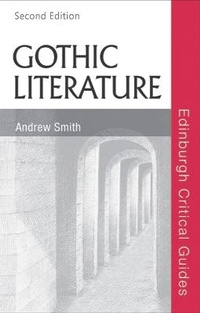
Gothic Literature
2nd Edition
Book
Hardback
224 pages
978-0-7486-4742-2 (ISBN)
Description
This is a new edition of bestselling introductory text outlining the history and ways of reading Gothic literature. This revised edition includes a new chapter on Contemporary Gothic which explores the Gothic of the early twentieth century and looks at new critical developments. It features an updated Bibliography of critical sources and a revised Chronology. The book opens with a Chronology and an Introduction to the principal texts and key critical terms, followed by five chapters: The Gothic Heyday 1760-1820; Gothic 1820-1865; Gothic Proximities 1865-1900; Twentieth Century; and Contemporary Gothic. The discussion examines how the Gothic has developed in different national contexts and in different forms, including novels, novellas, poems, films, radio and television. Each chapter concludes with a close reading of a specific text - Frankenstein, Jane Eyre, Dracula, The Silence of the Lambs and The Historian - to illustrate ways in which contextual discussion informs critical analysis. The book ends with a Conclusion outlining possible future developments within scholarship on the Gothic.
More details
Series
Edition
2nd edition
Language
English
Place of publication
Edinburgh
United Kingdom
Target group
Professional and scholarly
Dimensions
Height: 216 mm
Width: 138 mm
ISBN-13
978-0-7486-4742-2 (9780748647422)
Copyright in bibliographic data and cover images is held by Nielsen Book Services Limited or by the publishers or by their respective licensors: all rights reserved.
Schweitzer Classification
Other editions
Additional editions
Andrew Smith
Gothic Literature
E-Book
03/2013
1st Edition
Edinburgh University Press
€0.00
Available for download
Person
Andrew Smith is Reader in Nineteenth Century English Literature at the University of Sheffield.
Content
Chronology; Introduction; Chapter 1. The Gothic Heyday, 1760-1820; Chapter 2. The Gothic, 1820-1865; Chapter 3. Gothic Proximities, 1865-1900; Chapter 4. Twentieth Century; Chapter 5. Contemporary Gothic; Conclusion; Student Resources.