

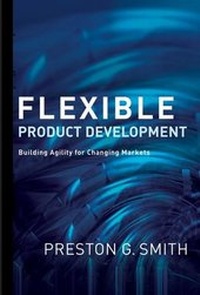
Flexible Product Development
Building Agility for Changing Markets
Published on 1. September 2007
Book
Hardback
304 pages
978-0-7879-9584-3 (ISBN)
Description
Praise for Flexible Product Development
"Speed has always been a critical element in the product design process. But as Preston Smith points out, one must be extraordinarily flexible as well in one's development and innovation processes. In the light-speed world we live in today, as Smith so poignantly points out, one's ability to use intelligent, knowledge-based flexibility is an imperative to winning each day, every day."
-Michael D. Thieneman, executive vice president and chief technology officer, Whirlpool Corporation
"Preston's previous book, Developing Products in Half the Time, was chock-full of time-to-market gems. This one goes further, showing time-to-market in a new light and providing even more wisdom that's right on for today."
-Chuck Blevins, Ph.D., director, Office of Program Management LifeScan, Inc. (Johnson & Johnson)
"Preston provides exceptionally detailed treatment of techniques to help any program manager lead difficult, constantly changing projects. His many examples show how these tools work in the real world."
-Jim Callahan, PMP, senior program manager, C-Cor
"This book addresses what's concerned me lately: how to make product development more effective and quicker. It emphasizes that project leaders should manage decisions and risk rather than tasks and processes because decisions are what really drive the project."
-James Joseph Snyder, product development manager, Medtronic, Inc.
"Speed has always been a critical element in the product design process. But as Preston Smith points out, one must be extraordinarily flexible as well in one's development and innovation processes. In the light-speed world we live in today, as Smith so poignantly points out, one's ability to use intelligent, knowledge-based flexibility is an imperative to winning each day, every day."
-Michael D. Thieneman, executive vice president and chief technology officer, Whirlpool Corporation
"Preston's previous book, Developing Products in Half the Time, was chock-full of time-to-market gems. This one goes further, showing time-to-market in a new light and providing even more wisdom that's right on for today."
-Chuck Blevins, Ph.D., director, Office of Program Management LifeScan, Inc. (Johnson & Johnson)
"Preston provides exceptionally detailed treatment of techniques to help any program manager lead difficult, constantly changing projects. His many examples show how these tools work in the real world."
-Jim Callahan, PMP, senior program manager, C-Cor
"This book addresses what's concerned me lately: how to make product development more effective and quicker. It emphasizes that project leaders should manage decisions and risk rather than tasks and processes because decisions are what really drive the project."
-James Joseph Snyder, product development manager, Medtronic, Inc.
Reviews / Votes
"I believe that any careful reader of (this book) will emerge with a clear sense of those values and principles and enough enthusiasm for what Smith recommends to take his advice and go ahead and implement them." ( Journal of Product Innovation Management , 03/2008)More details
Other editions
Additional editions
E-Book
10/2007
Jossey-Bass
€25.99
Available for download
Person
Preston Smith is a leading thinker in the product development community and consults with companies as diverse as Herman Miller and Welch Allyn. His book, Proactive Risk Management, won the David I. Cleland Project Management Literature Award from the Project Management Institute. Smith is book review editor of the Journal of Product Innovation Management and is a Certified Management Consultant.
Content
Preface.
Introduction.
1. Understanding Flexibility.
Dealing with Change.
How Much Flexibility?.
The Roots: Agile Software Development.
Moving from Software to Other Products.
A Note of Caution.
The Project Analyzer.
Summary.
2. Customers and Product Requirements.
The Fallacy of Frozen Requirements.
The Value of Customer Feedback.
Specify at a Higher Level.
Anticipate Customer Needs.
Pitfalls of Customer Feedback.
Summary.
3. Modular Product Architectures.
Modular versus Integral Architectures.
Examples of Architectural Choices.
Architectural Approaches.
Four Steps in Designing an Architecture.
Architectural Decisions.
Architecture at the Design Level.
Shifting the Hardware-Software Boundary.
Summary.
4. Experimentation.
Kinds of Experiments.
The Value of Failure.
Exploration as Experimentation.
Front-Loaded Prototyping.
Testing.
Summary.
5. Set-Based Design.
What Is Set-Based Design?
Benefi ts of Set-Based Design.
Managing Set-Based Design.
Delaying Decisions.
The Diffi culties.
Summary.
6. Development Teams and People Factors.
Teams and Flexibility.
Having the Right People.
Desirable People Qualities.
Team Qualities.
Summary.
7. Decision Making.
Improving Decision-Making Flexibility.
People and Decisions.
Uncertainty and Decisions.
Decision Trees.
Real Options Thinking.
Summary.
8. Project Management.
Flexible versus Mainstream Project Management.
The Role of a Flexible Project Manager.
Project Planning.
Timeboxing.
Project Risk Management.
Project Metrics.
Project Retrospectives.
Summary.
9. Product Development Processes.
Emergent Processes.
The Essentials of Flexible Processes.
Balancing Structure with Flexibility.
Bottlenecks and Queues.
Useful Concepts from Agile Software Development.
Summary.
10. Implementing Flexibility.
Five Paradoxes.
Transitions Are the Crux.
Top-Down Change.
Bottom-Up Change.
Summary.
Closing.
Notes.
Bibliography.
Customer Council.
The Author.
Index.
Introduction.
1. Understanding Flexibility.
Dealing with Change.
How Much Flexibility?.
The Roots: Agile Software Development.
Moving from Software to Other Products.
A Note of Caution.
The Project Analyzer.
Summary.
2. Customers and Product Requirements.
The Fallacy of Frozen Requirements.
The Value of Customer Feedback.
Specify at a Higher Level.
Anticipate Customer Needs.
Pitfalls of Customer Feedback.
Summary.
3. Modular Product Architectures.
Modular versus Integral Architectures.
Examples of Architectural Choices.
Architectural Approaches.
Four Steps in Designing an Architecture.
Architectural Decisions.
Architecture at the Design Level.
Shifting the Hardware-Software Boundary.
Summary.
4. Experimentation.
Kinds of Experiments.
The Value of Failure.
Exploration as Experimentation.
Front-Loaded Prototyping.
Testing.
Summary.
5. Set-Based Design.
What Is Set-Based Design?
Benefi ts of Set-Based Design.
Managing Set-Based Design.
Delaying Decisions.
The Diffi culties.
Summary.
6. Development Teams and People Factors.
Teams and Flexibility.
Having the Right People.
Desirable People Qualities.
Team Qualities.
Summary.
7. Decision Making.
Improving Decision-Making Flexibility.
People and Decisions.
Uncertainty and Decisions.
Decision Trees.
Real Options Thinking.
Summary.
8. Project Management.
Flexible versus Mainstream Project Management.
The Role of a Flexible Project Manager.
Project Planning.
Timeboxing.
Project Risk Management.
Project Metrics.
Project Retrospectives.
Summary.
9. Product Development Processes.
Emergent Processes.
The Essentials of Flexible Processes.
Balancing Structure with Flexibility.
Bottlenecks and Queues.
Useful Concepts from Agile Software Development.
Summary.
10. Implementing Flexibility.
Five Paradoxes.
Transitions Are the Crux.
Top-Down Change.
Bottom-Up Change.
Summary.
Closing.
Notes.
Bibliography.
Customer Council.
The Author.
Index.