

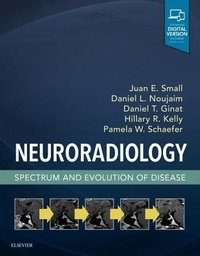
Neuroradiology: Spectrum and Evolution of Disease
Spectrum and Evolution of Disease
Published on 18. October 2018
Book
Hardback
408 pages
978-0-323-44549-8 (ISBN)
Description
Acquire a better understanding of disease evolution and treatment response with Neuroradiology Spectrum and Evolution of Disease. The unique format includes carefully chosen clinical images that depict the pathologic evolution of disease from initial presentation across the continuum of progression. Colorful graphics plot characteristic changes, helping you visualize how normal and abnormal variations alter over time. Extensive illustrations and concise descriptions distill complex concepts, making this first-of-its-kind resource an excellent tool for imaging interpretation and clinical problem solving.
Presents neurologic disease from a novel imaging perspective, emphasizing evolutionary development and pointing out patterns to recognize.
Provides a state-of-the-art understanding of image interpretation based on early, middle, and late imaging characteristics; typical and atypical variants; and pre-treatment, post-treatment, progression, and regression characteristics.
Guides you through the progression of disease with chronological indicators, additional clinical images and descriptions, and annotations that highlight atypical findings - for an easy-to-digest, visually memorable presentation.
Helps you correctly interpret specific imaging characteristics you have never seen, even when the disease process is one you are familiar with.
Enhanced eBook version included with purchase. Your enhanced eBook allows you to access all of the text, figures, and references from the book on a variety of devices.
Presents neurologic disease from a novel imaging perspective, emphasizing evolutionary development and pointing out patterns to recognize.
Provides a state-of-the-art understanding of image interpretation based on early, middle, and late imaging characteristics; typical and atypical variants; and pre-treatment, post-treatment, progression, and regression characteristics.
Guides you through the progression of disease with chronological indicators, additional clinical images and descriptions, and annotations that highlight atypical findings - for an easy-to-digest, visually memorable presentation.
Helps you correctly interpret specific imaging characteristics you have never seen, even when the disease process is one you are familiar with.
Enhanced eBook version included with purchase. Your enhanced eBook allows you to access all of the text, figures, and references from the book on a variety of devices.
More details
Language
English
Place of publication
Philadelphia
United States
Target group
Professional and scholarly
Product notice
sewn/stitched
Cloth over boards
Illustrations
2000 illustrations (200 in full color); Illustrations
Dimensions
Height: 282 mm
Width: 221 mm
Thickness: 23 mm
Weight
1315 gr
ISBN-13
978-0-323-44549-8 (9780323445498)
Copyright in bibliographic data and cover images is held by Nielsen Book Services Limited or by the publishers or by their respective licensors: all rights reserved.
Schweitzer Classification
Other editions
Additional editions
E-Book
08/2018
Elsevier
€176.99
Available for download
Persons
Juan E. Small, MD is the Section Chief of the Neuroradiology Division and the Director of Neuroimaging Education at Lahey Hospital and Medical Center in Burlington, Massachusetts. He is the lead author of Neuroradiology: Key Differential Diagnoses and Clinical Questions. Dr. Small joined Lahey in 2009 after completing his medical degree at Harvard Medical School in Boston; a Master's in Neuroscience at the University of Oxford; a radiology residency at Brigham and Women's Hospital; and a neuroradiology fellowship at Massachusetts General Hospital in Boston. Dr. Small is board certified in diagnostic radiology and neuroradiology. Dr. Pamela Schaefer is an associate radiologist and associate director in the Division of Neuroradiology, clinical director of MRI services in the Department of Radiology and program director of the Neuroradiology Fellowship at Massachusetts General Hospital.
Author
Section Chief, Neuroradiology, Lahey Hospital and Medical Center, Burlington, Massachusetts, USA
Neuroradiologist, Department of Radiology, Beaumont Hospital, Dearborn, Michigan
Department of Radiology, Pritzker School of Medicine, The University of Chicago, Chicago, Illinois
Radiologist, Massachusetts Eye and Ear Infirmary; Neuroradiologist, Massachusetts General Hospital; Assistant Professor of Radiology, Harvard Medical School, Boston, Massachusetts
Associate Director of Neuroradiology, Clinical Director of MRI, Massachusetts General Hospital; Associate Professor of Radiology, Harvard University, Boston, Massachusetts, USA
Content
Section I BRAIN
Parenchymal Hemorrhage and Trauma
1. Brain Parenchymal Hematoma
2. Subdural Hemorrhage and Post-traumatic Hygroma
Disorders of Cerebral Vascular Autoregulation
3. Posterior Reversible Encephalopathy Syndrome
Arteriopathy
4. Cerebral Amyloid Angiopathy
Metabolic Disorders
5. Wernicke Encephalopathy
6. Central Pontine Myelinolysis
Infection
7. Herpes Simplex Encephalitis
8. Toxoplasmosis
9. Neurocysticercosis
Autoimmune/Inflammatory Disorders
10. Acute Disseminated Encephalomyelitis
11. Autoimmune Encephalitis
12. Progressive Multifocal Leukoencephalopathy
13. Immune Reconstitution Inflammatory Syndrome
14. Neurosarcoidosis
Tumors
15. Glial Tumors
16. Hemangioblastoma
Ventricular System Alterations
17. Intracranial Hypotension
18. Intracranial Hypertension
Pituitary Abnormalities
19. Partially Empty Sella
20. Rathke's Cleft Cyst
21. Pituitary Apoplexy
Neurodegenerative Disease
22. Hypertrophic Olivary Degeneration
Section II SPINE
Degenerative Disease
23. Ossification of the Posterior Longitudinal Ligament
24. Lumbar Interbody Fusion
Post-traumatic Effects
25. Kummel's Disease
Infection
26. Discitis-Osteomyelitis
27. Tuberculous Spinal Infection
Bone Lesions
28. Chordoma
29. Vertebral Hemangioma
Cord Lesions
30. Syringohydromyelia
31. Cord Infarct
32. Subacute Progressive Ascending Myelopathy
Cord Tumors
33. Spinal Cord Ependymoma
34. Astrocytoma
Spine Deformity
35. Hiryama
36. Thoracic Web
Section III HEAD AND NECK
Infection
37. Orbital Infection
38. Suppurative Thyroiditis
Inflammatory Disorders
39. Thyroid-Associated Orbitopathy
40. IgG4-Related Disease in the head and neck
41. Sjogren's
42. Cholesteatoma
43. Labyrinthitis
Tumors
44. Paraganglioma
45. Esthesioneuroblastoma
Post-traumatic Effects
46. Vocal Cord Augmentation
Bone Lesions
47. Otospongiosis
48. Paget's
Vascular Lesions
49. Carotid Blowout Syndrome
Parenchymal Hemorrhage and Trauma
1. Brain Parenchymal Hematoma
2. Subdural Hemorrhage and Post-traumatic Hygroma
Disorders of Cerebral Vascular Autoregulation
3. Posterior Reversible Encephalopathy Syndrome
Arteriopathy
4. Cerebral Amyloid Angiopathy
Metabolic Disorders
5. Wernicke Encephalopathy
6. Central Pontine Myelinolysis
Infection
7. Herpes Simplex Encephalitis
8. Toxoplasmosis
9. Neurocysticercosis
Autoimmune/Inflammatory Disorders
10. Acute Disseminated Encephalomyelitis
11. Autoimmune Encephalitis
12. Progressive Multifocal Leukoencephalopathy
13. Immune Reconstitution Inflammatory Syndrome
14. Neurosarcoidosis
Tumors
15. Glial Tumors
16. Hemangioblastoma
Ventricular System Alterations
17. Intracranial Hypotension
18. Intracranial Hypertension
Pituitary Abnormalities
19. Partially Empty Sella
20. Rathke's Cleft Cyst
21. Pituitary Apoplexy
Neurodegenerative Disease
22. Hypertrophic Olivary Degeneration
Section II SPINE
Degenerative Disease
23. Ossification of the Posterior Longitudinal Ligament
24. Lumbar Interbody Fusion
Post-traumatic Effects
25. Kummel's Disease
Infection
26. Discitis-Osteomyelitis
27. Tuberculous Spinal Infection
Bone Lesions
28. Chordoma
29. Vertebral Hemangioma
Cord Lesions
30. Syringohydromyelia
31. Cord Infarct
32. Subacute Progressive Ascending Myelopathy
Cord Tumors
33. Spinal Cord Ependymoma
34. Astrocytoma
Spine Deformity
35. Hiryama
36. Thoracic Web
Section III HEAD AND NECK
Infection
37. Orbital Infection
38. Suppurative Thyroiditis
Inflammatory Disorders
39. Thyroid-Associated Orbitopathy
40. IgG4-Related Disease in the head and neck
41. Sjogren's
42. Cholesteatoma
43. Labyrinthitis
Tumors
44. Paraganglioma
45. Esthesioneuroblastoma
Post-traumatic Effects
46. Vocal Cord Augmentation
Bone Lesions
47. Otospongiosis
48. Paget's
Vascular Lesions
49. Carotid Blowout Syndrome