

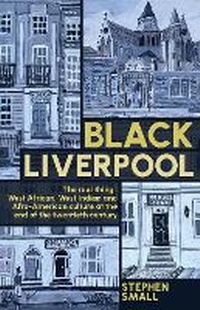
Black Liverpool
'The real thing': West African, West Indian and Afro-American culture at the end of the twentieth century
Will be published approx. on 28. June 2026
Book
Hardback
320 pages
978-1-80596-752-1 (ISBN)
Description
This book describes the Black community in Liverpool and the arrival, embrace and transformation of waves of transnational Black culture from Africa, the West Indies and the United States in the final three decades of the twentieth century. Transnational cultural influences were spread via the media, brought first-hand by visitors to Liverpool, and through Liverpool residents who travelled internationally.
Liverpool's Black community was fundamentally different from Black communities in other cities in the 1970s because of the city's unique history. There were far more Africans than West Indians, more long-term citizens than recent immigrants, the highest proportion of inter-racial marriages and people of mixed race in the nation, and a far more vivid collective memory of imperialism in West Africa than in any other city. One important difference is the far greater salience of African cultural patterns, revealed in African family names, the largest concentration of African clubs in the nation, and the emergence of African-inspired organizations like Delado African Drum and Dance company, the Steve Biko Housing Association, and Amadudu women's refuge.
Black Liverpool closely examines the role of gender ideologies, institutional practices and the experiences of Black women, alongside music and nightlife, social and political ideologies, Black Studies courses, language and dialect, and personal fashion, dress and hairstyles. The religious and secular aspects of Rastafarian beliefs and practices are also foregrounded. Drawing on more than seventy first-hand interviews with Black community residents, workers, activists and celebrities, as well as private and public organizational documents and newspapers, this illuminating book is essential reading for anyone interested in Black culture and the history of Liverpool.
Liverpool's Black community was fundamentally different from Black communities in other cities in the 1970s because of the city's unique history. There were far more Africans than West Indians, more long-term citizens than recent immigrants, the highest proportion of inter-racial marriages and people of mixed race in the nation, and a far more vivid collective memory of imperialism in West Africa than in any other city. One important difference is the far greater salience of African cultural patterns, revealed in African family names, the largest concentration of African clubs in the nation, and the emergence of African-inspired organizations like Delado African Drum and Dance company, the Steve Biko Housing Association, and Amadudu women's refuge.
Black Liverpool closely examines the role of gender ideologies, institutional practices and the experiences of Black women, alongside music and nightlife, social and political ideologies, Black Studies courses, language and dialect, and personal fashion, dress and hairstyles. The religious and secular aspects of Rastafarian beliefs and practices are also foregrounded. Drawing on more than seventy first-hand interviews with Black community residents, workers, activists and celebrities, as well as private and public organizational documents and newspapers, this illuminating book is essential reading for anyone interested in Black culture and the history of Liverpool.
Reviews / Votes
'This is a compelling story about one of Britain's oldest and most beguiling Black communities. Written from the perspective of a son of the city, highlighting both the community's successes and its numerous challenges, this is a mesmerizing and unflinching journey through the history of the Liverpool Black community, written with a balance of frankness and affection.' Dr Richard Benjamin, Co-Director of the Centre for the Study of International Slavery, University of Liverpool 'Stephen Small's writing provides a depth of consideration when reflecting on the critical discourse that shaped Black consciousness in Liverpool from the 1970s - early 2000s. This reflection on arts and activism acts as a crucial account and ensures that significant forces such as Delado African Drum and Dance Company, Steve Biko Housing Association, Liverpool Black Sisters and the Transatlantic Slavery Gallery are clearly contextualised within the chronicles of the times and their impact today, both in Liverpool and across the UK.' Pawlet Brookes, MBE, Founder CEO and artistic director of Serendipity Institute for Black Arts and Culture 'Black Liverpool: The Real Thing is Prof. Stephen Small's singular deep dive into the port city of Liverpool, providing vivid detail and insights on the multiple meanings of blackness in the most continuous Black community in a European city. Equal parts ethnography, cultural framing and sociological portrait, local activists, musical groups, athletes and community-built institutions (including his father's barbershop) pop up from the pages of this lively read. Prof. Stephen Small generously shares a labour of love, pain and memory, nurtured over many years and spread across these pages. The Real Thing is yet another reminder of how so many communities across the world are tethered together by transnational Black culture. Bravo!' Dr. Michael G. Hanchard is the Gustave C. Kuemmerle Professor in the Africana Studies Department of the University of PennsylvaniaMore details
Language
English
Place of publication
Liverpool
United Kingdom
Target group
Professional and scholarly
Illustrations
20 Illustrations
Dimensions
Height: 239 mm
Width: 163 mm
ISBN-13
978-1-80596-752-1 (9781805967521)
Copyright in bibliographic data and cover images is held by Nielsen Book Services Limited or by the publishers or by their respective licensors: all rights reserved.
Schweitzer Classification
Person
Stephen Small, PhD. is a Professor of the Graduate School, University of California, Berkeley, where he has taught for thirty years. He was born and raised in Liverpool.