

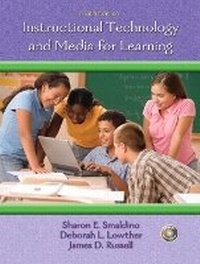
Instructional Technology and Media for Learning
9th Edition
Published on 7. June 2007
Book
Mixed media product
432 pages
978-0-13-239174-0 (ISBN)
Description
Are you ready to integrate technology into your classroom? Instructional Technology and Media for Learning will guide you as you begin to incorporate computer technology and other media into your teaching. This unique case-based text places the reader squarely in the classroom while providing a framework that teaches readers to apply in-depth coverage of current and future computer, multimedia, Internet/intranet, distance learning, and audio/visual technologies to classroom instruction.
Don't just read about technology integration - experience it! In addition to its' unique case-based approach the new edition now includes a new ASSURE Learning in Action DVD. This dvd, located in every copy of the text, provides current video of today's teachers using technology and media to improve learning for students across grade levels and content areas, rubric templates, a lesson plan builder, and skill-builder activites.
More details
Edition
9th edition
Language
English
Place of publication
United States
Publishing group
Pearson Education (US)
Target group
Professional and scholarly
Dimensions
Height: 209 mm
Width: 276 mm
Thickness: 16 mm
Weight
878 gr
ISBN-13
978-0-13-239174-0 (9780132391740)
Copyright in bibliographic data and cover images is held by Nielsen Book Services Limited or by the publishers or by their respective licensors: all rights reserved.
Schweitzer Classification
Other editions
New editions
Sharon E. Smaldino | Deborah L. Lowther | James D. Russell
Instructional Technology and Media for Learning
International Edition
Book
03/2011
10th Edition
Pearson
€120.07
Article exhausted; check for reprint
Sharon E. Smaldino | Deborah L. Lowther | James D. Russell
Instructional Technology and Media for Learning
Book
03/2011
10th Edition
Pearson
€120.07
Article exhausted; check for reprint
Previous edition
Sharon E. Smaldino | James D. Russell | Robert Heinich
Instructional Technology and Media for Learning
Book
08/2004
8th Edition
Pearson
€64.36
Article exhausted; check for reprint
Content
Chapter 1 Technology and Media: Facilitating Learning
Introduction
Technology
Media
The Concrete-Abstract Continuum
Learning
Roles of Technology and Media in Learning
Learning Settings
Information and Instruction
Instructional Strategies
Summary
Chapter 2 Instructional Strategies: Integrating Technology and Media
Introduction
Strategies in the Classroom
Presentation
Demonstration
Drill and Practice
Tutorials
Discussion
Cooperative Learning
Games
Simulations
Discovery
Problem Solving
Teacher-Centered Strategies
Student-Centered Strategies
Creating Learning Experiences
Learning Contexts and Settings
Summary
Chapter 3 Visual Principles: Designing Effective Materials
Introduction
Visual Literacy
Roles of Visuals in Learning
Types of Visuals
Visual Design Guidelines
Creating Images
Capturing Images
Summary
Chapter 4 Introduction
The ASSURE Model
Analyze Learners
State Standards and Objectives
Select Strategies, Technology, Media, and Materials
Utilize Technology, Media, and Materials
Require Learner Participation
Evaluate and Revise
Summary
Chapter 5 Computers and Multimedia: Accessing Digital Worlds
Introduction
Computers and Multimedia in the Classroom
Advantages
Limitations
Integration
Software Selection
Computer Hardware
Computer Facilities
Summary
Chapter 6 Distance Education: Connecting Learners Beyond the Classroom
Introduction
Distance Education
Instruction at a Distance
Audio in Distance Education
Television in Distance Education
Instructional Television Options
Summary
Chapter 7 Online Learning: Learning Through the Internet and Computer Networks
Introduction
Online Learning
Networks
Issues
Summary
Chapter 8 Instructional Materials and Displays: Using Media to Engage Learners
Introduction
Learning Centers
Instructional Modules
Manipulatives
Printed Materials
Display Surfaces
Exhibits
Summary
Chapter 9 Visuals: Enhancing Learning with Visuals
Introduction
Visuals in the Classroom
Nonprojected Visuals
Projected Visuals
Presentation Software
Digital Images
Document Camera Projection
Overhead Projection
Summary
Chapter 10 Audio: Listening and Learning
Introduction
Using Audio in the Classroom
Digital Audio Formats
Analog Audio Formats
Advantages of Audio
Limitations of Audio
Integration of Audio
Hearing and Listening
Developing Listening Skills
Summary
Chapter 11 Video: Enhancing Learning with Moving Images
Introduction
Using Video in the Classroom
Special Attributes
Digital Video Formats
Analog Video Formats
Advantages
Limitations
Integration
Selecting Video
Producing Video
Summary
Chapter 12 Trends in Technology and Media: Looking Ahead
Introduction
Trends in Technology and Media
Innovations on the Horizon
Schools of the Future
Your Future in the Field
Professional Organizations
Professional Journals
Summary
Appendix: Equipment Safety and Setups
Introduction
Equipment Safety
Equipment Selection and Identification
Care and Handling of Equipment
Projector Setups
Video Setups
Audio Setups
Introduction
Technology
Media
The Concrete-Abstract Continuum
Learning
Roles of Technology and Media in Learning
Learning Settings
Information and Instruction
Instructional Strategies
Summary
Chapter 2 Instructional Strategies: Integrating Technology and Media
Introduction
Strategies in the Classroom
Presentation
Demonstration
Drill and Practice
Tutorials
Discussion
Cooperative Learning
Games
Simulations
Discovery
Problem Solving
Teacher-Centered Strategies
Student-Centered Strategies
Creating Learning Experiences
Learning Contexts and Settings
Summary
Chapter 3 Visual Principles: Designing Effective Materials
Introduction
Visual Literacy
Roles of Visuals in Learning
Types of Visuals
Visual Design Guidelines
Creating Images
Capturing Images
Summary
Chapter 4 Introduction
The ASSURE Model
Analyze Learners
State Standards and Objectives
Select Strategies, Technology, Media, and Materials
Utilize Technology, Media, and Materials
Require Learner Participation
Evaluate and Revise
Summary
Chapter 5 Computers and Multimedia: Accessing Digital Worlds
Introduction
Computers and Multimedia in the Classroom
Advantages
Limitations
Integration
Software Selection
Computer Hardware
Computer Facilities
Summary
Chapter 6 Distance Education: Connecting Learners Beyond the Classroom
Introduction
Distance Education
Instruction at a Distance
Audio in Distance Education
Television in Distance Education
Instructional Television Options
Summary
Chapter 7 Online Learning: Learning Through the Internet and Computer Networks
Introduction
Online Learning
Networks
Issues
Summary
Chapter 8 Instructional Materials and Displays: Using Media to Engage Learners
Introduction
Learning Centers
Instructional Modules
Manipulatives
Printed Materials
Display Surfaces
Exhibits
Summary
Chapter 9 Visuals: Enhancing Learning with Visuals
Introduction
Visuals in the Classroom
Nonprojected Visuals
Projected Visuals
Presentation Software
Digital Images
Document Camera Projection
Overhead Projection
Summary
Chapter 10 Audio: Listening and Learning
Introduction
Using Audio in the Classroom
Digital Audio Formats
Analog Audio Formats
Advantages of Audio
Limitations of Audio
Integration of Audio
Hearing and Listening
Developing Listening Skills
Summary
Chapter 11 Video: Enhancing Learning with Moving Images
Introduction
Using Video in the Classroom
Special Attributes
Digital Video Formats
Analog Video Formats
Advantages
Limitations
Integration
Selecting Video
Producing Video
Summary
Chapter 12 Trends in Technology and Media: Looking Ahead
Introduction
Trends in Technology and Media
Innovations on the Horizon
Schools of the Future
Your Future in the Field
Professional Organizations
Professional Journals
Summary
Appendix: Equipment Safety and Setups
Introduction
Equipment Safety
Equipment Selection and Identification
Care and Handling of Equipment
Projector Setups
Video Setups
Audio Setups