

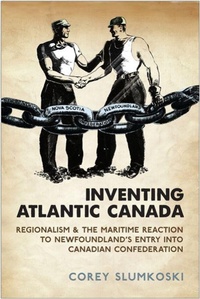
Inventing Atlantic Canada
Regionalism and the Maritime Reaction to Newfoundland's Entry Into Canadian Confederation
Will be published approx. on 30. May 2011
Book
Hardback
224 pages
978-1-4426-4288-1 (ISBN)
Description
When Newfoundland entered the Canadian Confederation in 1949, it was hoped it would promote greater unity between the Maritime provinces, as Term 29 of the Newfoundland Act explicitly linked the region's economic and political fortunes. On the surface, the union seemed like an unprecedented opportunity to resurrect the regional spirit of the Maritime Rights movement of the 1920s, which advocated a cooperative approach to addressing regional underdevelopment. However, Newfoundland's arrival did little at first to bring about a comprehensive Atlantic Canadian regionalism.
Inventing Atlantic Canada is the first book to analyse the reaction of the Maritime provinces to Newfoundland's entry into Confederation. Drawing on editorials, government documents, and political papers, Corey Slumkoski examines how each Maritime province used the addition of a new provincial cousin to fight underdevelopment. Slumkoski also details the rise of regional cooperation characterized by the Atlantic Revolution of the mid-1950s, when Maritime leaders began to realize that by acting in isolation their situations would only worsen.
Inventing Atlantic Canada is the first book to analyse the reaction of the Maritime provinces to Newfoundland's entry into Confederation. Drawing on editorials, government documents, and political papers, Corey Slumkoski examines how each Maritime province used the addition of a new provincial cousin to fight underdevelopment. Slumkoski also details the rise of regional cooperation characterized by the Atlantic Revolution of the mid-1950s, when Maritime leaders began to realize that by acting in isolation their situations would only worsen.
More details
Language
English
Place of publication
Toronto
Canada
Target group
College/higher education
Professional and scholarly
Product notice
sewn/stitched
Cloth over boards
Illustrations
6 b&w tables
Dimensions
Height: 231 mm
Width: 155 mm
Thickness: 23 mm
Weight
431 gr
ISBN-13
978-1-4426-4288-1 (9781442642881)
Copyright in bibliographic data and cover images is held by Nielsen Book Services Limited or by the publishers or by their respective licensors: all rights reserved.
Schweitzer Classification
Person
Corey Slumkoski researches and teaches Canadian and Atlantic Canadian history.
Content
Contents
Introduction
1.Newfoundland-Maritime Connections from Colonization to Confederation
2.A Province Divided: Nova Scotia and Newfoundland's Entry into Confederation
3."... both islands would benefit": Prince Edward Island and
4.Newfoundland's Entry into Confederation
5."... for the general expansion of the economy ...": New Brunswick and
6.Newfoundland's Entry into Confederation
7."...preaching a dangerous gospel": Regional Union and Newfoundland in the 1940s
Epilogue
Bibliography
Introduction
1.Newfoundland-Maritime Connections from Colonization to Confederation
2.A Province Divided: Nova Scotia and Newfoundland's Entry into Confederation
3."... both islands would benefit": Prince Edward Island and
4.Newfoundland's Entry into Confederation
5."... for the general expansion of the economy ...": New Brunswick and
6.Newfoundland's Entry into Confederation
7."...preaching a dangerous gospel": Regional Union and Newfoundland in the 1940s
Epilogue
Bibliography