

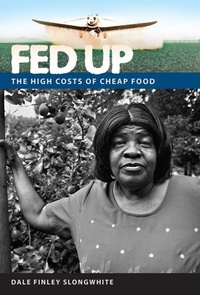
Fed Up
The High Costs of Cheap Food
Will be published approx. on 31. May 2014
Book
Hardback
192 pages
978-0-8130-4984-7 (ISBN)
Description
One farmworker tells of the soil that would "bite" him, but that was the chemi?cals burning his skin. Other labourers developed lupus, asthma, diabetes, kid?ney failure, or suffered myriad symptoms with no clear diagnosis. Some mis?carried or had children with genetic defects while others developed cancer.
In Fed Up, Dale Slongwhite collects the nearly inconceivable and chilling oral histories of African American farmworkers whose lives, and those of their families, were forever altered by one of the most horrific pesticide exposure incidents in United States' history.
For decades, the farms around Lake Apopka, Florida's third largest lake, were sprayed with chemicals ranging from the now-banned DDT to toxa?phene. Among the most productive farmlands in America, the fields were doused with organochlorine pesticides, also known as persistent organic pol?lutants; the once-clear waters of the lake turned pea green; birds, alligators, and fish died at alarming rates; and still the farmworkers planted, harvested, packed, and shipped produce all over the country, enduring scorching sun, snakes, rats, injuries, substandard housing, low wages, and the endocrine dis?ruptors dropped by crop dusters.
Eventually, state and federal dollars were allocated to buy out and close the farms to attempt land restoration, water clean-up, and wildlife rehabilitation. But the farmworkers became statistics, nameless casualty's history almost forgot. Here are their stories, told in their own words.
In Fed Up, Dale Slongwhite collects the nearly inconceivable and chilling oral histories of African American farmworkers whose lives, and those of their families, were forever altered by one of the most horrific pesticide exposure incidents in United States' history.
For decades, the farms around Lake Apopka, Florida's third largest lake, were sprayed with chemicals ranging from the now-banned DDT to toxa?phene. Among the most productive farmlands in America, the fields were doused with organochlorine pesticides, also known as persistent organic pol?lutants; the once-clear waters of the lake turned pea green; birds, alligators, and fish died at alarming rates; and still the farmworkers planted, harvested, packed, and shipped produce all over the country, enduring scorching sun, snakes, rats, injuries, substandard housing, low wages, and the endocrine dis?ruptors dropped by crop dusters.
Eventually, state and federal dollars were allocated to buy out and close the farms to attempt land restoration, water clean-up, and wildlife rehabilitation. But the farmworkers became statistics, nameless casualty's history almost forgot. Here are their stories, told in their own words.
More details
Series
Language
English
Place of publication
Florida
United States
Target group
College/higher education
Professional and scholarly
Product notice
Unsewn / adhesive bound
Paper over boards
With dust jacket
Illustrations
83 black & white photographs, 2 maps
Dimensions
Height: 233 mm
Width: 156 mm
Thickness: 22 mm
Weight
452 gr
ISBN-13
978-0-8130-4984-7 (9780813049847)
Copyright in bibliographic data and cover images is held by Nielsen Book Services Limited or by the publishers or by their respective licensors: all rights reserved.
Schweitzer Classification
Other editions
Additional editions
E-Book
05/2014
1st Edition
University Press of Florida
from
€31.99
Available for download
Person
Dale Finley Slongwhite is a creative writing consultant and freelance writer.