

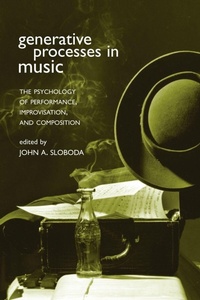
Generative Processes in Music
The Psychology of Performance, Improvisation, and Composition
Published on 11. January 2001
Book
Paperback/Softback
316 pages
978-0-19-850846-5 (ISBN)
Description
Where most of the literature in the psychology of music has focused on the processes involved when listening to music, little has been written about the processes involved in making music. Reissued by popular demand, and for the first time in paperback, Generative Processes: The Psychology of Performance, Improvisation, and Composition brings together leading figures in music psychology to present pioneering studies of the processes by which music is generated. The book looks at the generation of expression in musical performance, the problems of synchrony in ensemble performance, the development of children's song, rehearsal strategies of pianists, improvisational skill in trained and untrained musicians, children's spontaneous notations for music, formal constraints on compositional systems, and compositional strategies of music students. Edited by the leading authority on music psychology, the book will be of great interest to cognitive and developmental psychologists, as well as music educators and musicologists
More details
Language
English
Place of publication
Oxford
United Kingdom
Target group
Professional and scholarly
Illustrations
numerous tables and line figures
Dimensions
Height: 234 mm
Width: 156 mm
Thickness: 17 mm
Weight
488 gr
ISBN-13
978-0-19-850846-5 (9780198508465)
Copyright in bibliographic data and cover images is held by Nielsen Book Services Limited or by the publishers or by their respective licensors: all rights reserved.
Schweitzer Classification
Person
Professor John Sloboda is the leading authority world-wide on the psychology of music. His classic book The Musical mind was published by OUP in 1985, and has been reprinted 15 times.
Content
1. Generative principles in music performance ; 2. Timing in music performance and its relation to music ; 3. Computer synthesis of music performance ; 4. Timing and synchronization in ensemble performance ; 5. Rehearsal skill and musical competence: does practice make perfect? ; 6. Tonal structure and children's early learning of music ; 7. Improvisation: methods and models ; 8. Experimental research into musical generative ability ; 9. Young children's musical representations: windows on music cognition ; 10. Cognitive constraints on compositional systems ; 11. From collections to structure: the developmental path of tonal thinking ; Appendix ; Author index ; Subject index