

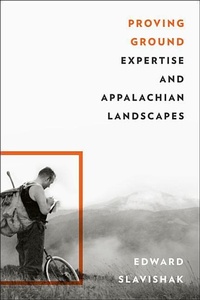
Proving Ground
Expertise and Appalachian Landscapes
Published on 27. July 2018
Book
Hardback
232 pages
978-1-4214-2539-9 (ISBN)
Description
Disrupting the intervenor narrative in Appalachian studies.
The Appalachian Mountains attracted an endless stream of visitors in the twentieth century, each bearing visions of what they would encounter. Well before large numbers of tourists took to the mountains in the latter half of the century, however, networks of missionaries, sociologists, folklorists, doctors, artists, and conservationists made Appalachia their primary site for fieldwork. In Proving Ground, Edward Slavishak studies several of these interlopers to show that the travelers' tales were the foundation of powerful forms of insider knowledge.
Following four individuals and one cohort as they climbed professional ladders via the Appalachian Mountains, Slavishak argues that these visitors represented occupational and recreational groups that used Appalachia to gain precious expertise. Time spent in the mountains, in the guise of work (or play that mimicked work), distinguished travelers as master problem-solvers and transformed Appalachia into a proving ground for preservationists, planners, hikers, anthropologists, and photographers.
Based on archival materials from outdoors clubs, trade journals, field notes, correspondence, National Park Service records, civic promotional materials, and photographs, Proving Ground presents mountain landscapes as a fluid combination of embodied sensation, narrative fantasy, and class privilege. Touching on critical regionalism and mobility studies, this book is a boundary-pushing cultural history of expertise, an environmental history of the Appalachian Mountains, and a historical geography of spaces and places in the twentieth century.
The Appalachian Mountains attracted an endless stream of visitors in the twentieth century, each bearing visions of what they would encounter. Well before large numbers of tourists took to the mountains in the latter half of the century, however, networks of missionaries, sociologists, folklorists, doctors, artists, and conservationists made Appalachia their primary site for fieldwork. In Proving Ground, Edward Slavishak studies several of these interlopers to show that the travelers' tales were the foundation of powerful forms of insider knowledge.
Following four individuals and one cohort as they climbed professional ladders via the Appalachian Mountains, Slavishak argues that these visitors represented occupational and recreational groups that used Appalachia to gain precious expertise. Time spent in the mountains, in the guise of work (or play that mimicked work), distinguished travelers as master problem-solvers and transformed Appalachia into a proving ground for preservationists, planners, hikers, anthropologists, and photographers.
Based on archival materials from outdoors clubs, trade journals, field notes, correspondence, National Park Service records, civic promotional materials, and photographs, Proving Ground presents mountain landscapes as a fluid combination of embodied sensation, narrative fantasy, and class privilege. Touching on critical regionalism and mobility studies, this book is a boundary-pushing cultural history of expertise, an environmental history of the Appalachian Mountains, and a historical geography of spaces and places in the twentieth century.
Reviews / Votes
Proving Ground provides fertile terrain for thinking about the politics of expertise and makes important contributions to intellectual history and Appalachian studies. Slavishak has produced an eloquently written and thought-provoking book.-Sarah Mittlefehldt, Northern Michigan University, Environmental History Eloquently written and prodigiously researched . . . Proving Ground is an intensely interesting story of intersecting perspectives-particularly of place, environment, and culture-that gives "close attention to the messy material of human encounters with landscapes" (p. 13). This provocative book will lead regionalists to examine what made the Appalachian proving ground similar, and different, from other such terrain.
-Chad Berry, Berea College, Journal of American History Exhaustively researched and skillfully composed . . . The most impressive features of Proving Ground are the depth of Slavishak's research into important but relatively unknown personalities and cultural trends, regional and national, and his familiarity with the history and vocabulary of each of several very different professional, aesthetic, academic, and recreational pursuits as practiced within the Appalachians.
-Ricky Cox, Radford University, North Carolina Historical Review Situated at the crossroads of environmental history, critical regionalism, and visual studies, this masterful book synthesizes these fields to assess the approaches of several Appalachian interlopers. Slavishak's case studies of preservationists, planners, hikers, anthropologists, and photographers convincingly demonstrate that specialists proved themselves to their peers by gaining and displaying on-the-ground expertise through formidable, marginalized landscapes . . . Foremost among Slavishak's many fine attributes is his ability to contextualize and analyze . . . a skill he exhibits throughout this diligently researched and elegantly written book, which proves his own expertise in the fertile interdisciplinary ground of Appalachian studies.
-Andrew Crooke, East Stroudsburg University, Journal of Southern History Slavishak throws light on how conceptions of place can be exported and disseminated. And by studying professionals rather than leisure travelers, Slavishak has revealed how and why a heterogeneous group of them accessed seemingly remote corners of Appalachia and sought to carry their experiences out again.
-Laura J. Martin, Williams College, American Historical Review
More details
Language
English
Place of publication
Baltimore, MD
United States
Target group
Professional and scholarly
Illustrations
16 s/w Abbildungen
16 Illustrations, black and white
Dimensions
Height: 236 mm
Width: 156 mm
Thickness: 22 mm
Weight
435 gr
ISBN-13
978-1-4214-2539-9 (9781421425399)
DOI
10.1353/book.58629
Copyright in bibliographic data and cover images is held by Nielsen Book Services Limited or by the publishers or by their respective licensors: all rights reserved.
Schweitzer Classification
Other editions
Additional editions
E-Book
07/2018
Johns Hopkins University Press
€37.99
Available for download
Person
Edward Slavishak is an associate professor of history at Susquehanna University. He is the author of Bodies of Work: Civic Display and Labor in Industrial Pittsburgh.
Content
List of Illustrations
Acknowledgments
Introduction
1. Expert Vision
2. Terrestrial and Human
3. The Stern Grip of Circumstance
4. A Priceless Asset
5. William Gedney and the Look of Coal Country
Conclusion
Notes
Bibliography
Index
Acknowledgments
Introduction
1. Expert Vision
2. Terrestrial and Human
3. The Stern Grip of Circumstance
4. A Priceless Asset
5. William Gedney and the Look of Coal Country
Conclusion
Notes
Bibliography
Index