

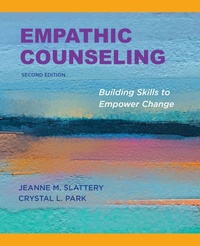
Empathic Counseling
Building Skills to Empower Change, Second Edition, 2020
2nd Edition
Published on 14. January 2020
Book
Paperback/Softback
335 pages
978-1-4338-3122-5 (ISBN)
Description
This is the fully updated second edition teaches the skills therapists need to understand and empathize with clients, develop strong therapeutic alliances, make accurate contextualized assessments, and facilitate positive change.
Empathy is fundamental to therapeutic change. This engaging and accessible text teaches students the clinical skills they will need as therapists to communicate empathy and help clients change. Slattery and Park begin by outlining a framework for understanding how clients think-what meaning they give to difficult situations-and how those meaning systems are connected to cultural and other contextual factors. Chapters that follow discuss how their empathic framework can be factored into assessment, intervention, ending treatment, and even case reporting and ethical concerns. Throughout they emphasize that effective therapists possess not only strong observational, listening, and critical thinking skills, but that they also put their clients amp rsquo worldviews, meaning-making, culture, and change processes at the heart of their practice.
This second edition features new case studies, research, and clinical applications, as well as a streamlined presentation that better mirrors the process of mental health treatment. With extensive case material, reflection questions, and other practical tools, the book will help budding mental health practitioners understand and empathize with a diverse range of clients, develop strong therapeutic alliances, make accurate assessments that reflect clients amp rsquo contexts and worldviews, and facilitate positive change.
Empathy is fundamental to therapeutic change. This engaging and accessible text teaches students the clinical skills they will need as therapists to communicate empathy and help clients change. Slattery and Park begin by outlining a framework for understanding how clients think-what meaning they give to difficult situations-and how those meaning systems are connected to cultural and other contextual factors. Chapters that follow discuss how their empathic framework can be factored into assessment, intervention, ending treatment, and even case reporting and ethical concerns. Throughout they emphasize that effective therapists possess not only strong observational, listening, and critical thinking skills, but that they also put their clients amp rsquo worldviews, meaning-making, culture, and change processes at the heart of their practice.
This second edition features new case studies, research, and clinical applications, as well as a streamlined presentation that better mirrors the process of mental health treatment. With extensive case material, reflection questions, and other practical tools, the book will help budding mental health practitioners understand and empathize with a diverse range of clients, develop strong therapeutic alliances, make accurate assessments that reflect clients amp rsquo contexts and worldviews, and facilitate positive change.
More details
Edition
Second Edition
Language
English
Place of publication
Washington DC
United States
Target group
Children/juvenile
Edition type
New edition
Product notice
Paperback (trade)
Illustrations
many clinical and real-world case examples
Dimensions
Height: 191 mm
Width: 236 mm
Thickness: 20 mm
Weight
646 gr
ISBN-13
978-1-4338-3122-5 (9781433831225)
Copyright in bibliographic data and cover images is held by Nielsen Book Services Limited or by the publishers or by their respective licensors: all rights reserved.
Schweitzer Classification
Persons
Jeanne M. Slattery, PhD, is Professor of Psychology at Clarion University. She is passionate about teaching and helping students learn to become empathic and respectful clinicians. She has also written Trauma, Meaning, and Spirituality: Translating Research into Clinical Practice and Counseling Diverse Clients: Bringing Context into Therapy. She is a licensed psychologist with a small private practice and especially works with adults and children with a history of trauma, and mood and anxiety disorders. She lives in Clarion, Pennsylvania. Visit https://jeannemslattery.wordpress.com.
Crystal L. Park, PhD, is Professor of Clinical Psychology at the University of Connecticut, Storrs. Her research focuses on multiple aspects of coping with stressful events, including the roles of religious beliefs and religious coping, the phenomenon of stress-related growth, yoga, and the making of meaning in the context of traumatic events and life-threatening illnesses, particularly with cancer survivors, congestive heart failure patients, and military veterans. At UConn, she maintains an active research lab and teaches health psychology at both the graduate and undergraduate levels. She lives in the lovely village of Mystic, Connecticut. Visit https://spiritualitymeaningandhealth.uconn.edu.
Crystal L. Park, PhD, is Professor of Clinical Psychology at the University of Connecticut, Storrs. Her research focuses on multiple aspects of coping with stressful events, including the roles of religious beliefs and religious coping, the phenomenon of stress-related growth, yoga, and the making of meaning in the context of traumatic events and life-threatening illnesses, particularly with cancer survivors, congestive heart failure patients, and military veterans. At UConn, she maintains an active research lab and teaches health psychology at both the graduate and undergraduate levels. She lives in the lovely village of Mystic, Connecticut. Visit https://spiritualitymeaningandhealth.uconn.edu.
Content
Preface to the Second Edition
Part I. Introduction to Empathy and the Mental Health Professional
Chapter . What Is Empathy, and Why Does It Matter?
Part II. Building a Framework for Understanding People
Chapter 2. Understanding Meaning Systems
Chapter 3. Understanding Culture, Identity, and Oppression
Part III. Developing Empathic Assessments
Chapter 4. Building the Therapeutic Alliance
Chapter 5. Communicating Empathy Verbally
Chapter . Assessing People in Context
Chapter 7. Thinking Critically to Ensure Accurate Assessments
Part IV. Facilitating Positive Change
Chapter 8. Developing Goals and a Treatment Plan
Chapter 9. Providing Empathic Interventions
Chapter . Ending Treatment
Part V. Professional Issues
Chapter . Ethics
Chapter 2. Writing Empathic Clinical Reports
Chapter 3. Self-Care
References
Glossary
Index
About the Authors
Part I. Introduction to Empathy and the Mental Health Professional
Chapter . What Is Empathy, and Why Does It Matter?
Part II. Building a Framework for Understanding People
Chapter 2. Understanding Meaning Systems
Chapter 3. Understanding Culture, Identity, and Oppression
Part III. Developing Empathic Assessments
Chapter 4. Building the Therapeutic Alliance
Chapter 5. Communicating Empathy Verbally
Chapter . Assessing People in Context
Chapter 7. Thinking Critically to Ensure Accurate Assessments
Part IV. Facilitating Positive Change
Chapter 8. Developing Goals and a Treatment Plan
Chapter 9. Providing Empathic Interventions
Chapter . Ending Treatment
Part V. Professional Issues
Chapter . Ethics
Chapter 2. Writing Empathic Clinical Reports
Chapter 3. Self-Care
References
Glossary
Index
About the Authors