

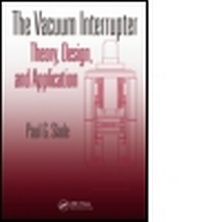
The Vacuum Interrupter
Theory, Design, and Application
1st Edition
Published on 1. November 2007
Book
Hardback
528 pages
978-0-8493-9091-3 (ISBN)
Description
Drawn from the author's more than four decades of practical experience in the industry, The Vacuum Interrupter: Theory, Design, and Application first discusses the design and manufacture of the vacuum interrupter before delving into its general application.
The book begins with a review of the vacuum breakdown process and what to consider when developing a design for a high-voltage application. It then discusses the vacuum arc and how its appearance changes as a function of current. This section concludes with an overview of existing contact materials, a summary of their advantages and disadvantages, an analysis of vacuum interrupter contact design, and considerations for the manufacture of vacuum interrupters. The next section on application describes the interruption process for low- and high-current vacuum arcs, examines the voltage escalation event that occurs if the contact gap is very small at the ac current zero, and explores the phenomenon of contact welding. It also studies the application of vacuum interrupters to switch load currents, circuit breakers, and reclosers.
Owing to the increasing need for environmentally friendly interrupting systems, the development of vacuum interrupters will only intensify over time. With extensive references in each chapter for further exploration, this comprehensive guide provides essential, up-to-date knowledge to fully understand this vital technology.
The book begins with a review of the vacuum breakdown process and what to consider when developing a design for a high-voltage application. It then discusses the vacuum arc and how its appearance changes as a function of current. This section concludes with an overview of existing contact materials, a summary of their advantages and disadvantages, an analysis of vacuum interrupter contact design, and considerations for the manufacture of vacuum interrupters. The next section on application describes the interruption process for low- and high-current vacuum arcs, examines the voltage escalation event that occurs if the contact gap is very small at the ac current zero, and explores the phenomenon of contact welding. It also studies the application of vacuum interrupters to switch load currents, circuit breakers, and reclosers.
Owing to the increasing need for environmentally friendly interrupting systems, the development of vacuum interrupters will only intensify over time. With extensive references in each chapter for further exploration, this comprehensive guide provides essential, up-to-date knowledge to fully understand this vital technology.
Reviews / Votes
"The author has produced a classic book. It contains all the essential background needed for a reader to become well-versed in vacuum interrupter technology and it will be referenced for many years to come . . . Those working in the field of vacuum interrupter design would obviously be interested in this book, and those who perform or are interested in the vacuum arc switching technology would also find it an outstanding book that will be used for many years to come."- In IEEE Electrical Insulation Magazine, January/ February 2009, Vol. 25, No. 1
More details
Language
English
Place of publication
Bosa Roca
United States
Publishing group
Taylor & Francis Inc
Target group
Professional and scholarly
Power, power electronics, electrical, industrial, and mechanical engineers; plasma physicists; materials scientists; vacuum science researchers; and graduate-level students in power engineering.
Illustrations
34 s/w Photographien bzw. Rasterbilder, 438 s/w Abbildungen, 93 s/w Tabellen
290 equations; 34 Halftones, black and white; 93 Tables, black and white; 438 Illustrations, black and white
Dimensions
Height: 254 mm
Width: 178 mm
Weight
1066 gr
ISBN-13
978-0-8493-9091-3 (9780849390913)
Copyright in bibliographic data and cover images is held by Nielsen Book Services Limited or by the publishers or by their respective licensors: all rights reserved.
Schweitzer Classification
Other editions
New editions
Book
11/2020
2nd Edition
CRC Press
€251.10
Shipment within 15-20 days
Person
Eaton Electrical, Horseheads, New York, USA (retired)
Content
PREFACE
INTRODUCTION
VACUUM INTERRUPTER THEORY AND DESIGN
HIGH-VOLTAGE VACUUM INTERRUPTER DESIGN
Introduction
The External Design
Electrical Breakdown in Vacuum
Internal Vacuum Interrupter Design
X-Ray Emission
Arc Initiation When Closing a Vacuum Interrupter
References
THE VACUUM ARC
The Closed Contact
The Formation of the Vacuum Arc during Contact Opening
The Diffuse Vacuum Arc
The Columnar Vacuum Arc
The Transition Vacuum Arc
The Interaction of the Vacuum Arc and a Transverse Magnetic Field
The Vacuum Arc and an Axial Magnetic Field
Overview
References
THE MATERIALS, THE DESIGN, AND THE MANUFACTURE OF THE VACUUM INTERRUPTER
Introduction
Vacuum Interrupter Contact Materials
The Contact Structures for the Vacuum Interrupter
Other Vacuum Interrupter Design Features
Vacuum Interrupter Manufacture
References
VACUUM INTERRUPTER APPLICATION
GENERAL ASPECTS OF VACUUM INTERRUPTER APPLICATION
Introduction
The Interruption of AC Circuits
Interruption of AC Circuits When the Contacts Open Just before Current Zero
Contact Welding
References
APPLICATION OF THE VACUUM INTERRUPTER FOR SWITCHING LOAD CURRENTS
Introduction
Load Current Switching
Switching Inductive Circuits
Vacuum Contactors
Switching Capacitor Circuits
Vacuum Interrupters for Circuit Switching, Circuit Isolation, and Circuit Grounding
Summary
References
CIRCUIT PROTECTION, VACUUM CIRCUIT BREAKERS, AND RECLOSERS
Introduction
Load Currents
Short-Circuit Currents
Late Breakdowns and Nonsustained Disruptive Discharges
Vacuum Circuit Breaker Design
Vacuum Circuit Breaker Testing and Certification
Vacuum Circuit Breakers for Capacitor Switching, Cable and Line Switching, and Motor Switching
Application of Vacuum Circuit Breakers
Concluding Summary
References
AUTHOR INDEX
SUBJECT INDEX
INTRODUCTION
VACUUM INTERRUPTER THEORY AND DESIGN
HIGH-VOLTAGE VACUUM INTERRUPTER DESIGN
Introduction
The External Design
Electrical Breakdown in Vacuum
Internal Vacuum Interrupter Design
X-Ray Emission
Arc Initiation When Closing a Vacuum Interrupter
References
THE VACUUM ARC
The Closed Contact
The Formation of the Vacuum Arc during Contact Opening
The Diffuse Vacuum Arc
The Columnar Vacuum Arc
The Transition Vacuum Arc
The Interaction of the Vacuum Arc and a Transverse Magnetic Field
The Vacuum Arc and an Axial Magnetic Field
Overview
References
THE MATERIALS, THE DESIGN, AND THE MANUFACTURE OF THE VACUUM INTERRUPTER
Introduction
Vacuum Interrupter Contact Materials
The Contact Structures for the Vacuum Interrupter
Other Vacuum Interrupter Design Features
Vacuum Interrupter Manufacture
References
VACUUM INTERRUPTER APPLICATION
GENERAL ASPECTS OF VACUUM INTERRUPTER APPLICATION
Introduction
The Interruption of AC Circuits
Interruption of AC Circuits When the Contacts Open Just before Current Zero
Contact Welding
References
APPLICATION OF THE VACUUM INTERRUPTER FOR SWITCHING LOAD CURRENTS
Introduction
Load Current Switching
Switching Inductive Circuits
Vacuum Contactors
Switching Capacitor Circuits
Vacuum Interrupters for Circuit Switching, Circuit Isolation, and Circuit Grounding
Summary
References
CIRCUIT PROTECTION, VACUUM CIRCUIT BREAKERS, AND RECLOSERS
Introduction
Load Currents
Short-Circuit Currents
Late Breakdowns and Nonsustained Disruptive Discharges
Vacuum Circuit Breaker Design
Vacuum Circuit Breaker Testing and Certification
Vacuum Circuit Breakers for Capacitor Switching, Cable and Line Switching, and Motor Switching
Application of Vacuum Circuit Breakers
Concluding Summary
References
AUTHOR INDEX
SUBJECT INDEX