

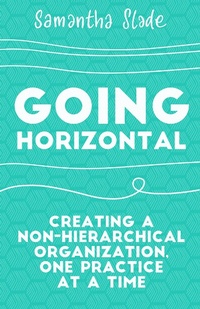
Going Horizontal
Creating a Non-Hierarchical Organization, One Practice at a Time
Published on 27. November 2018
Book
Paperback/Softback
192 pages
978-1-5230-9526-1 (ISBN)
Description
Hierarchy in organizations is obsolete. There is a better way: one that increases the engagement of employees and managers alike, reduces micromanaging and other limiting approaches, and promotes organizational and individual success.
In this book, self-management expert Samantha Slade presents seven concrete practices to help your organization flatten its existing hierarchy and develop a horizontal organization. The result will be enhanced creativity, greater growth, and a increased employee retention and productivity--and a better bottom line.
These days, more than ever, successful organizations must respond quickly and nimbly to change--they need every employee's best thinking. A horizontal organization creates an environment of true collaboration, respect, and openness. It allows everyone more freedom to express unconventional ideas or to work through issues that are getting in the way of organizational goals. And it's a more human way to organize--after all, we function perfectly well in our day-to day lives without someone telling us what to do.
But when an organization decides to go horizontal, it can be overwhelming for both managers and employees. Slade offers a practical, proven, incremental method to help organizations of all kinds and sizes ease in to a non-hierarchical model. She includes techniques for using your organization's purpose to stay focused and aligned, developing shared decision-making, creating a mutual feedback culture, nurturing autonomy, holding co-managed meetings, and maintaining an environment of collective learning.
Going Horizontal will help organizations become more adaptive, collaborative and innovative, which is vital in today's highly competitive and constantly-evolving world.
In this book, self-management expert Samantha Slade presents seven concrete practices to help your organization flatten its existing hierarchy and develop a horizontal organization. The result will be enhanced creativity, greater growth, and a increased employee retention and productivity--and a better bottom line.
These days, more than ever, successful organizations must respond quickly and nimbly to change--they need every employee's best thinking. A horizontal organization creates an environment of true collaboration, respect, and openness. It allows everyone more freedom to express unconventional ideas or to work through issues that are getting in the way of organizational goals. And it's a more human way to organize--after all, we function perfectly well in our day-to day lives without someone telling us what to do.
But when an organization decides to go horizontal, it can be overwhelming for both managers and employees. Slade offers a practical, proven, incremental method to help organizations of all kinds and sizes ease in to a non-hierarchical model. She includes techniques for using your organization's purpose to stay focused and aligned, developing shared decision-making, creating a mutual feedback culture, nurturing autonomy, holding co-managed meetings, and maintaining an environment of collective learning.
Going Horizontal will help organizations become more adaptive, collaborative and innovative, which is vital in today's highly competitive and constantly-evolving world.
More details
Language
English
Place of publication
United States
Product notice
Paperback (trade)
Unsewn / adhesive bound
Dimensions
Height: 216 mm
Width: 139 mm
Thickness: 22 mm
Weight
306 gr
ISBN-13
978-1-5230-9526-1 (9781523095261)
Copyright in bibliographic data and cover images is held by Nielsen Book Services Limited or by the publishers or by their respective licensors: all rights reserved.
Schweitzer Classification
Person
Samantha Slade is the cofounder of Percolab--an international consultancy--and Ecolab, a co-working coop in Montreal. Both organizations are experimental fields for new operational ways, from collaborative general assemblies to self-managing compensation models. Slade has been exploring new collaborative models for twenty-five years, and has worked with departments within the European Union as well as with business teams, city employees, and citizens to develop new ways to work and learn.