

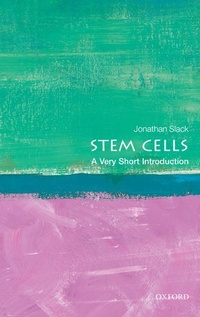
Stem Cells: A Very Short Introduction
Published on 23. February 2012
Book
Paperback/Softback
144 pages
978-0-19-960338-1 (ISBN)
Description
The topic of stem cells has been very high profile in the media in recent years. There is much public interest in stem cells but also much confusion and misinformation, with some companies already offering 'stem cell products' and bogus 'stem cell therapies'. In this Very Short Introduction, Jonathan Slack introduces stem cells; what they are, what scientists do with them, what stem cell therapies are available today, and how they might be used in future.
Despite important advances, clinical applications of stem cells are still in their infancy. Most real stem cell therapy today is some form of bone marrow transplantation. Slack introduces stem cells by explaining the difference between embryonic stem cells, which exist only in laboratory cultures, and tissue-specific stem cells, which exist in our bodies. Embryonic stem cells can become any cell type in the body, so diseases that may in future be treated by functional cells derived from these
sorts of stem cell include diabetes, Parkinson's disease, heart disease, and spinal trauma. He then goes on to discuss the properties of tissue-specific stem cells and the important technique of bone marrow transplantation. Slack concludes by analysing how medical innovation has occurred in this area
in the past, and draws out some of the lessons for the development of new therapies in the future.
ABOUT THE SERIES: The Very Short Introductions series from Oxford University Press contains hundreds of titles in almost every subject area. These pocket-sized books are the perfect way to get ahead in a new subject quickly. Our expert authors combine facts, analysis, perspective, new ideas, and enthusiasm to make interesting and challenging topics highly readable.
Despite important advances, clinical applications of stem cells are still in their infancy. Most real stem cell therapy today is some form of bone marrow transplantation. Slack introduces stem cells by explaining the difference between embryonic stem cells, which exist only in laboratory cultures, and tissue-specific stem cells, which exist in our bodies. Embryonic stem cells can become any cell type in the body, so diseases that may in future be treated by functional cells derived from these
sorts of stem cell include diabetes, Parkinson's disease, heart disease, and spinal trauma. He then goes on to discuss the properties of tissue-specific stem cells and the important technique of bone marrow transplantation. Slack concludes by analysing how medical innovation has occurred in this area
in the past, and draws out some of the lessons for the development of new therapies in the future.
ABOUT THE SERIES: The Very Short Introductions series from Oxford University Press contains hundreds of titles in almost every subject area. These pocket-sized books are the perfect way to get ahead in a new subject quickly. Our expert authors combine facts, analysis, perspective, new ideas, and enthusiasm to make interesting and challenging topics highly readable.
Reviews / Votes
I would recommend this clearly written book to everyone. * Simon McGurk, Nursing Standard *More details
Series
Language
English
Place of publication
Oxford
United Kingdom
Target group
College/higher education
Professional and scholarly
Illustrations
15 black and white illustrations
Dimensions
Height: 172 mm
Width: 115 mm
Thickness: 9 mm
Weight
127 gr
ISBN-13
978-0-19-960338-1 (9780199603381)
Copyright in bibliographic data and cover images is held by Nielsen Book Services Limited or by the publishers or by their respective licensors: all rights reserved.
Schweitzer Classification
Other editions
New editions
Book
09/2021
2nd Edition
Oxford University Press
€13.00
Shipment within 15-20 days
Person
Jonathan Slack is Director of the Stem Cell Institute at the University of Minnesota, USA, and also holds the Tulloch Chair of Stem Cell Biology. His recent research has focused on the mechanisms of regeneration of missing parts, and on methods for inducing the transformation of one tissue type into another by overexpression of specific genes. He has a particular interest in attempting to reprogram other tissue types into pancreatic beta cells, which could be used
for the treatment of some types of diabetes. He has published over 180 research and review papers in scientific journals, and has also written three books, including Essential Developmental Biology (Wiley-Blackwell, 2005), an undergraduate textbook.
for the treatment of some types of diabetes. He has published over 180 research and review papers in scientific journals, and has also written three books, including Essential Developmental Biology (Wiley-Blackwell, 2005), an undergraduate textbook.
Content
PREFACE; GLOSSARY; FURTHER READING