

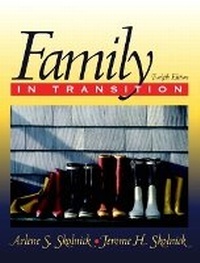
Family in Transition
12th Edition
Published on 28. August 2002
Book
Paperback/Softback
517 pages
978-0-205-35104-6 (ISBN)
Description
This classic reader on families and intimate relationships identifies the most current trends, places them in historical context, and balances cutting-edge scholarship with perennial favorites.
More details
Edition
12th edition
Language
English
Place of publication
United States
Publishing group
Pearson Education (US)
Target group
Professional and scholarly
Dimensions
Height: 235 mm
Width: 178 mm
Thickness: 23 mm
Weight
740 gr
ISBN-13
978-0-205-35104-6 (9780205351046)
Copyright in bibliographic data and cover images is held by Nielsen Book Services Limited or by the publishers or by their respective licensors: all rights reserved.
Schweitzer Classification
Other editions
New editions
Arlene S. Skolnick | Jerome H. Skolnick
Family in Transition
Book
08/2004
13th Edition
Pearson
€75.70
Article exhausted; check for reprint
Previous edition
Arlene S. Skolnick | Jerome H. Skolnick
Family in Transition
Book
04/2001
11th Edition
Pearson
€53.41
Article exhausted; check for reprint
Content
I. THE CHANGING FAMILY.
1. Families Past and Present.
Reading 1. Anthony Giddens, The Global Revolution in Family and Personal Life.
Reading 2. Arlene Skolnick, The Life Course Revolution.
Reading 3. Stephanie Coontz, What We Really Miss About the 1950s.
2. Public Debates and Private Lives.
Reading 4. Sharon Hays, The Mommy Wars.
Reading 5. Janet Giele, The Decline of the Family: Conservative, Liberal and Feminist Views.
Reading 6. Mary Ann Mason, Mark A. Fine and Sarah Carnochan, Family Law in the New Millennium: For Whose Families?
II. THE SEXES.
3. Changing Gender Roles.
Reading 7. Robert M. Jackson, Destined for Equality.
Reading 8. Kathleen Gerson, Children of the Gender Revolution: Some Theoretical Questions and Findings from the Field.
Reading 9. Scott Coltrane and Michele Adams, Mens Family Work: Child-Centered Fathering and the Sharing of Domestic Labor.
4. Sexuality and Society.
Reading 10. Amy T. Schalet, Raging Hormones, Regulated Love: Adolescent Sexuality and the Constitution of the Modern Individual in the United States and the Netherlands.
Reading 11. Julia Ericksen, with Sally A. Steffen, Sex Before Marriage.
5. Courtship and Marriage.
Reading 12. Mary Riege Laner and Nicole A. Ventrone, Dating Scripts Revisited.
Reading 13. Paula Kamen, Modern Marriage: From Meal Ticket to Best Friend.
Reading 14. Kathryn Edin, Few Good Men: Why Poor Mothers Stay Single.
Reading 15. Frank F. Furstenberg, Jr., The Future of Marriage.
6. Divorce and Remarriage.
Reading 16. Karla B. Hackstaff, Divorce Culture: A Quest for Relational Equality in Marriage.
Reading 17. Paul R. Amato, The Consequences of Divorce for Adults and Children.
III. PARENTS AND CHILDREN.
7. Parenthood.
Reading 18. Carolyn P. Cowan and Phillip A. Cowan, Becoming a Parent.
Reading 19. Reed Larson and Maryse H. Richards, Healthy Families: Toward Convergent Realities.
Reading 20. Rosanna Hertz, A Typology of Approaches to Childcare.
Reading 21. Mary Lyndon Shanley, Transracial and Open Adoption.
8. Childhood.
Reading 22. Donald Hernandez, With David E. Myers, Revolution in Children's Lives.
Reading 23. Ellen Galinsky, What Children Think About Their Working Parents.
Reading 24. Andrew J. Cherlin, Going to Extremes: Family Structure, Children's Well-Being, and Social Science.
IV. FAMILIES IN SOCIETY.
9. Work and Family.
Reading 25. Lillian B. Rubin, Families on the Fault Line.
Reading 26. Katherine S. Newman, Family Values Against the Odds.
Reading 27. Cynthia Fuchs Epstein, Carroll Seron, Bonnie Oglensky and Robert Saute, The Family and Part Time-Work.
Reading 28. Kathleen Gerson and Jerry Jacobs, Changing the Structure and Culture of Work: Work and Family Conflict, Work Flexibility, and Gender Equity in the Modern Workplace.
10. Dimensions of Diversity.
Reading 29. Ronald L. Taylor, Diversity Within African-American Families.
Reading 30. Maxine Baca Zinn and Barbara Wells, Diversity Within Latino Families.
Reading 31. Laura Benkov, Reinventing the Family.
Reading 32. Karen Pyke, The Normal American Family as an Interpretive Structure of Family Life Among Grown Children of Korean and Vietnamese Immigrants.
Reading 33. Vern L. Bengtson, Beyond the Nuclear Family: The Increasing Importance of Multigenerational Bonds.
11. Trouble in the Family
Reading 34. Kristin Luker, Why Do They Do It?
Reading 35. Mark R. Rank, Poverty and Economic Hardship in Families.
Reading 36. Michael P. Johnson and Kathleen J. Ferraro, Research on Domestic Violence in the 1990s: Making Distinctions.
1. Families Past and Present.
Reading 1. Anthony Giddens, The Global Revolution in Family and Personal Life.
Reading 2. Arlene Skolnick, The Life Course Revolution.
Reading 3. Stephanie Coontz, What We Really Miss About the 1950s.
2. Public Debates and Private Lives.
Reading 4. Sharon Hays, The Mommy Wars.
Reading 5. Janet Giele, The Decline of the Family: Conservative, Liberal and Feminist Views.
Reading 6. Mary Ann Mason, Mark A. Fine and Sarah Carnochan, Family Law in the New Millennium: For Whose Families?
II. THE SEXES.
3. Changing Gender Roles.
Reading 7. Robert M. Jackson, Destined for Equality.
Reading 8. Kathleen Gerson, Children of the Gender Revolution: Some Theoretical Questions and Findings from the Field.
Reading 9. Scott Coltrane and Michele Adams, Mens Family Work: Child-Centered Fathering and the Sharing of Domestic Labor.
4. Sexuality and Society.
Reading 10. Amy T. Schalet, Raging Hormones, Regulated Love: Adolescent Sexuality and the Constitution of the Modern Individual in the United States and the Netherlands.
Reading 11. Julia Ericksen, with Sally A. Steffen, Sex Before Marriage.
5. Courtship and Marriage.
Reading 12. Mary Riege Laner and Nicole A. Ventrone, Dating Scripts Revisited.
Reading 13. Paula Kamen, Modern Marriage: From Meal Ticket to Best Friend.
Reading 14. Kathryn Edin, Few Good Men: Why Poor Mothers Stay Single.
Reading 15. Frank F. Furstenberg, Jr., The Future of Marriage.
6. Divorce and Remarriage.
Reading 16. Karla B. Hackstaff, Divorce Culture: A Quest for Relational Equality in Marriage.
Reading 17. Paul R. Amato, The Consequences of Divorce for Adults and Children.
III. PARENTS AND CHILDREN.
7. Parenthood.
Reading 18. Carolyn P. Cowan and Phillip A. Cowan, Becoming a Parent.
Reading 19. Reed Larson and Maryse H. Richards, Healthy Families: Toward Convergent Realities.
Reading 20. Rosanna Hertz, A Typology of Approaches to Childcare.
Reading 21. Mary Lyndon Shanley, Transracial and Open Adoption.
8. Childhood.
Reading 22. Donald Hernandez, With David E. Myers, Revolution in Children's Lives.
Reading 23. Ellen Galinsky, What Children Think About Their Working Parents.
Reading 24. Andrew J. Cherlin, Going to Extremes: Family Structure, Children's Well-Being, and Social Science.
IV. FAMILIES IN SOCIETY.
9. Work and Family.
Reading 25. Lillian B. Rubin, Families on the Fault Line.
Reading 26. Katherine S. Newman, Family Values Against the Odds.
Reading 27. Cynthia Fuchs Epstein, Carroll Seron, Bonnie Oglensky and Robert Saute, The Family and Part Time-Work.
Reading 28. Kathleen Gerson and Jerry Jacobs, Changing the Structure and Culture of Work: Work and Family Conflict, Work Flexibility, and Gender Equity in the Modern Workplace.
10. Dimensions of Diversity.
Reading 29. Ronald L. Taylor, Diversity Within African-American Families.
Reading 30. Maxine Baca Zinn and Barbara Wells, Diversity Within Latino Families.
Reading 31. Laura Benkov, Reinventing the Family.
Reading 32. Karen Pyke, The Normal American Family as an Interpretive Structure of Family Life Among Grown Children of Korean and Vietnamese Immigrants.
Reading 33. Vern L. Bengtson, Beyond the Nuclear Family: The Increasing Importance of Multigenerational Bonds.
11. Trouble in the Family
Reading 34. Kristin Luker, Why Do They Do It?
Reading 35. Mark R. Rank, Poverty and Economic Hardship in Families.
Reading 36. Michael P. Johnson and Kathleen J. Ferraro, Research on Domestic Violence in the 1990s: Making Distinctions.