

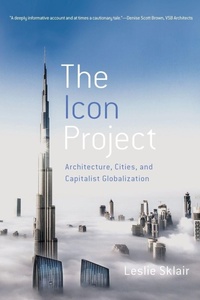
The Icon Project
Architecture, Cities, and Capitalist Globalization
Published on 13. August 2019
Book
Paperback/Softback
346 pages
978-0-19-006838-7 (ISBN)
Description
In the last quarter century, a new form of iconic architecture has appeared throughout the world's major cities. Typically designed by globe-trotting "starchitects" or by a few large transnational architectural firms, these projects are almost always funded by the private sector in the service of private interests. Whereas in the past monumental architecture often had a strong public component, the urban ziggurats of today are emblems and conduits of capitalist globalization.
In The Icon Project, Leslie Sklair focuses on ways in which capitalist globalization is produced and represented all over the world, especially in globalizing cities. Sklair traces how the iconic buildings of our era-elaborate shopping malls, spectacular museums, and vast urban megaprojects--constitute the triumphal "Icon Project" of contemporary global capitalism, promoting increasing inequality and hyperconsumerism. Two of the most significant strains of iconic architecture--unique icons recognized as works of art, designed by the likes of Gehry, Foster, Koolhaas, and Hadid, as well as successful, derivative icons that copy elements of the starchitects' work--speak to the centrality of hyperconsumerism within contemporary capitalism. Along with explaining how the architecture industry organizes the social production and marketing of iconic structures, he also shows how corporations increasingly dominate the built environment and promote the trend towards globalizing, consumerist cities. The Icon Project, Sklair argues, is a weapon in the struggle to solidify capitalist hegemony as well as reinforce transnational capitalist control of where we live, what we consume, and how we think.
In The Icon Project, Leslie Sklair focuses on ways in which capitalist globalization is produced and represented all over the world, especially in globalizing cities. Sklair traces how the iconic buildings of our era-elaborate shopping malls, spectacular museums, and vast urban megaprojects--constitute the triumphal "Icon Project" of contemporary global capitalism, promoting increasing inequality and hyperconsumerism. Two of the most significant strains of iconic architecture--unique icons recognized as works of art, designed by the likes of Gehry, Foster, Koolhaas, and Hadid, as well as successful, derivative icons that copy elements of the starchitects' work--speak to the centrality of hyperconsumerism within contemporary capitalism. Along with explaining how the architecture industry organizes the social production and marketing of iconic structures, he also shows how corporations increasingly dominate the built environment and promote the trend towards globalizing, consumerist cities. The Icon Project, Sklair argues, is a weapon in the struggle to solidify capitalist hegemony as well as reinforce transnational capitalist control of where we live, what we consume, and how we think.
Reviews / Votes
Leslie Sklair has produced an elegantly written, wide-ranging exploration of that over-used and under-examined totem of our times, the icon. The Icon Project deconstructs the seductive image of power that rises from the uneasy depths of transnational capitalism and global consumer culture to symbolize both modern desire and social control-this is a masterful work of political-economic critique and architectural analysis. * Sharon Zukin, author, Naked City: The Death and Life of Authentic Urban Places* This book ought to be required reading for my generation. A great tough survey-crucially from outside the architectural world-which manages to show us the huge shiny, lumpen shape of the transnational development Utopia we've come to accept as inevitable. Most of all, it shows just how even the best architects and architecture have become 'enthusiastic partners' in the global project of turning the whole way we treat the world into a form of development opportunity and corporate entertainment. A gripping read, as well as a very, very scary one. There's never been a bigger need for architects to use all their other skills to think about how to design us out of this place. * Kester Rattenbury, Professor of Architecture, University of Westminster
* ...In this masterfully sweeping survey of the leading architects of our times, some living, some deceased, Sklair dares to situate the undisputed creativity and genius of distinguished architectural icons in the context of capitalist dynamics that sustain and privilege the demand for ever more wildly ambitious designs. With a sociologist's understanding of power and the commercial requisites associated with globalization, a comparative historical appreciation for developmental context, and an activist's social sensibilities clearly on his mind, Leslie Sklair reveals the utopian and dystopian elements of modern design practice. Readers may not fully agree with all his critiques, but they will embrace his search for an alternative aesthetics of urban design and city-building, even as they continue to ponder how individual virtuoso can be disassociated from the larger consumption dynamics that brand architectural projects as iconic. * Diane E. Davis, Harvard Graduate School of Design * Leslie Sklair's sociological perspective on iconic architecture surveys conditions under which it has emerged and the social and political demands to which it responds. This is a deeply informative account and at times a cautionary tale. * Denise Scott Brown, VSB Architects *
More details
Language
English
Place of publication
New York
United States
Target group
Professional and scholarly
Dimensions
Height: 234 mm
Width: 156 mm
Thickness: 19 mm
Weight
526 gr
ISBN-13
978-0-19-006838-7 (9780190068387)
Copyright in bibliographic data and cover images is held by Nielsen Book Services Limited or by the publishers or by their respective licensors: all rights reserved.
Schweitzer Classification
Other editions
Additional editions
Book
04/2017
Oxford University Press Inc
€50.60
Shipment within 15-20 days
E-Book
02/2017
1st Edition
OUP eBook
€9.99
Available for download
E-Book
02/2017
1st Edition
OUP eBook
€9.99
Available for download
Person
Leslie Sklair is Professor Emeritus of Sociology at the London School of Economics. He worked in a cotton mill outside Glasgow for two years before going to university to study sociology and philosophy. Both experiences fostered a life-long interest in how capitalist society works in different ways for different groups of people. In particular his long-standing interest in architecture and cities sharpened his vision on the power of the built environment to shape our lives.
Content
INTRODUCTION
The argument
Sources
Structure of the book
CHAPTER 1
ICONIC ARCHITECTURE AND CAPITALIST GLOBALIZATION
Architecture, Power, Aesthetics
The Icon: history and theory of an idea
Iconic for when
Iconic for whom
Iconic for where
CHAPTER 2
TWO TYPES OF ICONIC ARCHITECTURE: UNIQUE AND TYPICAL
The rise of iconic architecture
Iconicity claims of top firms
Starchitects and signature architects
Architecture theme parks and other iconic projects
CHAPTER 3
THE ARCHITECTURE INDUSTRY AND TYPICAL ICONS
The sociology of architecture
The architecture industry in the new millennium
Successful typical icons
Celebrity infrastructure
CHAPTER 4
CORPORATE STARCHITECTS AND UNIQUE ICONS
Frank Lloyd Wright and the FLW industry
Le Corbusier and the Corb industry
The rise of the starchitects
Frank Gehry
Norman Foster
Rem Koolhaas
Zaha Hadid
CHAPTER 5
THE POLITICS OF ICONIC ARCHITECTURE
Architectural iconicity and identities
Politics and the architecture of transnational social spaces
Iconic architecture in urban megaprojects
Paris
China
CHAPTER 6
ARCHITECTS AS PROFESSIONALS AND IDEOLOGUES
The criticality debate
Third World Modernism and postcolonialisms
Postcolonialist understandings of architecture
Disney, China, and India
Sustainability, human rights, and the architect's place in society
CHAPTER 7
ARCHITECTURE AND THE CULTURE-IDEOLOGY OF CONSUMERISM
Consumerist space in the city of capitalist globalization
Architecture, consumerism, and the media
Iconic architecture and shopping
Performance spaces
Displacement
CHAPTER 8
ARCHITECTURE, CITIES AND ALTERNATIVE GLOBALIZATIONS
APPENDIX Interview codes
BIBLIOGRAPHY
INDEX
The argument
Sources
Structure of the book
CHAPTER 1
ICONIC ARCHITECTURE AND CAPITALIST GLOBALIZATION
Architecture, Power, Aesthetics
The Icon: history and theory of an idea
Iconic for when
Iconic for whom
Iconic for where
CHAPTER 2
TWO TYPES OF ICONIC ARCHITECTURE: UNIQUE AND TYPICAL
The rise of iconic architecture
Iconicity claims of top firms
Starchitects and signature architects
Architecture theme parks and other iconic projects
CHAPTER 3
THE ARCHITECTURE INDUSTRY AND TYPICAL ICONS
The sociology of architecture
The architecture industry in the new millennium
Successful typical icons
Celebrity infrastructure
CHAPTER 4
CORPORATE STARCHITECTS AND UNIQUE ICONS
Frank Lloyd Wright and the FLW industry
Le Corbusier and the Corb industry
The rise of the starchitects
Frank Gehry
Norman Foster
Rem Koolhaas
Zaha Hadid
CHAPTER 5
THE POLITICS OF ICONIC ARCHITECTURE
Architectural iconicity and identities
Politics and the architecture of transnational social spaces
Iconic architecture in urban megaprojects
Paris
China
CHAPTER 6
ARCHITECTS AS PROFESSIONALS AND IDEOLOGUES
The criticality debate
Third World Modernism and postcolonialisms
Postcolonialist understandings of architecture
Disney, China, and India
Sustainability, human rights, and the architect's place in society
CHAPTER 7
ARCHITECTURE AND THE CULTURE-IDEOLOGY OF CONSUMERISM
Consumerist space in the city of capitalist globalization
Architecture, consumerism, and the media
Iconic architecture and shopping
Performance spaces
Displacement
CHAPTER 8
ARCHITECTURE, CITIES AND ALTERNATIVE GLOBALIZATIONS
APPENDIX Interview codes
BIBLIOGRAPHY
INDEX