

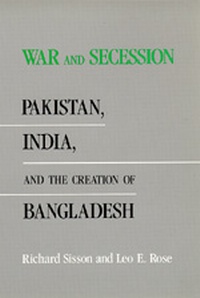
War and Secession
Pakistan, India, and the Creation of Bangladesh
1st Edition
Will be published approx. on 13. August 1991
Book
Paperback/Softback
350 pages
978-0-520-07665-5 (ISBN)
Description
A decade after the 1971 wars in South Asia, the principal decisionmakers were still uncertain why wars so clearly unwanted had occurred. The authors reconstruct the complex decisionmaking process attending the break-up of Pakistan and the subsequent war between India and Pakistan. Much of their data derive from interviews conducted with principal players in each of the countries immediately involved - Pakistan, India, and Bangladesh - including Indira Gandhi and leaders of the Awami League in Bangladesh.
More details
Edition
First Edition
Language
English
Place of publication
Berkerley
United States
Target group
College/higher education
Professional and scholarly
Product notice
Paperback (trade)
Illustrations
1 frontisp.
Dimensions
Height: 234 mm
Width: 156 mm
Thickness: 23 mm
Weight
499 gr
ISBN-13
978-0-520-07665-5 (9780520076655)
Copyright in bibliographic data and cover images is held by Nielsen Book Services Limited or by the publishers or by their respective licensors: all rights reserved.
Schweitzer Classification
Other editions
Additional editions
E-Book
04/2023
1st Edition
Naval Institute Press
€32.99
Available for download
Persons
Richard Sisson is Professor of Political Science at the University of California, Los Angeles. Leo Rose is Adjunct Professor of Political Science at the University of California, Berkeley.
Content
Preface
List of Abbreviations
1. Prologue and Overview
2. Pakistani Politics: Image and Legacy
Regionalism, Political Fragmentation, and Distrust
Populism and the Demise of the Ayub Regime
Designing the Transfer of Power
The Two Election Campaigns, 1970
3? Indo-Pakistani Relations: Image and Legacy
Indo-Pakistani Relations, 1947-1970
A Legacy of Misperception
The International Dimension
Strategies of Coping and Exploiting
4? A Culture of Distrust
Testing and Preparation for Negotiation
Political Fears and Strategies of Polarization
Preparation for Military Action
5? Crisis Bargaining
Reaction and Redeployment
The Government's Concession
Stratagems in the West
A New Context
6. Constitutional Consensus and Civil War
Preliminary Talks between Yahya Khan and Sheikh Mujib
Toward a Constitutional Settlement
The Ascendancy of the Army
7? The Indian Response
The Foreign Policy Decision-Making Process in India, 1971
From Concern to Crisis
8. Pakistan, 25 March-October 1971
The "Military Solution According to Plan"
After the Crisis
Toward a Political Settlement
Elections as a Measure of Support
9? India and the Prelude to War, June-October 1971
The Refugee Issue and Domestic Politics
India and the Bangladesh Government in Exile
Mobilizing International Support
Differences with the United States
The Soviet Role from New Delhi's Perspective
India and the Other "Concerned" Powers
10. War: India
Military Tactics
The Campaign
International Reaction
11. War: Pakistan
Obsession with India
A Strategy of Constraint
The War That Wouldn't Happen
The Decision on War
The Decision to Surrender
The Transfer of Power
12. Soviet, Chinese, and American Policies in the 1971 Crisis
The Soviet Union
China
The United States
13? Interpretations
Negotiation and Civil War
International Conflict, War, and Secession
Notes
Participants Interviewed
Select Bibliography
Index
List of Abbreviations
1. Prologue and Overview
2. Pakistani Politics: Image and Legacy
Regionalism, Political Fragmentation, and Distrust
Populism and the Demise of the Ayub Regime
Designing the Transfer of Power
The Two Election Campaigns, 1970
3? Indo-Pakistani Relations: Image and Legacy
Indo-Pakistani Relations, 1947-1970
A Legacy of Misperception
The International Dimension
Strategies of Coping and Exploiting
4? A Culture of Distrust
Testing and Preparation for Negotiation
Political Fears and Strategies of Polarization
Preparation for Military Action
5? Crisis Bargaining
Reaction and Redeployment
The Government's Concession
Stratagems in the West
A New Context
6. Constitutional Consensus and Civil War
Preliminary Talks between Yahya Khan and Sheikh Mujib
Toward a Constitutional Settlement
The Ascendancy of the Army
7? The Indian Response
The Foreign Policy Decision-Making Process in India, 1971
From Concern to Crisis
8. Pakistan, 25 March-October 1971
The "Military Solution According to Plan"
After the Crisis
Toward a Political Settlement
Elections as a Measure of Support
9? India and the Prelude to War, June-October 1971
The Refugee Issue and Domestic Politics
India and the Bangladesh Government in Exile
Mobilizing International Support
Differences with the United States
The Soviet Role from New Delhi's Perspective
India and the Other "Concerned" Powers
10. War: India
Military Tactics
The Campaign
International Reaction
11. War: Pakistan
Obsession with India
A Strategy of Constraint
The War That Wouldn't Happen
The Decision on War
The Decision to Surrender
The Transfer of Power
12. Soviet, Chinese, and American Policies in the 1971 Crisis
The Soviet Union
China
The United States
13? Interpretations
Negotiation and Civil War
International Conflict, War, and Secession
Notes
Participants Interviewed
Select Bibliography
Index