

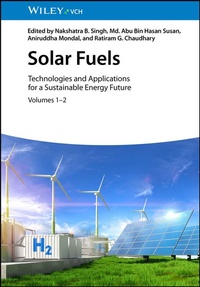
Solar Fuels
Technologies and Applications for a Sustainable Energy Future 2V Set
1st Edition
Will be published approx. on 5. August 2026
Book
Hardback
800 pages
978-3-527-35597-6 (ISBN)
Description
"Solar Fuels" is a comprehensive handbook that reviews the principles and technologies behind solar fuel production. It covers a wide range of topics, including photochemistry, catalysis, nanotechnology, hydrogen production, and carbon-based solar fuels. The book stands out by addressing critical aspects such as grid stability, industrial applications, and the role of artificial intelligence in solar fuel development. It is an essential resource for researchers, policymakers, and energy professionals committed to clean energy transition.
More details
Persons
N. B. Singh, PhD, is Emeritus Professor at Sharda University, India, with extensive experience in materials science and energy. He has authored six books, edited six others, and published over 340 research articles.
Md. Bin Hasan Susan, PhD, is Professor of Chemistry and Director of the Nanotechnology Centre at Dhaka University, Bangladesh. He has published 227 articles, including 37 book chapters, and received numerous awards.
Aniruddha Mondal, PhD, is a Research Scientist in Material Chemistry at Lulea University of Technology, Sweden. He has authored over 50 high-impact publications and contributed to two patents.
Ratiram G. Chaudhary, PhD, is Associate Professor and Head of the Post Graduate Department of Chemistry at Seth Kesarimal Porwal College, India. He has published 110 research articles and 35 book chapters.
Md. Bin Hasan Susan, PhD, is Professor of Chemistry and Director of the Nanotechnology Centre at Dhaka University, Bangladesh. He has published 227 articles, including 37 book chapters, and received numerous awards.
Aniruddha Mondal, PhD, is a Research Scientist in Material Chemistry at Lulea University of Technology, Sweden. He has authored over 50 high-impact publications and contributed to two patents.
Ratiram G. Chaudhary, PhD, is Associate Professor and Head of the Post Graduate Department of Chemistry at Seth Kesarimal Porwal College, India. He has published 110 research articles and 35 book chapters.
Content
Volume 1
Part I. Principles and Technologies of Solar Fuel Generation
1. Introduction: Global Energy Challenges and Need for Solar Innovations
2. Principles and Potential of Solar Energy
3. Photochemistry and Energy Conversion
4. Solar Fuels in the Transition to Clean Energy
5. Photovoltaics vs. Solar Fuels: Complementary Technologies
6. Electrochemical Fundamentals: Catalysis and Charge Transfer
7. Materials for Solar Energy Harvesting: Advances and Challenges
8. Organic Solar Cells: Principles, Materials and Working Mechanism
9. The Role of Nanotechnology in Solar Fuel Innovations
10. Hydrogen from Sunlight: The Path to a Hydrogen Economy
11. Carbon-Based Solar Fuels: Methanol, Ethanol, and Beyond
12. Solar Ammonia: Revolutionizing Agriculture and Energy
13. Thermochemical Methods for Solar Fuel Generation
14. Electrolysis and Solar Water Splitting: Technologies at the Forefront
Volume 2
Part II. Applications and Economics of Solar Fuel Technologies
15. Solar Fuels in Transportation: A Sustainable Future for Mobility
16. Powering Industries with Solar Fuels: Opportunities and Challenges
17. Solar Fuels for Grid Stability and Energy Storage
18. Economic Viability: Cost Comparisons with Conventional Fuels
19. Policy and Incentives for Solar Fuel Adoption
20. Environmental Impact and Sustainability of Solar Fuels
21. Advances in Solar-to-Fuel Conversion Efficiency
22. The Role of Artificial Intelligence in Solar Fuel Development
23. Advancing Solar Fuel Technologies: A Systematic Analysis of Public Perception
24. Hybrid Systems: Combining Solar Fuels with Other Clean Energy Technologies
25. The Future of Solar Fuels: Technological and Scientific Frontiers
26. Solar-Driven Global Energy System: A Strategic Roadmap
Part I. Principles and Technologies of Solar Fuel Generation
1. Introduction: Global Energy Challenges and Need for Solar Innovations
2. Principles and Potential of Solar Energy
3. Photochemistry and Energy Conversion
4. Solar Fuels in the Transition to Clean Energy
5. Photovoltaics vs. Solar Fuels: Complementary Technologies
6. Electrochemical Fundamentals: Catalysis and Charge Transfer
7. Materials for Solar Energy Harvesting: Advances and Challenges
8. Organic Solar Cells: Principles, Materials and Working Mechanism
9. The Role of Nanotechnology in Solar Fuel Innovations
10. Hydrogen from Sunlight: The Path to a Hydrogen Economy
11. Carbon-Based Solar Fuels: Methanol, Ethanol, and Beyond
12. Solar Ammonia: Revolutionizing Agriculture and Energy
13. Thermochemical Methods for Solar Fuel Generation
14. Electrolysis and Solar Water Splitting: Technologies at the Forefront
Volume 2
Part II. Applications and Economics of Solar Fuel Technologies
15. Solar Fuels in Transportation: A Sustainable Future for Mobility
16. Powering Industries with Solar Fuels: Opportunities and Challenges
17. Solar Fuels for Grid Stability and Energy Storage
18. Economic Viability: Cost Comparisons with Conventional Fuels
19. Policy and Incentives for Solar Fuel Adoption
20. Environmental Impact and Sustainability of Solar Fuels
21. Advances in Solar-to-Fuel Conversion Efficiency
22. The Role of Artificial Intelligence in Solar Fuel Development
23. Advancing Solar Fuel Technologies: A Systematic Analysis of Public Perception
24. Hybrid Systems: Combining Solar Fuels with Other Clean Energy Technologies
25. The Future of Solar Fuels: Technological and Scientific Frontiers
26. Solar-Driven Global Energy System: A Strategic Roadmap