

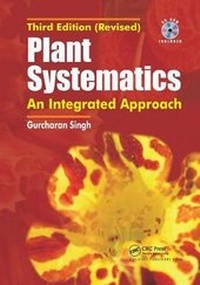
Plant Systematics
An Integrated Approach, Third Edition
3rd Edition
Published on 21. March 2018
Book
Hardback
756 pages
978-1-138-40766-4 (ISBN)
Description
The focus of the present edition has been to further consolidate the information on the principles of plant systematic, include detailed discussion on all major systems of classification, and significantly, also include discussion on the selected families of vascular plants, without sacrificing the discussion on basic principles. The families included for discussion are largely those which have wide representation, as also those that are less known but significant in evaluating the phylogeny of angiosperms. The discussion of the families also has a considerable focus on their phylogenetic relationships, as evidenced by recent cladistic studies, with liberal citation of molecular data. Several additional families have been included for detailed discussion in the present volume.
More details
Edition
3rd New edition
Language
English
Place of publication
London
United Kingdom
Publishing group
Taylor & Francis Ltd
Target group
College/higher education
Edition type
New edition
Dimensions
Height: 229 mm
Width: 152 mm
Weight
1542 gr
ISBN-13
978-1-138-40766-4 (9781138407664)
Copyright in bibliographic data and cover images is held by Nielsen Book Services Limited or by the publishers or by their respective licensors: all rights reserved.
Schweitzer Classification
Other editions
New editions
Book
06/2019
4th Edition
CRC Press
€311.70
Shipment within 15-20 days
Additional editions
Book
01/2010
3rd Edition
Science Publishers,U.S.
€90.55
Shipment within 3-4 weeks
Content
<P>Preface</P><B>
<P>PLANTS, TAXONOMY AND SYSTEMATICS</P></B><I>
<P>Plants and Kingdoms of Life</P>
<P>Taxonomy and Systematics</P></I><B>
<P>BOTANICAL NOMENCLATURE</P></B><I>
<P>Need for Scientific names</P>
<P>Development of Botanical Code</P>
<P>Contents of Botanical Code</P>
<P>Unified Biological Nomenclature</P></I><B>
<P>HIERARCHICAL CLASSIFICATION</P></B><I>
<P>Taxonomic groups, categories and ranks</P>
<P>Utilization of categories</P></I><B>
<P>DESCRIPTIVE TERMINOLOGY</P></B><I>
<P>Habit and life span</P>
<P>Habitat</P>
<P>Roots</P>
<P>Stems</P>
<P>Leaves</P>
<P>Inflorescence</P>
<P>Flower</P>
<P>Fruit</P>
<P>Floral formula</P>
<P>Floral diagram</P></I><B>
<P>PROCESS OF IDENTIFICATION</P></B><I>
<P>Specimen preparation</P>
<P>Herbarium methods</P>
<P>Identification methods</P></I><B>
<P>VARIATION, BIOSYSTEMATICS, POPULATION GENETICS AND EVOLUTION</P></B><I>
<P>Types of variation</P>
<P>Variance analysis</P>
<P>Reproductive systems</P>
<P>Population genetics</P>
<P>Evolution</P></I><B>
<P>TAXONOMIC EVIDENCE</P></B><I>
<P>Morphology</P>
<P>Anatomy</P>
<P>Embryology</P>
<P>Palynology</P>
<P>Micromorphology and Ultrastructure</P>
<P>Chromosomes</P>
<P>Chemotaxonomy</P>
<P>Molecular systematics</P></I><B>
<P>DEVELOPING CLASSIFICATIONS</P></B><I>
<P>Phenetic methods</P>
<P>Cladistic methods</P>
<P>Phylogenetic data analysis</P></I><B>
<P>PHYLOGENY OF ANGIOSPERMS</P></B><I>
<P>Origin of Angiosperms</P>
<P>Basal living angiosperms</P>
<P>Evolutionary trends</P></I><B>
<P>SYSTEMS OF CLASSIFICATION</P></B><I>
<P>Classifications based on gross morphology</P>
<P>Sexual System</P>
<P>Natural Systems</P>
<P>Phylogenetic Systems</P></I><B>
<P>FAMILIES OF PTERIDOPHYTES</P></B><I>
<P>Lycopodiophtes</P>
<P>Psilopsida</P>
<P>Equisetopsida</P>
<P>Pteropsida</P></I><B>
<P>FAMILIES OF GYMNOSPERMS</P></B><I>
<P>Cycadales</P>
<P>Ginkgoales</P>
<P>Coniferales</P>
<P>Gnetales</P></I><B>
<P>MAJOR FAMILIES OF ANGIOSPERMS</P></B><I>
<P>Angiosperms roll of honour</P>
<P>Chloranthidae</P>
<P>Magnoliidae</P>
<P>Alismatidae</P>
<P>Liliidae</P>
<P>Commelinidae</P>
<P>Ranunculidae</P>
<P>Hamamelididae</P>
<P>Caryophyllidae</P>
<P>Rosidae</P>
<P>Malvidae</P>
<P>Asteridae</P>
<P>Lamiidae</P></I><B>
<P>REFERENCES</P>
<P>INDEX</P></B>
<P>PLANTS, TAXONOMY AND SYSTEMATICS</P></B><I>
<P>Plants and Kingdoms of Life</P>
<P>Taxonomy and Systematics</P></I><B>
<P>BOTANICAL NOMENCLATURE</P></B><I>
<P>Need for Scientific names</P>
<P>Development of Botanical Code</P>
<P>Contents of Botanical Code</P>
<P>Unified Biological Nomenclature</P></I><B>
<P>HIERARCHICAL CLASSIFICATION</P></B><I>
<P>Taxonomic groups, categories and ranks</P>
<P>Utilization of categories</P></I><B>
<P>DESCRIPTIVE TERMINOLOGY</P></B><I>
<P>Habit and life span</P>
<P>Habitat</P>
<P>Roots</P>
<P>Stems</P>
<P>Leaves</P>
<P>Inflorescence</P>
<P>Flower</P>
<P>Fruit</P>
<P>Floral formula</P>
<P>Floral diagram</P></I><B>
<P>PROCESS OF IDENTIFICATION</P></B><I>
<P>Specimen preparation</P>
<P>Herbarium methods</P>
<P>Identification methods</P></I><B>
<P>VARIATION, BIOSYSTEMATICS, POPULATION GENETICS AND EVOLUTION</P></B><I>
<P>Types of variation</P>
<P>Variance analysis</P>
<P>Reproductive systems</P>
<P>Population genetics</P>
<P>Evolution</P></I><B>
<P>TAXONOMIC EVIDENCE</P></B><I>
<P>Morphology</P>
<P>Anatomy</P>
<P>Embryology</P>
<P>Palynology</P>
<P>Micromorphology and Ultrastructure</P>
<P>Chromosomes</P>
<P>Chemotaxonomy</P>
<P>Molecular systematics</P></I><B>
<P>DEVELOPING CLASSIFICATIONS</P></B><I>
<P>Phenetic methods</P>
<P>Cladistic methods</P>
<P>Phylogenetic data analysis</P></I><B>
<P>PHYLOGENY OF ANGIOSPERMS</P></B><I>
<P>Origin of Angiosperms</P>
<P>Basal living angiosperms</P>
<P>Evolutionary trends</P></I><B>
<P>SYSTEMS OF CLASSIFICATION</P></B><I>
<P>Classifications based on gross morphology</P>
<P>Sexual System</P>
<P>Natural Systems</P>
<P>Phylogenetic Systems</P></I><B>
<P>FAMILIES OF PTERIDOPHYTES</P></B><I>
<P>Lycopodiophtes</P>
<P>Psilopsida</P>
<P>Equisetopsida</P>
<P>Pteropsida</P></I><B>
<P>FAMILIES OF GYMNOSPERMS</P></B><I>
<P>Cycadales</P>
<P>Ginkgoales</P>
<P>Coniferales</P>
<P>Gnetales</P></I><B>
<P>MAJOR FAMILIES OF ANGIOSPERMS</P></B><I>
<P>Angiosperms roll of honour</P>
<P>Chloranthidae</P>
<P>Magnoliidae</P>
<P>Alismatidae</P>
<P>Liliidae</P>
<P>Commelinidae</P>
<P>Ranunculidae</P>
<P>Hamamelididae</P>
<P>Caryophyllidae</P>
<P>Rosidae</P>
<P>Malvidae</P>
<P>Asteridae</P>
<P>Lamiidae</P></I><B>
<P>REFERENCES</P>
<P>INDEX</P></B>