

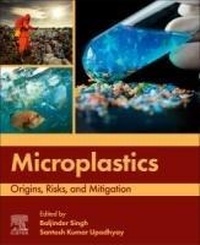
Microplastics
Origins, Risks, and Mitigation
Published on 18. October 2024
Book
Paperback/Softback
582 pages
978-0-443-29804-2 (ISBN)
Description
Microplastics: Origins, Risks, and Mitigation discusses the sources, origin, and health risk assessment of microplastics in the environment. The various contamination indices, like contamination factor, atmospheric behavior, enrichment factor, and marine pollution are also included to provide further context on the state of microplastics in the environment and environmental impacts. The book present reviews on microplastics toxicology research, health hazards, and green remedial solutions for pollution control in terrestrial and aquatic environments, aiming to provide scientists and researchers with the knowledge to combat microplastic pollutants through sustainable means.
Covering a variety of approaches, techniques, and scenarios, this book is a key resource for environmental scientists working to address microplastic environmental pollutants. It presents reviews on microplastics toxicology research, health hazards, and green remedial solutions for pollution control in terrestrial and aquatic environments.
Covering a variety of approaches, techniques, and scenarios, this book is a key resource for environmental scientists working to address microplastic environmental pollutants. It presents reviews on microplastics toxicology research, health hazards, and green remedial solutions for pollution control in terrestrial and aquatic environments.
More details
Language
English
Place of publication
Philadelphia
United States
Target group
Professional and scholarly
Product notice
Paperback (trade)
Unsewn / adhesive bound
Dimensions
Height: 236 mm
Width: 188 mm
Thickness: 36 mm
Weight
1116 gr
ISBN-13
978-0-443-29804-2 (9780443298042)
Copyright in bibliographic data and cover images is held by Nielsen Book Services Limited or by the publishers or by their respective licensors: all rights reserved.
Schweitzer Classification
Other editions
Additional editions
E-Book
10/2024
Elsevier
€142.00
Available for download
Persons
Dr. Baljinder Singh is working as an Associate Professor, Department of Biochemistry, Central University of Punjab, Bathinda, India. He perused his master's degrees in biotechnology from Punjabi University, Patiala. He completed his Ph.D. from Panjab University, Chandigarh. His research has focused primarily on Applied microbial and plant Biotechnology and Environmental Biotechnology with main emphasis on microbial remediation of pollutants, Biofuel production, and Effluent treatment technology, microplastic contamination in soil and its effect on plants. He has published nearly 53 articles/review papers in journals/books of international repute. He delivered several invited lectures in the institutes of national repute. He had enveloped e-content and delivered seven modules (Lectures) in the field of Environmental Nanotechnology for the paper NanoBiotechnology, under epgPathshala project of MHRD, Govt. of India.
Dr. Upadhyay is an Assistant Professor in the Department of Botany at Panjab University, India, with over 16 years of experience in Plant Science. His research focuses on green synthesis of ZnO nanoparticles, carbon nanotubes, and key defense-related proteins, as well as long non-coding RNAs involved in stress responses. He has made significant contributions to plant defense and genome editing research. Dr. Upadhyay has received prestigious awards including the INSA Associate Fellowship and the INSA Medal for Young Scientist. He also serves on editorial boards and as a reviewer for several international journals.
Dr. Upadhyay is an Assistant Professor in the Department of Botany at Panjab University, India, with over 16 years of experience in Plant Science. His research focuses on green synthesis of ZnO nanoparticles, carbon nanotubes, and key defense-related proteins, as well as long non-coding RNAs involved in stress responses. He has made significant contributions to plant defense and genome editing research. Dr. Upadhyay has received prestigious awards including the INSA Associate Fellowship and the INSA Medal for Young Scientist. He also serves on editorial boards and as a reviewer for several international journals.
Content
Section I Introduction
Chapter 1: Microplastics contamination in soil, water, air, and environmental health risk assessment
Chapter 2: Microplastics in the food chain
Section II Microplastics interactions with terrestrial environment and aquatic environment
Chapter 3: Toxic effects of micro and nanoplastics on living system and
recent advances in understanding their degradation route
Chapter 4: Microplastics in soil-uptake, fate, transport, and effect on the growth of plants
Chapter 5: Microplastics: toxicity and tolerance in plants
Chapter 6: Effect of microplastics on the biochemistry of plant
Chapter 7: Microplastics in the atmosphere: transportation and impact on humans
Chapter 8: Microplastics contamination in marine system
Chapter 9: Microplastics toxicity in aquatic animals
Chapter 10: Effects of microplastics on coastal planktonic community
Section III Microplastics contaminations: Recent advances and future prospective
Chapter 11: Conventional and advanced management techniques and policies adopted at the global level for microplastics
Chapter 12: Microplastics and toxic leachate from littered cigarette butts threaten the environment, biodiversity, and human well-being
Chapter 13: Challenges associated with preventive measures and environmentally acceptable techniques to control microplastics
Chapter 14: Future trends that can be used for MP removals
Chapter 15: Bioplastics/biodegradable plastics: a sustainable approach to plastic and their waste management
Chapter 16: Microplastics: impact on marine animals and their remediation strategies
Chapter 17: Effect of microplastics on seed storage proteins of plants
Chapter 18: Various conventional and advanced management techniques and policies adopted at the global level for microplastics
Chapter 19: Challenges associated with preventive measures and environmentally acceptable techniques to control microplastics
Chapter 20: Microplastics occurrence, contamination, and effects on human health-a critical review
Chapter 21: Impact of microplastics on economic condition in underdeveloped nations
Chapter 22: Chemical, physical, and biological techniques to remove microplastics
Chapter 1: Microplastics contamination in soil, water, air, and environmental health risk assessment
Chapter 2: Microplastics in the food chain
Section II Microplastics interactions with terrestrial environment and aquatic environment
Chapter 3: Toxic effects of micro and nanoplastics on living system and
recent advances in understanding their degradation route
Chapter 4: Microplastics in soil-uptake, fate, transport, and effect on the growth of plants
Chapter 5: Microplastics: toxicity and tolerance in plants
Chapter 6: Effect of microplastics on the biochemistry of plant
Chapter 7: Microplastics in the atmosphere: transportation and impact on humans
Chapter 8: Microplastics contamination in marine system
Chapter 9: Microplastics toxicity in aquatic animals
Chapter 10: Effects of microplastics on coastal planktonic community
Section III Microplastics contaminations: Recent advances and future prospective
Chapter 11: Conventional and advanced management techniques and policies adopted at the global level for microplastics
Chapter 12: Microplastics and toxic leachate from littered cigarette butts threaten the environment, biodiversity, and human well-being
Chapter 13: Challenges associated with preventive measures and environmentally acceptable techniques to control microplastics
Chapter 14: Future trends that can be used for MP removals
Chapter 15: Bioplastics/biodegradable plastics: a sustainable approach to plastic and their waste management
Chapter 16: Microplastics: impact on marine animals and their remediation strategies
Chapter 17: Effect of microplastics on seed storage proteins of plants
Chapter 18: Various conventional and advanced management techniques and policies adopted at the global level for microplastics
Chapter 19: Challenges associated with preventive measures and environmentally acceptable techniques to control microplastics
Chapter 20: Microplastics occurrence, contamination, and effects on human health-a critical review
Chapter 21: Impact of microplastics on economic condition in underdeveloped nations
Chapter 22: Chemical, physical, and biological techniques to remove microplastics