

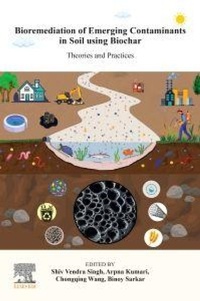
Bioremediation of Emerging Contaminants in Soil using Biochar
Theories and Practices
Will be published approx. on 1. October 2026
Book
Paperback/Softback
350 pages
978-0-443-27656-9 (ISBN)
Description
Bioremediation of Emerging Contaminants from Soil using Biochar: Theory and Practices covers the pressing issue of contaminants of emerging concern (CEC) in the soil ecosystem, emphasizing the threat they pose to environmental health. With a focus on pollutants like microplastic compounds, phenols, pharmaceuticals, heavy metals, and more, the book explores the use of biochar as a cost-effective and efficient solution for soil remediation. It highlights the importance of surface modified nanobiochar and other innovative approaches in tackling these pollutants effectively. The TOC includes sections on the occurrence and fates of contaminants in soil, agroecological consequences, recent advancements in biochar production, and more.
Chapters cover topics such as biochar-assisted removal of micro/nano plastics, decontamination of personal care products, and phyto-remediation of contaminants. Future prospects and challenges in biochar-led remediation are also discussed, making it a comprehensive resource for those interested in environmental cleanup technologies. This edited book will be valuable for undergraduates, postgraduates, researchers, and professors exploring biochar applications in bioremediation. It offers insights into high-quality biochar production and its role in remediating soil and aqueous ecosystems, particularly in addressing emerging contaminants and heavy metals.
Chapters cover topics such as biochar-assisted removal of micro/nano plastics, decontamination of personal care products, and phyto-remediation of contaminants. Future prospects and challenges in biochar-led remediation are also discussed, making it a comprehensive resource for those interested in environmental cleanup technologies. This edited book will be valuable for undergraduates, postgraduates, researchers, and professors exploring biochar applications in bioremediation. It offers insights into high-quality biochar production and its role in remediating soil and aqueous ecosystems, particularly in addressing emerging contaminants and heavy metals.
More details
Language
English
Place of publication
Philadelphia
United States
Target group
Professional and scholarly
Product notice
Paperback (trade)
Unsewn / adhesive bound
Dimensions
Height: 229 mm
Width: 152 mm
Weight
449 gr
ISBN-13
978-0-443-27656-9 (9780443276569)
Copyright in bibliographic data and cover images is held by Nielsen Book Services Limited or by the publishers or by their respective licensors: all rights reserved.
Schweitzer Classification
Persons
Dr. Shiv Vendra Singh (M.Sc. (Ag.) in Agronomy from N.D. University of Agriculture & Technology, Ayodhya, India. doctoral degree in Agronomy from G.B. Pant University of Agriculture and Technology, Pantnagar, Uttarakhand, India) is an assistant professor at Graphic Era Hill University, Dehradun, India. He has research experience in the field of biochar based nitrogenous fertilizers production, biochar enrichment, soil quality enhancement, carbon sequestration, GHGs emission and carbon footprint mitigation under biochar-based rice-wheat production system. Besides, he has received the reputed awards and fellowships from state and national agencies (e.g., Vice-Chancellor Gold Medal, NDUAT, Ayodhya; INSPIRE Fellowship, DST, GOI; Prize in National Essay Writing on Waste to Wealth by Ministry of Agriculture and Farmers Welfare, GOI; Young Scientist Award, UCOST-Uttarakhand State Science & Technology Council, Uttarakhand; Student Excellence Award, GBPUAT, Pantnagar, INDIA). Dr. Arpna Kumari is working as a Senior Researcher in the Academy of Biology and Biotechnology, Southern Federal University, Russia. She possesses 7 years of research experience in the field of Plant Physiology with special emphasis on various abiotic stressors (i.e., drought, salinity, heat, heavy metals, organic contaminants, etc.); stress mitigation strategies; roles of nanotechnology in sustainable agriculture and contaminated soil restorations; cytotoxicity and genotoxicity of emerging pollutants. She has earned her doctoral degree in Life Sciences with specialization in Botany from Guru Nanak Dev University, Punjab, India. She has presented her research work in various national and international institutions like the National University of Singapore, National Botanical Research Institute, Panjab University, IIT-Delhi, etc. Dr. Chongqing Wang is an associate professor of Zhengzhou University in Zhengzhou, China. Dr. Wang obtained his doctoral degree from Central South University, China in 2017. His academic background involves waste management, recycling of solid wastes, and wastewater treatment. Dr. Wang has experience in separation of waste plastics, microplastic management, and functional materials derived from solid wastes. He has published over 80 research papers on international peer-reviewed journals, 10 highly cited papers, with H-index 38. Dr. Wang has obtained 15 Chinese licensed patents and 3 international licensed patents. He was selected in the Stanford University's 2023 list of the top 2% of scientists. He has been serving as Associate Editor of International Journal of Environmental Science and Technology, Advisory editorial board of Clean-Soil, Air, Water, editorial board member of Sustainability, and Sustainable Horizons. Dr. Wang serves as reviewer for over 30 prestigious international journals and received the Certificate of Outstanding Contribution in reviewing from Journal of Hazardous Materials, Journal of Cleaner Production and Waste Management.
Binoy Sarkar is an early-career researcher based at the Future Industries Institute, University of South Australia. He received his PhD in Environmental remediation from the University of South Australia in 2011. He has over nine years' experience in water treatment research underpinning principles of applied clay mineralogy, environmental nanotechnology, chemistry and microbiology. He is currently the technical editor for the International Journal of Agriculture, Environment and Biotechnology (New Delhi Publishers) and has been the Managing Guest Editor for two special issues in Applied Clay Science (Elsevier) on 'Clay-based EnvRemTech and in Environmental Technology and Innovation (Elsevier) on 'Innovation in clay and nanomaterial-based environmental remediation'. He is a reviewer for several international journals and an active member of numerous professional associations and societies including: the Clay Minerals Society of America; the Australasian Soil and Plant Analysis Council; the Australian Nanotechnology Network; and the Australian Clay Minerals Society.
Binoy Sarkar is an early-career researcher based at the Future Industries Institute, University of South Australia. He received his PhD in Environmental remediation from the University of South Australia in 2011. He has over nine years' experience in water treatment research underpinning principles of applied clay mineralogy, environmental nanotechnology, chemistry and microbiology. He is currently the technical editor for the International Journal of Agriculture, Environment and Biotechnology (New Delhi Publishers) and has been the Managing Guest Editor for two special issues in Applied Clay Science (Elsevier) on 'Clay-based EnvRemTech and in Environmental Technology and Innovation (Elsevier) on 'Innovation in clay and nanomaterial-based environmental remediation'. He is a reviewer for several international journals and an active member of numerous professional associations and societies including: the Clay Minerals Society of America; the Australasian Soil and Plant Analysis Council; the Australian Nanotechnology Network; and the Australian Clay Minerals Society.
Editor
Assistant Professor, Graphic Era Hill University, India
JSPS Postdoc Fellow, Laboratory of Plant Nutrition and Fertilizers, Department of Applied Biological Chemistry, Graduate School of Agricultural and Life Sciences, The University of Tokyo, Japan
Associate Professor, Zhengzhou University, Zhengzhou, China
Researcher, Future Industries Institute, Adelaide University, Mawson Lakes, SA 5095, Australia
Content
1. Emerging Contaminants and Priority Heavy Metals in Ecosystem: Occurrence, Fates and Consequences
2. Agro-ecological Consequences of Emerging Contaminants and Heavy Metals
3. Potential Threats of Emerging Metallic Contaminants in Soil Ecosystems
4. Development of Tailored Biochar Composites for Efficient Bioremediation of Emerging Contaminants in the Environment
5. Biochar-mediated immobilization of micro/nano plastics and nano particles in contaminated ecosystem
6. One-step microwave-assisted preparation of MgCl{sub|2} modified biochar for Cd{sup|2+} and tetracycline removal from wastewater: Case Studyand mechanism analysis
7. Biochar-induced potential immobilization of heavy metals in contaminated water
8. Biochar-Assisted Microplastics Degradation and Immobilization in Soil Ecosystems
9. Decontamination of PCPs and pharmaceuticals in soil systems using biochar
10. Biochar assisted bioremediation of Phthalate esters and PFCs for polluted soil
11. Immobilization of heavy metals in polluted soil systems using biochar-based materials
12. Biochar-assisted phytoremediation of organic contaminants
13. Enhancing Soil Bioremediation: The role of Biochar in Phytoremediation of organic pollutants
14. Chapter 14. Biochar assisted phytoremediation of inorganic contaminants
15. Biochar-Microbe synergy for environmental bioremediation
16. Biochar and Nanoscience for Environmental Cleanup: Future Perspectives
17. Artificial intelligence assisted biochar applications in pollutant immobilization
2. Agro-ecological Consequences of Emerging Contaminants and Heavy Metals
3. Potential Threats of Emerging Metallic Contaminants in Soil Ecosystems
4. Development of Tailored Biochar Composites for Efficient Bioremediation of Emerging Contaminants in the Environment
5. Biochar-mediated immobilization of micro/nano plastics and nano particles in contaminated ecosystem
6. One-step microwave-assisted preparation of MgCl{sub|2} modified biochar for Cd{sup|2+} and tetracycline removal from wastewater: Case Studyand mechanism analysis
7. Biochar-induced potential immobilization of heavy metals in contaminated water
8. Biochar-Assisted Microplastics Degradation and Immobilization in Soil Ecosystems
9. Decontamination of PCPs and pharmaceuticals in soil systems using biochar
10. Biochar assisted bioremediation of Phthalate esters and PFCs for polluted soil
11. Immobilization of heavy metals in polluted soil systems using biochar-based materials
12. Biochar-assisted phytoremediation of organic contaminants
13. Enhancing Soil Bioremediation: The role of Biochar in Phytoremediation of organic pollutants
14. Chapter 14. Biochar assisted phytoremediation of inorganic contaminants
15. Biochar-Microbe synergy for environmental bioremediation
16. Biochar and Nanoscience for Environmental Cleanup: Future Perspectives
17. Artificial intelligence assisted biochar applications in pollutant immobilization