

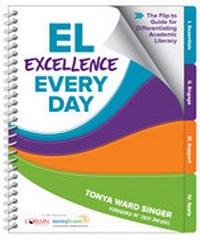
EL Excellence Every Day
The Flip-to Guide for Differentiating Academic Literacy
1st Edition
Published on 20. June 2018
Book
Spiral bound
328 pages
978-1-5063-7787-2 (ISBN)
Description
Much more than a resource for EL specialists, EL Excellence Every Day is written for every teacher, with a singular focus on improving the ways we all differentiate literacy instruction. It includes over 85 flip-to strategies plus 200+ prompts and linguistic scaffolds.
Reviews / Votes
"Tonya Ward Singer's latest book, written in an easy-to-access conversational style, is exactly what teachers need to bring English learners to the next level in language as well as content. Ward Singer obviously knows her way around classrooms that contain ELs and offers practical suggestions grounded in research of what teachers can do when very real situations arise with ELs. This book provides guidance framed around ELs' proficiency levels and will help teachers find that 'sweet spot' that we're all looking for to promote our ELs' excellence. I highly recommend this book for all types of teachers." -- Dr. Diane Staehr Fenner, PresidentMore details
Language
English
Place of publication
Thousand Oaks
United States
Publishing group
SAGE Publications Inc
Target group
Professional and scholarly
Dimensions
Height: 279 mm
Width: 216 mm
Weight
933 gr
ISBN-13
978-1-5063-7787-2 (9781506377872)
Copyright in bibliographic data and cover images is held by Nielsen Book Services Limited or by the publishers or by their respective licensors: all rights reserved.
Schweitzer Classification
Other editions
New editions
Tonya W. Singer
Asset-Based Language and Literacy
The Flip-To Guide to Multilingual Learner Excellence in the Core
Book
05/2026
2nd Edition
Corwin Press Inc
€28.50
Shipment within 15-20 days
Person
Tonya Ward Singer is the founder of Courageous Literacy LLC, an organization that helps K-12 educators advance literacy and language learning in culturally and linguistically rich schools. Teachers and administrators describe Tonya's work as groundbreaking, dynamic, practical, relevant, and impactful.
Tonya is the author of bestsellers EL Excellence Every Day and Opening Doors to Equity. She co-authored Breaking Down the Wall and literacy curricula for international publishers. Tonya has taught across multiple grade levels and excels as an international consultant helping schools build collective efficacy of all teachers through job-embedded, impactful professional learning.
Beyond her work in schools, Tonya co-facilitates dialogues in non-profit organizations committed to truth seeking and transforming legacies of racial oppression.
Contact Tonya at: @TonyaWardSinger
www.tonyasinger.com
Tonya is the author of bestsellers EL Excellence Every Day and Opening Doors to Equity. She co-authored Breaking Down the Wall and literacy curricula for international publishers. Tonya has taught across multiple grade levels and excels as an international consultant helping schools build collective efficacy of all teachers through job-embedded, impactful professional learning.
Beyond her work in schools, Tonya co-facilitates dialogues in non-profit organizations committed to truth seeking and transforming legacies of racial oppression.
Contact Tonya at: @TonyaWardSinger
www.tonyasinger.com
Content
Foreword
Acknowledgments
About the Author
SECTION I: ESSENTIALS FOR EL EXCELLENCE
1. INTRODUCTION
Why This Book?
Helping Every Teacher Excel Teaching ELs
Core Pedagogy for EL Excellence
How This Guide Helps You Every Day
Ways to Use This Flip-To Guide
2. ESSENTIAL MINDSETS
Mindsets Matter
Value English Learners' Assets
Expect Excellence From Every English Learner
Reflect in Inquiry About Your Impact
SECTION II: ENGAGE
3. ENGAGE EVERY EL
What Is Student Engagement?
Why Collaborative Conversations?
3.1 Whole-Class Conversation Structures
3.2 Partner Conversation Structures
3.3 Small-Group Conversation Structures
3.4 Up and Moving Conversation Structures
3.5 Fishbowl Structure
3.6 Listening to Conversations as Formative Data
3.7 Tools to Differentiate Student Conversations
3.8 Linguistic Frames for Conversations
3.9 Strategies to Actively Engage Emerging ELs
3.10 Total Physical Response Strategies
3.11 Read and Annotate Strategies
3.12 Collaborate to Write Strategies
SECTION III: SUPPORT
4. SUPPORT ELS STRATEGICALLY
What Supports Do ELs Need?
How Do I Personalize Supports?
How Do I Differentiate With Ease?
5. BUILD BACKGROUND
What and Why?
When Do I Build Background?
Who Benefits From Building Background?
Strategies to Build Background
5.1 Connect to Students' Background Knowledge and Experiences
5.2 Teach Concept Vocabulary With the Frayer Model
5.3 A Collaborative Approach to the Frayer Model
5.4 Direct Instruction Vocabulary Routine
5.5 Teach Vocabulary With Cognates
5.6 Model Through Teacher Action
5.7 Model Expectations With an Exemplar
5.8 Collaborate to Contrast Exemplars
5.9 Collaborate to Evaluate an Exemplar With a Rubric
Reflect on Chapter 5
6. SCAFFOLD LANGUAGE DURING A TASK
What and Why?
Strategies to Scaffold Language During a Task
Anticipating the Just-Right Level of Scaffolds
Tips to Be Strategic
6.1 Linguistic Frames
6.2 Word Banks
6.3 Word Bank Table
6.4 Sentence Chart
6.5 Graphic Organizers
Reflect on Chapter 6
7. TEACH LANGUAGE BEYOND A TASK
What and Why?
What Features of Language Do I Teach?
Strategies to Teach Language in This Chapter
7.1 Teach Language From Life Experience
7.2 Teach Language From a Text
7.3 Syntax (or Paragraph) Surgery
7.4 Teach Word Relationships
Reflect on Chapter 7
SECTION IV: APPLY STRATEGIES TO DIFFERENTIATE ACADEMIC LITERACY
8. MAKE EL EXCELLENCE ROUTINE
Four Steps, Four Conversation Tasks
Apply Essentials to Meet Specific Literacy Goals
Where Do I Begin?
What Will I Find in Each Chapter?
Be in Continuous Inquiry About Your Impact
9. ANTICIPATE
What and Why?
9.1 Make Predictions
9.2 Ask Questions Before Reading
10. READ TO UNDERSTAND
What and Why?
10.1 Identify Main Ideas
10.2 Self-Monitor and Use Context Clues
10.3 Use Affixes and Roots to Figure Out Unknown Words
11. READ TO ANALYZE AND INFER
What and Why?
11.1 Make Claims About Texts
11.2 Justify Claims With Text Evidence
11.3 Make Inferences About Characters
11.4 Make and Justify Claims About Theme and Author's Message
11.5 Compare and Contrast
APPENDIX: GRAPHIC ORGANIZERS
Collaborative Brainstorm
Frayer Model
Direct Vocabulary Instruction
Word Family Chart
Organize Cause and Effect
Claim and Justify With Text Evidence
References
Index
Acknowledgments
About the Author
SECTION I: ESSENTIALS FOR EL EXCELLENCE
1. INTRODUCTION
Why This Book?
Helping Every Teacher Excel Teaching ELs
Core Pedagogy for EL Excellence
How This Guide Helps You Every Day
Ways to Use This Flip-To Guide
2. ESSENTIAL MINDSETS
Mindsets Matter
Value English Learners' Assets
Expect Excellence From Every English Learner
Reflect in Inquiry About Your Impact
SECTION II: ENGAGE
3. ENGAGE EVERY EL
What Is Student Engagement?
Why Collaborative Conversations?
3.1 Whole-Class Conversation Structures
3.2 Partner Conversation Structures
3.3 Small-Group Conversation Structures
3.4 Up and Moving Conversation Structures
3.5 Fishbowl Structure
3.6 Listening to Conversations as Formative Data
3.7 Tools to Differentiate Student Conversations
3.8 Linguistic Frames for Conversations
3.9 Strategies to Actively Engage Emerging ELs
3.10 Total Physical Response Strategies
3.11 Read and Annotate Strategies
3.12 Collaborate to Write Strategies
SECTION III: SUPPORT
4. SUPPORT ELS STRATEGICALLY
What Supports Do ELs Need?
How Do I Personalize Supports?
How Do I Differentiate With Ease?
5. BUILD BACKGROUND
What and Why?
When Do I Build Background?
Who Benefits From Building Background?
Strategies to Build Background
5.1 Connect to Students' Background Knowledge and Experiences
5.2 Teach Concept Vocabulary With the Frayer Model
5.3 A Collaborative Approach to the Frayer Model
5.4 Direct Instruction Vocabulary Routine
5.5 Teach Vocabulary With Cognates
5.6 Model Through Teacher Action
5.7 Model Expectations With an Exemplar
5.8 Collaborate to Contrast Exemplars
5.9 Collaborate to Evaluate an Exemplar With a Rubric
Reflect on Chapter 5
6. SCAFFOLD LANGUAGE DURING A TASK
What and Why?
Strategies to Scaffold Language During a Task
Anticipating the Just-Right Level of Scaffolds
Tips to Be Strategic
6.1 Linguistic Frames
6.2 Word Banks
6.3 Word Bank Table
6.4 Sentence Chart
6.5 Graphic Organizers
Reflect on Chapter 6
7. TEACH LANGUAGE BEYOND A TASK
What and Why?
What Features of Language Do I Teach?
Strategies to Teach Language in This Chapter
7.1 Teach Language From Life Experience
7.2 Teach Language From a Text
7.3 Syntax (or Paragraph) Surgery
7.4 Teach Word Relationships
Reflect on Chapter 7
SECTION IV: APPLY STRATEGIES TO DIFFERENTIATE ACADEMIC LITERACY
8. MAKE EL EXCELLENCE ROUTINE
Four Steps, Four Conversation Tasks
Apply Essentials to Meet Specific Literacy Goals
Where Do I Begin?
What Will I Find in Each Chapter?
Be in Continuous Inquiry About Your Impact
9. ANTICIPATE
What and Why?
9.1 Make Predictions
9.2 Ask Questions Before Reading
10. READ TO UNDERSTAND
What and Why?
10.1 Identify Main Ideas
10.2 Self-Monitor and Use Context Clues
10.3 Use Affixes and Roots to Figure Out Unknown Words
11. READ TO ANALYZE AND INFER
What and Why?
11.1 Make Claims About Texts
11.2 Justify Claims With Text Evidence
11.3 Make Inferences About Characters
11.4 Make and Justify Claims About Theme and Author's Message
11.5 Compare and Contrast
APPENDIX: GRAPHIC ORGANIZERS
Collaborative Brainstorm
Frayer Model
Direct Vocabulary Instruction
Word Family Chart
Organize Cause and Effect
Claim and Justify With Text Evidence
References
Index