

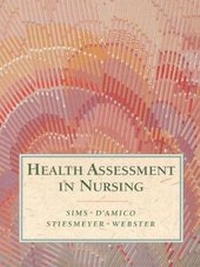
Health Assessment in Nursing
Published on 13. February 1995
Book
Paperback/Softback
732 pages
978-0-8053-7347-9 (ISBN)
Description
The first health assessment textbook to present clear, step-by-step assessment techniques within a true nursing frame-work, Health Assessment in Nursing helps nursing students learn to perform assessments safely and accurately.
More details
Language
English
Place of publication
Upper Saddle River
United States
Target group
Professional and scholarly
Illustrations
Illustrations (some col.)
Dimensions
Height: 226 mm
Width: 285 mm
Thickness: 37 mm
Weight
1852 gr
ISBN-13
978-0-8053-7347-9 (9780805373479)
Copyright in bibliographic data and cover images is held by Nielsen Book Services Limited or by the publishers or by their respective licensors: all rights reserved.
Schweitzer Classification
Content
I. THE FOUNDATION OF HEALTH ASSESSMENT IN NURSING.
1. Introduction to Health Assessment.
2. The Interview and Health History.
3. Assessing Growth and Development.
4. Assessing Psychosocial Health.
5. Assessing Self-Care and Wellness Activities.
6. Assessing the Family, Culture, and Environment.
II. PHYSICAL ASSESSMENT.
7. Techniques of Physical Assessment and the General Survey.
8. Assessing the Integumentary System.
9. Assessing the Head and Neck.
10. Assessing the Respiratory System.
11. Assessing the Cardiovascular System.
12. Assessing the Breasts and Axillae.
13. Assessing the Abdomen.
14. Assessing the Urinary System.
15. Assessing the Reproductive System.
16. Assessing the Peripheral Vascular System.
17. Assessing the Musculoskeletal System.
18. Assessing the Neurological System.
III. INTEGRATED HEALTH ASSESSMENTS.
19. Assessing Infants, Children, and Adolescents.
20. Assessing the Childbearing Client.
21. Assessing the Older Adult.
22. Physical Assessment.
Checklist.
APPENDIX: INTERVIEWING STRATEGIES FOR SPECIAL SITUATIONS.
A. Assessing for Domestic Violence.
B. Assessing for Substance Abuse.
C. Assessing for Child Abuse.
D. Assessing for Elder Abuse.
E. Interviewing the Homeless Client.
1. Introduction to Health Assessment.
2. The Interview and Health History.
3. Assessing Growth and Development.
4. Assessing Psychosocial Health.
5. Assessing Self-Care and Wellness Activities.
6. Assessing the Family, Culture, and Environment.
II. PHYSICAL ASSESSMENT.
7. Techniques of Physical Assessment and the General Survey.
8. Assessing the Integumentary System.
9. Assessing the Head and Neck.
10. Assessing the Respiratory System.
11. Assessing the Cardiovascular System.
12. Assessing the Breasts and Axillae.
13. Assessing the Abdomen.
14. Assessing the Urinary System.
15. Assessing the Reproductive System.
16. Assessing the Peripheral Vascular System.
17. Assessing the Musculoskeletal System.
18. Assessing the Neurological System.
III. INTEGRATED HEALTH ASSESSMENTS.
19. Assessing Infants, Children, and Adolescents.
20. Assessing the Childbearing Client.
21. Assessing the Older Adult.
22. Physical Assessment.
Checklist.
APPENDIX: INTERVIEWING STRATEGIES FOR SPECIAL SITUATIONS.
A. Assessing for Domestic Violence.
B. Assessing for Substance Abuse.
C. Assessing for Child Abuse.
D. Assessing for Elder Abuse.
E. Interviewing the Homeless Client.