


Language and Society
An Introduction
Published on 21. February 2019
Book
Paperback/Softback
488 pages
978-0-19-021066-3 (ISBN)
Description
Language and Society is a broad introduction to the interaction of language and society, intended for undergraduate students majoring in any academic discipline. The book discusses the complex socio-political roles played by large, dominant languages around the world and how the growth of major national and official languages is threatening the continued existence of smaller, minority languages. As individuals adopt new ways of speaking, many languages are disappearing, others are evolving into hybrid languages with distinctive new forms, and even long-established languages are experiencing significant change, with young speakers creating novel expressions and innovative pronunciations. Making use of a wide range of case studies selected from the Americas, Europe, Asia and Africa, Andrew Simpson describes and explains key factors causing language variation and change which relate to societal structures and the expression of group and personal identity. The volume also examines how speakers' knowledge of language acts as an important force controlling access to education, advances in employment and the development of social status. Additional topics discussed in the volume focus on the global growth of English, gendered patterns of language use, and the influence of language on perception.
Reviews / Votes
a behemoth undertaking ... a suitable textbook with a copious amount of captivating language-oriented examples and illustrations for students not yet familiar with studies concerned with language and society. * Tyler Barrett, Australian Review of Applied Linguistics * Professor Simpson's book is one of the best introductions to sociolinguistics to come out in recent years, and exactly the kind of textbook that I was hoping to assign to my students. It is extraordinarily comprehensive, with a wide range of topics explored thoroughly and illustrated with case studies and examples from across the world and from many linguistic contexts. It is a truly global textbook. Perhaps most significantly, the book opens with chapters of multilingualism and language contact, establishing these as central to sociolinguistics, and this focus on multilingualism is sustained throughout the book, which is a very refreshing and long overdue approach. * Dominika M. Baran, Associate Professor of Linguistics, Duke University *More details
Language
English
Place of publication
New York
United States
Target group
Adult education
Product notice
Paperback (trade)
Unsewn / adhesive bound
Dimensions
Height: 251 mm
Width: 178 mm
Thickness: 33 mm
Weight
862 gr
ISBN-13
978-0-19-021066-3 (9780190210663)
Copyright in bibliographic data and cover images is held by Nielsen Book Services Limited or by the publishers or by their respective licensors: all rights reserved.
Schweitzer Classification
Other editions
Additional editions
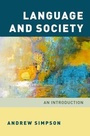
E-Book
01/2019
1st Edition
OUP eBook
€35.99
Available for download
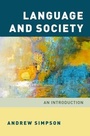
E-Book
01/2019
1st Edition
OUP eBook
€35.99
Available for download
Person
Andrew Simpson is Professor of Linguistics at the University of Southern California. He is the editor of Language and National Identity in Asia (Oxford University Press, 2007), Language and National Identity in Africa (Oxford University Press, 2008), and the author of many articles in linguistic journals on aspects of the languages of South Asia, East Asia, and Southeast Asia. He is also joint general editor of the Journal of East Asian Linguistics.
Content
Foreword
Chapter 1: Languages and Dialects
Chapter 2: Languages with Special Roles/functions: National and Official Languages
Chapter 3: Languages Under Pressure: Minority Groups and Language Loss
Chapter 4: Diglossia and Code-Switching
Chapter 5: Pidgins and Creoles: The Birth and Development of New Languages
Chapter 6: The Globalization of English
Chapter 7: Language(s) in the USA
Chapter 8: Bilingualism
Chapter 9: Language and Thought: The Linguistic Relativity Controversy
Chapter 10: Language and Gender
Chapter 11: Language Variation and Change
References
Subject Index
Chapter 1: Languages and Dialects
Chapter 2: Languages with Special Roles/functions: National and Official Languages
Chapter 3: Languages Under Pressure: Minority Groups and Language Loss
Chapter 4: Diglossia and Code-Switching
Chapter 5: Pidgins and Creoles: The Birth and Development of New Languages
Chapter 6: The Globalization of English
Chapter 7: Language(s) in the USA
Chapter 8: Bilingualism
Chapter 9: Language and Thought: The Linguistic Relativity Controversy
Chapter 10: Language and Gender
Chapter 11: Language Variation and Change
References
Subject Index