

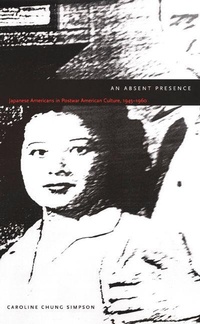
An Absent Presence
Japanese Americans in Postwar American Culture, 1945-1960
Published on 7. January 2002
Book
Paperback/Softback
248 pages
978-0-8223-2746-2 (ISBN)
Description
There have been many studies on the forced relocation and internment of nearly 120,000 Japanese Americans during World War II. But An Absent Presence is the first to focus on how popular representations of this unparalleled episode in U.S. history affected the formation of Cold War culture. Caroline Chung Simpson shows how the portrayal of this economic and social disenfranchisement haunted-and even shaped-the expression of American race relations and national identity throughout the middle of the twentieth century.
Simpson argues that when popular journals or social theorists engaged the topic of Japanese American history or identity in the Cold War era they did so in a manner that tended to efface or diminish the complexity of their political and historical experience. As a result, the shadowy figuration of Japanese American identity often took on the semblance of an "absent presence." Individual chapters feature such topics as the case of the alleged Tokyo Rose, the Hiroshima Maidens Project, and Japanese war brides. Drawing on issues of race, gender, and nation, Simpson connects the internment episode to broader themes of postwar American culture, including the atomic bomb, McCarthyism, the crises of racial integration, and the anxiety over middle-class gender roles.
By recapturing and reexamining these vital flashpoints in the projection of Japanese American identity, Simpson fills a critical and historical void in a number of fields including Asian American studies, American studies, and Cold War history.
Simpson argues that when popular journals or social theorists engaged the topic of Japanese American history or identity in the Cold War era they did so in a manner that tended to efface or diminish the complexity of their political and historical experience. As a result, the shadowy figuration of Japanese American identity often took on the semblance of an "absent presence." Individual chapters feature such topics as the case of the alleged Tokyo Rose, the Hiroshima Maidens Project, and Japanese war brides. Drawing on issues of race, gender, and nation, Simpson connects the internment episode to broader themes of postwar American culture, including the atomic bomb, McCarthyism, the crises of racial integration, and the anxiety over middle-class gender roles.
By recapturing and reexamining these vital flashpoints in the projection of Japanese American identity, Simpson fills a critical and historical void in a number of fields including Asian American studies, American studies, and Cold War history.
Reviews / Votes
"An Absent Presence is an ambitious, nuanced, and far-reaching analysis of a critical topic that adds much to our understanding of American history and in particular the central role Asian Americans have played in it."-David Palumbo-Liu, author of Asian/American: Historical Crossings of a Racial Frontier "This impressive and well-written book presents important new historical and cultural material in an understudied period within Asian American studies."-David Eng, author of Racial Castration: Managing Masculinity in Asian AmericaMore details
Series
Language
English
Place of publication
North Carolina
United States
Target group
Professional and scholarly
Product notice
Paperback (trade)
Illustrations
4 b&w photos
Dimensions
Height: 234 mm
Width: 148 mm
Thickness: 19 mm
Weight
399 gr
ISBN-13
978-0-8223-2746-2 (9780822327462)
Copyright in bibliographic data and cover images is held by Nielsen Book Services Limited or by the publishers or by their respective licensors: all rights reserved.
Schweitzer Classification
Person
Caroline Chung Simpson is Associate Professor of English at the University of Washington.
Content
Acknowledgments
Introduction
1. "That Faint and Elusive Insinuation": Remembering Internment and the Dawn of the Postwar
2. The Internment of Anthropology: Wartime Studies of Japanese Culture
3. How Rose Becomes Red: The Case of Tokyo Rose and the Postwar Beginnings of Cold War Culture
4. "A Mutual Brokenness": The Hiroshima Maidens Project, Japanese Americans, and American Motherhood
5. "Out of an Obscure Place": Japanese War Brides and Cultural Pluralism in the 1950s
Epilogue
Bibliography
Notes
Introduction
1. "That Faint and Elusive Insinuation": Remembering Internment and the Dawn of the Postwar
2. The Internment of Anthropology: Wartime Studies of Japanese Culture
3. How Rose Becomes Red: The Case of Tokyo Rose and the Postwar Beginnings of Cold War Culture
4. "A Mutual Brokenness": The Hiroshima Maidens Project, Japanese Americans, and American Motherhood
5. "Out of an Obscure Place": Japanese War Brides and Cultural Pluralism in the 1950s
Epilogue
Bibliography
Notes