

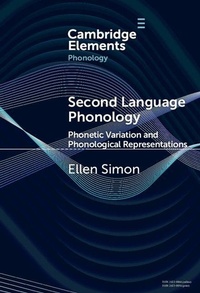
Second Language Phonology
Phonetic Variation and Phonological Representations
Published on 27. March 2025
Book
Hardback
86 pages
978-1-009-66330-4 (ISBN)
Description
This Element deals with the interplay between phonology, phonetics and acquisition. It addresses the question of whether and how phonological representations are acquired in adult second language (L2) learners in the face of phonetic variation inherent in speech. Drawing from a large number of empirical studies on the acquisition of L2 speech sounds, the Element outlines how phonetic or phonological representations develop in L2 learners on the basis of input in immersion and instructed language learning contexts. Taking in insights from sociophonetics and clinical linguistics, the Element further discusses how accent variation impacts second language phonological acquisition and what clinical studies on individuals with atypical language development can tell us about the nature of phonological representations. Finally, new avenues in the field of L2 phonology are explored, especially with regard to methodological challenges and opportunities related to the use of spontaneous speech and remote data collection.
More details
Series
Language
English
Place of publication
Cambridge
United Kingdom
Illustrations
Worked examples or Exercises
Dimensions
Height: 235 mm
Width: 157 mm
Thickness: 10 mm
Weight
291 gr
ISBN-13
978-1-009-66330-4 (9781009663304)
Copyright in bibliographic data and cover images is held by Nielsen Book Services Limited or by the publishers or by their respective licensors: all rights reserved.
Schweitzer Classification
Other editions
Additional editions
Book
03/2025
Cambridge University Press
€26.70
Shipment within 15-20 days
Person
Content
1. Introduction; 2. The field of second language phonology; 3. Towards robust phonological representations in a second language; 4. Flexibility of phonological representations; 5. Sociophonetics and second language phonology; 6. Fuzzy and overspecified representations; 7. Assessing the formation of categories; 8. Avenues for future research: How to advance the field of L2 phonology?; 9. Conclusions and implications; References.