

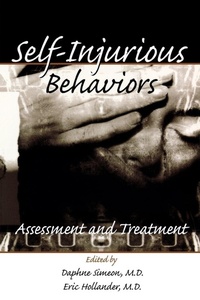
Self-Injurious Behaviors
Assessment and Treatment
Published on 28. February 2001
Book
Paperback/Softback
224 pages
978-0-88048-808-2 (ISBN)
Description
Throughout history, people have invented many different ways to inflict direct and deliberate physical injury on themselves - without an intent to die. Even today, the concept and practice of self-injury is sanctioned by some cultures, although condemned by most.
This insightful work fills a gap in the literature on pathologic self-injury. The phenomenon of people physically hurting themselves is heterogeneous in nature, disturbing in its impact on the self and others, frightening in its blatant maladaptiveness, and often indicative of serious developmental disturbances, breaks with reality, or deficits in the regulation of affects, aggressive impulses, or self states. Further complicating our understanding is the large and diverse scope of psychiatric conditions, such as pervasive developmental disorders, Tourette's syndrome, and psychosis, in which these behaviors occur.
This volume presents a comprehensive nosology of self-injurious behaviors, classifying them as stereotypic, major, compulsive, and impulsive (with greater emphasis on the last two categories because they are the most commonly seen). The chapter on stereotypic self-injurious behaviors (highly repetitive, monotonous behaviors usually devoid of meaning, such as head-banging) focuses on the neurochemical systems underlying the various forms of stereotypic movement disorders with self-injurious behaviors, typically seen in patients with mental retardation and autism, and discusses their psychopharmacological management. The chapter on psychotic, or major, self-injurious behaviors (severe, life-threatening behaviors, such as castration) presents a multidimensional approach to evaluating and treating patients with psychosis and self-injurious behaviors, including the neuroanatomy and neurobiology of sensory information processing as background for its discussion of neurobiological studies and psychopharmacological treatments. Chapters on the neurobiology of and psychopharmacology and psychotherapies for compulsive self-injurious behaviors (repetitive, ritualistic behaviors, such as trichotillomania [hair-pulling]) offer much-needed biological research and the first empirical treatment studies on compulsive self-injurious behaviors, and argue that a distinction can indeed be made between compulsive and impulsive self-injurious behaviors. Chapters on the neurobiology, psychopharmacology, and dialectic behavior and psychodynamic theory and treatment of impulsive self-injurious behaviors (habitual, chronic behaviors, such as skin picking) supplement the few neurobiological studies measuring impulsivity, aggression, dissociation, and suicide and detail the efficacy of various medications and psychotherapies.
An eminently practical guide with exhaustive references to the latest data and research findings, this concise volume contains clinical material and therapeutic interventions that can be used right away by clinicians to better understand and treat patients with these complex and disturbing behaviors.
This insightful work fills a gap in the literature on pathologic self-injury. The phenomenon of people physically hurting themselves is heterogeneous in nature, disturbing in its impact on the self and others, frightening in its blatant maladaptiveness, and often indicative of serious developmental disturbances, breaks with reality, or deficits in the regulation of affects, aggressive impulses, or self states. Further complicating our understanding is the large and diverse scope of psychiatric conditions, such as pervasive developmental disorders, Tourette's syndrome, and psychosis, in which these behaviors occur.
This volume presents a comprehensive nosology of self-injurious behaviors, classifying them as stereotypic, major, compulsive, and impulsive (with greater emphasis on the last two categories because they are the most commonly seen). The chapter on stereotypic self-injurious behaviors (highly repetitive, monotonous behaviors usually devoid of meaning, such as head-banging) focuses on the neurochemical systems underlying the various forms of stereotypic movement disorders with self-injurious behaviors, typically seen in patients with mental retardation and autism, and discusses their psychopharmacological management. The chapter on psychotic, or major, self-injurious behaviors (severe, life-threatening behaviors, such as castration) presents a multidimensional approach to evaluating and treating patients with psychosis and self-injurious behaviors, including the neuroanatomy and neurobiology of sensory information processing as background for its discussion of neurobiological studies and psychopharmacological treatments. Chapters on the neurobiology of and psychopharmacology and psychotherapies for compulsive self-injurious behaviors (repetitive, ritualistic behaviors, such as trichotillomania [hair-pulling]) offer much-needed biological research and the first empirical treatment studies on compulsive self-injurious behaviors, and argue that a distinction can indeed be made between compulsive and impulsive self-injurious behaviors. Chapters on the neurobiology, psychopharmacology, and dialectic behavior and psychodynamic theory and treatment of impulsive self-injurious behaviors (habitual, chronic behaviors, such as skin picking) supplement the few neurobiological studies measuring impulsivity, aggression, dissociation, and suicide and detail the efficacy of various medications and psychotherapies.
An eminently practical guide with exhaustive references to the latest data and research findings, this concise volume contains clinical material and therapeutic interventions that can be used right away by clinicians to better understand and treat patients with these complex and disturbing behaviors.
Reviews / Votes
Self-Injurious Behaviors: Assessment and Treatmentaccomplishes what it sets out to do: to provide the practicing clinician
with a solid overview of the topic along with a thorough review of current
treatment approaches. It is brief, easy to read, and inexpensive. It is the
ideal required reading for a course on the topic. The Clinical Practice
Series of the American Psychiatric Press has produced another outstanding
volume. -- Marc Hillbrand, Ph.D. * Journal of Nervous and Mental Illness * This excellent book includes the latest understanding of
the problem of self injurious behavior. The charts and summaries make it
clear and useful for the busy clinician. Information from well chosen
studies and extensive bibliographies offer a path to further exploration.
Four Stars! * Doody's Health Science Book Reviews *
More details
Language
English
Place of publication
VA
United States
Target group
College/higher education
Professional and scholarly
US School Grade: College Graduate Student and over
Product notice
Paperback (trade)
Dimensions
Height: 229 mm
Width: 152 mm
Thickness: 12 mm
Weight
307 gr
ISBN-13
978-0-88048-808-2 (9780880488082)
Copyright in bibliographic data and cover images is held by Nielsen Book Services Limited or by the publishers or by their respective licensors: all rights reserved.
Schweitzer Classification
Other editions
Additional editions
E-Book
11/2008
1st Edition
American Psychiatric Publishing
€80.69
Available for download
Persons
Daphne Simeon, M.D., is Assistant Professor and Director of Medical Student Education in the Department of Psychiatry at Mount Sinai School of Medicine in New York, New York.
Eric Hollander, M.D., is a Professor; Director of Clinical Psychopharmacology; Director of the Compulsive, Impulsive, and Anxiety Disorders Program; and Clinical Director of the Seaver Autism Research Center in the Department of Psychiatry at Mount Sinai School of Medicine, in New York, New York.
Eric Hollander, M.D., is a Professor; Director of Clinical Psychopharmacology; Director of the Compulsive, Impulsive, and Anxiety Disorders Program; and Clinical Director of the Seaver Autism Research Center in the Department of Psychiatry at Mount Sinai School of Medicine, in New York, New York.
Content
ContributorsIntroduction to the Clinical Practice SeriesIntroductionChapter 1. Self-Injurious Behaviors: Phenomenology and AssessmentChapter 2. Stereotypic Self-Injurious Behaviors: Neurobiology and PsychopharmacologyChapter 3. Psychotic Self-Injurious Behaviors: Phenomenology, Neurobiology, and TreatmentChapter 4. Compulsive Self-Injurious Behaviors: Neurobiology and PsychopharmacologyChapter 5. Psychotherapies for Compulsive Self-Injurious BehaviorsChapter 6. Impulsive Self-Injurious Behaviors: Neurobiology and PsychopharmacologyChapter 7. Dialectical Behavior Therapy for Impulsive Self-Injurious BehaviorsChapter 8. Psychodynamic Theory and Treatment of Impulsive Self-Injurious BehaviorsIndex