

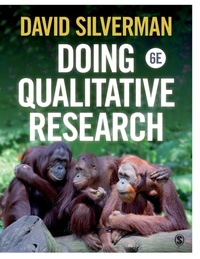
Doing Qualitative Research
6th Edition
Published on 6. December 2021
Book
Hardback
656 pages
978-1-5297-6901-2 (ISBN)
Description
Need practical advice on how to do your first qualitative research project? This book will guide you through each step of the research process: from brainstorming ideas and working with your supervisor to navigating the field to writing up your results.
Driven by examples from other students' projects, the book features discussions on translating social problems into research topics, collecting data in the wake of a pandemic, and guidance from Qualitative Data Analysis Software expert Christian Schmieder to help you summarise, categorise, and review qualitative data. A new chapter on how much data you need answers the age-old question: 'how many interviews or case studies are enough?'
It also includes:
- Articles and websites to build your bibliography
- Questions to test your knowledge
- Videos from world-leading qualitative experts
- Activities to dig deeper into key concepts and think critically about research
- Lessons-learned discussions with other researchers
- Exercises to help you choose the right path for your project.
Key features: in addition to the online Silverman Workshops, the book includes top tips, end-of-chapter checklists to test your understanding, and annotated further reading so you can develop your knowledge further.
Driven by examples from other students' projects, the book features discussions on translating social problems into research topics, collecting data in the wake of a pandemic, and guidance from Qualitative Data Analysis Software expert Christian Schmieder to help you summarise, categorise, and review qualitative data. A new chapter on how much data you need answers the age-old question: 'how many interviews or case studies are enough?'
It also includes:
- Articles and websites to build your bibliography
- Questions to test your knowledge
- Videos from world-leading qualitative experts
- Activities to dig deeper into key concepts and think critically about research
- Lessons-learned discussions with other researchers
- Exercises to help you choose the right path for your project.
Key features: in addition to the online Silverman Workshops, the book includes top tips, end-of-chapter checklists to test your understanding, and annotated further reading so you can develop your knowledge further.
Reviews / Votes
There is no doubt that "Doing Qualitative Research" is a Bible for all qualitative researchers. Unlike the Bible, however, it is constantly updated, taking into account both new methods and new circumstances in which research takes place. A classic, but always relevant. -- Barbara Czarniawska Doing Qualitative Research has evolved and deepened over its six editions as a result not only of the many conversations between its author and its readers over the years, but also the changing circumstances of the contexts in which it has been written and read. For instance, changes to research methods as a result of policy measures designed to deal with a pandemic are discussed in this edition. There is no better guide to the practical issues of doing qualitative research and getting it published than this book by Silverman, the leader in the field. -- Stewart Clegg A wide-ranging and highly distinctive introduction that addresses the practices and practicalities of undertaking different forms of qualitative research. It powerfully explores the contributions of particular methods and discusses how one can address and resolve the challenges that arise at the different stages of a research project. It is an important resource for students and teachers alike. -- Christian Heath David Silverman notes that 'qualitative research is a contested domain'. This is something of an under-statement, and students in particular need clear and concise guidance when seeking to grasp the complexities and harness the rich potentials of qualitative research. In his extensive writings and edited collections, Silverman provides precisely what is needed. New editions of Doing Qualitative Research have come thick and fast since 2000, each succeeding edition offering clear and incisive engagement with key aspects of qualitative research and the ways in which it, and researching generally, have developed. This new edition takes account of the global upheavals and transformations that have occurred since 2017, including the new challenges posed in data gathering and engaging in the chosen research context. The result is an invaluable resource not only for early-career but also seasoned researchers. -- Anthony Bryant This is an excellent resource that is so much more than a book. [...] This book's strength is its accessibility and sound advice illustrated by real life examples. The book will become a well-thumbed companion to anyone committing to qualitative post graduate research in the social sciences. -- Julie Truman * Social Research Association *More details
Edition
6th Revised edition
Language
English
Place of publication
London
United Kingdom
Target group
College/higher education
Edition type
Revised edition
Dimensions
Height: 241 mm
Width: 196 mm
Thickness: 39 mm
Weight
1399 gr
ISBN-13
978-1-5297-6901-2 (9781529769012)
Copyright in bibliographic data and cover images is held by Nielsen Book Services Limited or by the publishers or by their respective licensors: all rights reserved.
Schweitzer Classification
Other editions
Additional editions
David Silverman
Doing Qualitative Research
Book
12/2021
6th Edition
SAGE Publications Ltd
€55.05
Shipment within 15-20 days
David Silverman
Doing Qualitative Research
E-Book
11/2021
6th Edition
SAGE Publications Ltd
€80.99
Available for download
David Silverman
Doing Qualitative Research
E-Book
11/2021
6th Edition
SAGE Publications Ltd
€80.99
Available for download
Previous edition
David Silverman
Doing Qualitative Research
Book
12/2017
5th Edition
SAGE Publications Ltd
€159.22
Article exhausted; check for reprint
Person
David Silverman trained as a sociologist at the London School of Economics and the University of California, Los Angeles. He taught for 32 years at Goldsmiths, University of London. He is interested in conversation and discourse analysis and he has researched medical consultations and HIV-test counselling.
He is the author of Interpreting Qualitative Data (Seventh Edition, 2024) and A Very Short, Fairly Interesting and Reasonably Cheap Book about Qualitative Research (Second Edition, 2013). He is also the editor of Qualitative Research (Sixth Edition, 2026) and the Sage series, Introducing Qualitative Methods. In recent years, he has offered short, hands-on workshops in qualitative research for research students and faculty at universities in Europe, Asia, Africa and Australia.
Now retired from full-time work, David aims to watch one hundred days of cricket a year. He also enjoys voluntary work in an old people's home where he sings with residents with dementia and strokes.
He is the author of Interpreting Qualitative Data (Seventh Edition, 2024) and A Very Short, Fairly Interesting and Reasonably Cheap Book about Qualitative Research (Second Edition, 2013). He is also the editor of Qualitative Research (Sixth Edition, 2026) and the Sage series, Introducing Qualitative Methods. In recent years, he has offered short, hands-on workshops in qualitative research for research students and faculty at universities in Europe, Asia, Africa and Australia.
Now retired from full-time work, David aims to watch one hundred days of cricket a year. He also enjoys voluntary work in an old people's home where he sings with residents with dementia and strokes.
Content
Part One: Introduction
Chapter 1: How To Use This Book
Chapter 2: What You Can (and Can't) Do with Qualitative Research
What is Qualitative Research?
Why Do Some Researchers Prefer Qualitative Methods?
Are Qualitative Methods Always Appropriate?
Should You Use Qualitative Methods?
Chapter 3: Focusing a Research Project
Moira's Research Diary
Sally's Research Diary
Simon's Research Diary
Part Two: Starting Out and Project Foundations
Chapter 4: Formulating a Research Question
Challenges
Solutions
Some Cautions
Chapter 5: Ethical Research
The Standards of Ethical Research
Why Ethics Matter for Your Research
Ethical Guidelines in Practice
Complex Ethical Issues
Research Governance
Conclusion: Managing Unfolding Ethical Demands
Chapter 6: Research Design
Interviews
Ethnographies
Texts
The Internet
Audio Data
Visual Data
Mixed Methods
Chapter 7: Using Theories
How Theoretical Models Shape Research
The Different Languages of Qualitative Research
Theories, Models and Hypotheses
Examples
Chapter 8: Choosing a Methodology
Qualitative or Quantitative?
Your Research Strategy
Choosing a Methodology: A Case Study
Naturally Occurring Data?
Mixed Methods?
Chapter 9: Writing a Research Proposal
Aim for Crystal Clarity
Plan Before You Write
Be Persuasive
Be Practical
Make Broader Links
A Caution: Misunderstanding Qualitative Research?
Part Three: Getting Support
Chapter 10: Making Good Use of Your Supervisor
Supervision Horror Stories
Student and Supervisor Expectations
The Early Stages
The Later Stages
Standards of Good Practice
Chapter 11: Getting Feedback
Writing
Speaking
The Art of Presenting Research
Feedback from the People You Study
Part Four: Collecting and Analysing Data
Chapter 12: How much data do you need?
The Quantitative Model of Generalization
How many interviews do you need?
Purposive Sampling in interview research
What is a case study?
The Rationale of Case Study Design
Case Study Research in Practice
Theoretical sampling
Chapter 13: Collecting Your Data
Collecting Interview Data
Collecting Focus Group Data
Collecting Ethnographic Data
Collecting Internet Data
Collecting Your Data in the Wake of a Pandemic
Chapter 14: Developing Data Analysis
Kick-Starting Data Analysis
A Case Study
Interviews
Fieldnotes
Transcripts
Visual Data
Chapter 15: Using Qualitative Data Analysis Software: An Introduction
What is Qualitative Data Analysis Software?
Software for Qualitative Analysis? Great - so will it do analysis for me?
OK, so how can this software help me?
If I decide to use QDAS, do I have to use the program for all aspects of my analysis?
You continue to mention writing - why is that so important?
Will QDAS help my teamwork?
Hopes and Fears connected to using QDAS
What hardware do I need to run QDAS?
What are some strategies for learning to use QDAS, and to see if a specific software will work for my project?
Tips for doing analysis with QD
Chapter 16: Quality in Qualitative Research
Validity
Reliability
Chapter 17: Effective Qualitative Research
Keep It Simple
Do Not Assume That We Are Only Concerned with Subjective Experience
Take Advantage of Using Qualitative Data
Avoid Drowning in Data
Avoid Journalism
Part Five: Writing Up Your Research
Chapter 18: What Counts as 'Originality'?
Originality
Being a Professional
Independent Critical Thought
Chapter 19: Considering Your Audience
The Policy-Making Audience
The Practitioner Audience
The Lay Audience
Chapter 20: The First Few Pages
The Title
The Abstract
Keywords
The Table of Contents
The Introduction
Chapter 21: The Literature Review Chapter
Recording Your Reading
Writing Your Literature Review
Practical Questions
Principles
Do You Need a Literature Review Chapter?
Chapter 22: The Methodology Chapter
What Should the Methodology Chapter Contain?
A Natural History Chapter?
Chapter 23: Writing Your Data Chapters
The Macrostructure
The Microstructure
Tightening up
Chapter 24: Your Concluding Chapter
The Concluding Chapter as Mutual Stimulation
What Exactly Should Your Concluding Chapter Contain?
Confessions and Trumpets
Theorizing as Thinking Through Data
Writing for Audiences
Why Your Concluding Chapter Can Be Fun
Part Six: The Aftermath
Chapter 25: Managing an Oral Examination
Viva Horror Stories
Preparing for Your Oral
Doing the Oral
Outcomes
Revising Your Thesis after the Oral
A Case Study
Chapter 26: Getting Published
The Backstage Politics of Publishing
Strategic Choices
What Journals are Looking For
Reviewers' Comments
How to Write a Short Journal Article
Chapter 1: How To Use This Book
Chapter 2: What You Can (and Can't) Do with Qualitative Research
What is Qualitative Research?
Why Do Some Researchers Prefer Qualitative Methods?
Are Qualitative Methods Always Appropriate?
Should You Use Qualitative Methods?
Chapter 3: Focusing a Research Project
Moira's Research Diary
Sally's Research Diary
Simon's Research Diary
Part Two: Starting Out and Project Foundations
Chapter 4: Formulating a Research Question
Challenges
Solutions
Some Cautions
Chapter 5: Ethical Research
The Standards of Ethical Research
Why Ethics Matter for Your Research
Ethical Guidelines in Practice
Complex Ethical Issues
Research Governance
Conclusion: Managing Unfolding Ethical Demands
Chapter 6: Research Design
Interviews
Ethnographies
Texts
The Internet
Audio Data
Visual Data
Mixed Methods
Chapter 7: Using Theories
How Theoretical Models Shape Research
The Different Languages of Qualitative Research
Theories, Models and Hypotheses
Examples
Chapter 8: Choosing a Methodology
Qualitative or Quantitative?
Your Research Strategy
Choosing a Methodology: A Case Study
Naturally Occurring Data?
Mixed Methods?
Chapter 9: Writing a Research Proposal
Aim for Crystal Clarity
Plan Before You Write
Be Persuasive
Be Practical
Make Broader Links
A Caution: Misunderstanding Qualitative Research?
Part Three: Getting Support
Chapter 10: Making Good Use of Your Supervisor
Supervision Horror Stories
Student and Supervisor Expectations
The Early Stages
The Later Stages
Standards of Good Practice
Chapter 11: Getting Feedback
Writing
Speaking
The Art of Presenting Research
Feedback from the People You Study
Part Four: Collecting and Analysing Data
Chapter 12: How much data do you need?
The Quantitative Model of Generalization
How many interviews do you need?
Purposive Sampling in interview research
What is a case study?
The Rationale of Case Study Design
Case Study Research in Practice
Theoretical sampling
Chapter 13: Collecting Your Data
Collecting Interview Data
Collecting Focus Group Data
Collecting Ethnographic Data
Collecting Internet Data
Collecting Your Data in the Wake of a Pandemic
Chapter 14: Developing Data Analysis
Kick-Starting Data Analysis
A Case Study
Interviews
Fieldnotes
Transcripts
Visual Data
Chapter 15: Using Qualitative Data Analysis Software: An Introduction
What is Qualitative Data Analysis Software?
Software for Qualitative Analysis? Great - so will it do analysis for me?
OK, so how can this software help me?
If I decide to use QDAS, do I have to use the program for all aspects of my analysis?
You continue to mention writing - why is that so important?
Will QDAS help my teamwork?
Hopes and Fears connected to using QDAS
What hardware do I need to run QDAS?
What are some strategies for learning to use QDAS, and to see if a specific software will work for my project?
Tips for doing analysis with QD
Chapter 16: Quality in Qualitative Research
Validity
Reliability
Chapter 17: Effective Qualitative Research
Keep It Simple
Do Not Assume That We Are Only Concerned with Subjective Experience
Take Advantage of Using Qualitative Data
Avoid Drowning in Data
Avoid Journalism
Part Five: Writing Up Your Research
Chapter 18: What Counts as 'Originality'?
Originality
Being a Professional
Independent Critical Thought
Chapter 19: Considering Your Audience
The Policy-Making Audience
The Practitioner Audience
The Lay Audience
Chapter 20: The First Few Pages
The Title
The Abstract
Keywords
The Table of Contents
The Introduction
Chapter 21: The Literature Review Chapter
Recording Your Reading
Writing Your Literature Review
Practical Questions
Principles
Do You Need a Literature Review Chapter?
Chapter 22: The Methodology Chapter
What Should the Methodology Chapter Contain?
A Natural History Chapter?
Chapter 23: Writing Your Data Chapters
The Macrostructure
The Microstructure
Tightening up
Chapter 24: Your Concluding Chapter
The Concluding Chapter as Mutual Stimulation
What Exactly Should Your Concluding Chapter Contain?
Confessions and Trumpets
Theorizing as Thinking Through Data
Writing for Audiences
Why Your Concluding Chapter Can Be Fun
Part Six: The Aftermath
Chapter 25: Managing an Oral Examination
Viva Horror Stories
Preparing for Your Oral
Doing the Oral
Outcomes
Revising Your Thesis after the Oral
A Case Study
Chapter 26: Getting Published
The Backstage Politics of Publishing
Strategic Choices
What Journals are Looking For
Reviewers' Comments
How to Write a Short Journal Article