

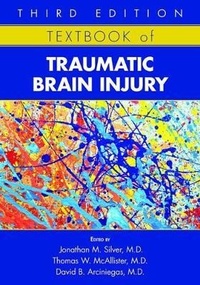
Textbook of Traumatic Brain Injury
3rd Edition
Published on 11. February 2019
Book
Hardback
985 pages
978-1-61537-112-9 (ISBN)
Description
Despite the increased public awareness of traumatic brain
injury (TBI), the complexities of the neuropsychiatric, neuropsychological,
neurological, and other physical consequences of TBI of all severities
across the lifespan remain incompletely understood by patients, their
families, healthcare providers, and the media.
Keeping pace with
advances in the diagnosis, treatment, and science of TBI, the Textbook of
Traumatic Brain Injury, Third Edition, comprehensively fills this
gap in knowledge. Nearly all 50 chapters feature new authors, all of them
experts in their field. Chapters new to this edition include biomechanical
forces, biomarkers, neurodegenerative dementias, suicide, endocrine
disorders, chronic disease management, and social cognition. An entirely new
section is devoted to the evaluation and treatment of mild TBI, including
injuries in athletes, military service members and veterans, and children
and adolescents. These chapters join newly updated sections on the
assessment and treatment of the cognitive, emotional, behavioral, and other
physical sequelae of TBI.
The Textbook of Traumatic Brain
Injury is a must-read for all of those working in any of the
multitude of disciplines that contribute to the care and rehabilitation of
persons with brain injury. This new volume is also a potentially useful
reference for policymakers in both the public and private sectors.
injury (TBI), the complexities of the neuropsychiatric, neuropsychological,
neurological, and other physical consequences of TBI of all severities
across the lifespan remain incompletely understood by patients, their
families, healthcare providers, and the media.
Keeping pace with
advances in the diagnosis, treatment, and science of TBI, the Textbook of
Traumatic Brain Injury, Third Edition, comprehensively fills this
gap in knowledge. Nearly all 50 chapters feature new authors, all of them
experts in their field. Chapters new to this edition include biomechanical
forces, biomarkers, neurodegenerative dementias, suicide, endocrine
disorders, chronic disease management, and social cognition. An entirely new
section is devoted to the evaluation and treatment of mild TBI, including
injuries in athletes, military service members and veterans, and children
and adolescents. These chapters join newly updated sections on the
assessment and treatment of the cognitive, emotional, behavioral, and other
physical sequelae of TBI.
The Textbook of Traumatic Brain
Injury is a must-read for all of those working in any of the
multitude of disciplines that contribute to the care and rehabilitation of
persons with brain injury. This new volume is also a potentially useful
reference for policymakers in both the public and private sectors.
More details
Edition
Third Edition
Language
English
Place of publication
VA
United States
Target group
College/higher education
US School Grade: College Graduate Student and over
Edition type
Revised edition
Illustrations
73 Figures; 5 Plates, black and white; 113 Tables, unspecified
Dimensions
Height: 254 mm
Width: 178 mm
Thickness: 34 mm
ISBN-13
978-1-61537-112-9 (9781615371129)
Copyright in bibliographic data and cover images is held by Nielsen Book Services Limited or by the publishers or by their respective licensors: all rights reserved.
Schweitzer Classification
Other editions
Additional editions
Jonathan M. Silver | Thomas W. McAllister | David B. Arciniegas
Textbook of Traumatic Brain Injury
E-Book
12/2018
2nd Edition
American Psychiatric Association Publishing
€153.99
Available for download
Previous edition
Jonathan M. Silver | Thomas W. McAllister | Stuart C. Yudofsky
Textbook of Traumatic Brain Injury
Book
02/2011
2nd Edition
American Psychiatric Association Publishing
€206.50
Article exhausted; check for reprint
Persons
Jonathan M. Silver, M.D., is Clinical Professor of
Psychiatry at New York University School of Medicine in New York, New
York.
Thomas W. McAllister, M.D., is Albert Eugene Sterne
Professor and Chair in the Department of Psychiatry at Indiana University
School of Medicine in Indianapolis, Indiana.
David B. Arciniegas,
M.D., is Chief Medical Officer of the Center for Mental Health in
Montrose, Colorado; Director of Education for the Marcus Institute for Brain
Health in Aurora, Colorado; Clinical Professor of Neurology and Psychiatry
at the University of Colorado School of Medicine in Aurora, Colorado; Senior
Scientist of the Brain Injury Research Center at TIRR Memorial Hermann in
Houston, Texas; and Chairman and CEO of the International Brain Injury
Association in Richmond, Virginia.
Psychiatry at New York University School of Medicine in New York, New
York.
Thomas W. McAllister, M.D., is Albert Eugene Sterne
Professor and Chair in the Department of Psychiatry at Indiana University
School of Medicine in Indianapolis, Indiana.
David B. Arciniegas,
M.D., is Chief Medical Officer of the Center for Mental Health in
Montrose, Colorado; Director of Education for the Marcus Institute for Brain
Health in Aurora, Colorado; Clinical Professor of Neurology and Psychiatry
at the University of Colorado School of Medicine in Aurora, Colorado; Senior
Scientist of the Brain Injury Research Center at TIRR Memorial Hermann in
Houston, Texas; and Chairman and CEO of the International Brain Injury
Association in Richmond, Virginia.
Content
Foreword
Preface
Part I: Epidemiology and
Pathophysiology
Chapter 1. Epidemiology of Traumatic Brain
Injury
Chapter 2. Biomechanical Forces Involved in Brain
Injury
Chapter 3. Pathophysiology
Part II: Assessment
Chapter 4.
Neuropsychiatric Assessment
Chapter 5. Clinical Imaging
Chapter 6.
Genetic Factors
Chapter 7. Electrophysiological Assessment
Chapter
8. Neuropsychological Assessment
Chapter 9. Biomarkers
Part III:
Neuropsychiatric Aspects of Traumatic Brain Injury
Cognition
Chapter
10. Disorders of Consciousness
Chapter 11. Acute Traumatic
Encephalopathy
Chapter 12. Neurocognitive Disorders Due to Traumatic
Brain Injury
Chapter 13. Awareness of Deficits
Chapter 14. Social
Cognition
Chapter 15. Neurodegenerative
Dementias
Emotion
Chapter 16. Epidemiology and Natural History of
Psychiatric Disorders
Chapter 17. Mood and Anxiety Disorders
Chapter
18. Emotional Dyscontrol
Chapter 19. Posttraumatic Stress
Disorder
Behavior
Chapter 20. Disorders of Diminished
Motivation
Chapter 21. Behavioral Dyscontrol
Chapter 22. Psychotic
Disorders
Chapter 23. Suicide
Somatic
Chapter 24. Sleep
Disturbance and Fatigue
Chapter 25. Posttraumatic Headache
Chapter
26. Dizziness, Imbalance, and Vestibular Dysfunction
Chapter 27. Vision
Problems
Chapter 28. Chronic Pain
Chapter 29. Sexual
Functioning
Chapter 30. Pituitary Dysfunction
Chapter 31.
Posttraumatic Epilepsy
Part IV: Special Populations and Issues
Mild
Brain Injury
Chapter 32. Overview of Mild Brain Injury
Chapter 33.
Pathophysiology of Mild Traumatic Brain Injury
Chapter 34. Assessment of
Sports-Related Concussion
Chapter 35. Military Mild Traumatic Brain
Injury
Chapter 36. Mild Traumatic Brain Injury in Children and
Adolescents
Chapter 37. Multidisciplinary Assessments and
Treatment
Chapter 38. Persistent Symptoms After Mild Traumatic Brain
Injury
Other Populations
Chapter 39. Neuropsychiatric Sequelae of
Traumatic Brain Injury in Children and Adolescents
Chapter 40. Chronic
Disease Management for Lifelong Brain Injury
Chapter 41. Substance Use
Disorders
Part V: Treatment
Chapter 42. Family
Intervention
Chapter 43. Systems of Care
Chapter 44. Activity,
Participation, and Community Integration
Chapter 45. Psychological
Adjustment to the Effects of a Moderate to Severe Traumatic Brain
Injury
Chapter 46. Cognitive Rehabilitation
Chapter 47.
Environmental and Behavioral Management
Chapter 48. Principles of
Pharmacotherapy
Chapter 49. Complementary and Alternative
Therapies
Chapter 50. Clinical Legal Issues
Preface
Part I: Epidemiology and
Pathophysiology
Chapter 1. Epidemiology of Traumatic Brain
Injury
Chapter 2. Biomechanical Forces Involved in Brain
Injury
Chapter 3. Pathophysiology
Part II: Assessment
Chapter 4.
Neuropsychiatric Assessment
Chapter 5. Clinical Imaging
Chapter 6.
Genetic Factors
Chapter 7. Electrophysiological Assessment
Chapter
8. Neuropsychological Assessment
Chapter 9. Biomarkers
Part III:
Neuropsychiatric Aspects of Traumatic Brain Injury
Cognition
Chapter
10. Disorders of Consciousness
Chapter 11. Acute Traumatic
Encephalopathy
Chapter 12. Neurocognitive Disorders Due to Traumatic
Brain Injury
Chapter 13. Awareness of Deficits
Chapter 14. Social
Cognition
Chapter 15. Neurodegenerative
Dementias
Emotion
Chapter 16. Epidemiology and Natural History of
Psychiatric Disorders
Chapter 17. Mood and Anxiety Disorders
Chapter
18. Emotional Dyscontrol
Chapter 19. Posttraumatic Stress
Disorder
Behavior
Chapter 20. Disorders of Diminished
Motivation
Chapter 21. Behavioral Dyscontrol
Chapter 22. Psychotic
Disorders
Chapter 23. Suicide
Somatic
Chapter 24. Sleep
Disturbance and Fatigue
Chapter 25. Posttraumatic Headache
Chapter
26. Dizziness, Imbalance, and Vestibular Dysfunction
Chapter 27. Vision
Problems
Chapter 28. Chronic Pain
Chapter 29. Sexual
Functioning
Chapter 30. Pituitary Dysfunction
Chapter 31.
Posttraumatic Epilepsy
Part IV: Special Populations and Issues
Mild
Brain Injury
Chapter 32. Overview of Mild Brain Injury
Chapter 33.
Pathophysiology of Mild Traumatic Brain Injury
Chapter 34. Assessment of
Sports-Related Concussion
Chapter 35. Military Mild Traumatic Brain
Injury
Chapter 36. Mild Traumatic Brain Injury in Children and
Adolescents
Chapter 37. Multidisciplinary Assessments and
Treatment
Chapter 38. Persistent Symptoms After Mild Traumatic Brain
Injury
Other Populations
Chapter 39. Neuropsychiatric Sequelae of
Traumatic Brain Injury in Children and Adolescents
Chapter 40. Chronic
Disease Management for Lifelong Brain Injury
Chapter 41. Substance Use
Disorders
Part V: Treatment
Chapter 42. Family
Intervention
Chapter 43. Systems of Care
Chapter 44. Activity,
Participation, and Community Integration
Chapter 45. Psychological
Adjustment to the Effects of a Moderate to Severe Traumatic Brain
Injury
Chapter 46. Cognitive Rehabilitation
Chapter 47.
Environmental and Behavioral Management
Chapter 48. Principles of
Pharmacotherapy
Chapter 49. Complementary and Alternative
Therapies
Chapter 50. Clinical Legal Issues