

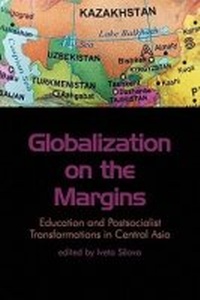
Globalization on the Margins
Education and Postsocialist Transformations in Central Asia
Published on 24. November 2010
Book
Paperback/Softback
384 pages
978-1-61735-200-3 (ISBN)
Description
The essays in Globalization on the Margins explore the continuities and changes in Central Asian education development since the collapse of the Soviet Union in 1991. Reflecting on two decades of post-socialist transformations, they reveal that education systems in Central Asia responded to the rapidly changing political, economic, and social environment in profoundly new and unique ways. Some countries moved towards Western models, others went backwards, and still others followed entirely new trajectories. Yet, elements of the "old" system remain.
Rather than viewing these post-Soviet transformations in isolation, Globalization on the Margins places its analyses within the global context by reflecting on the interaction between Soviet legacies and global education reform pressures in the Central Asian countries of Kazakhstan, Kyrgyzstan, Tajikistan, Turkmenistan, and Uzbekistan. Instead of portraying the transition process as the influx of Western ideas into the region, the authors provide new lenses to critically examine the multidirectional flow of ideas, concepts, and reform models within Central Asia.
Notwithstanding the variety of theoretical perspectives, methodological approaches, and conceptual lenses, the authors have one thing in common: both individually and collectively, they reveal the complexity and uncertainty of the post-Soviet transformations. By highlighting the political nature of the transformation processes and the uniqueness of historical, political, social, and cultural contexts of each particular country, Globalization on the Margins portrays post-Soviet education transformations as complex, multidimensional, and uncertain processes.
Rather than viewing these post-Soviet transformations in isolation, Globalization on the Margins places its analyses within the global context by reflecting on the interaction between Soviet legacies and global education reform pressures in the Central Asian countries of Kazakhstan, Kyrgyzstan, Tajikistan, Turkmenistan, and Uzbekistan. Instead of portraying the transition process as the influx of Western ideas into the region, the authors provide new lenses to critically examine the multidirectional flow of ideas, concepts, and reform models within Central Asia.
Notwithstanding the variety of theoretical perspectives, methodological approaches, and conceptual lenses, the authors have one thing in common: both individually and collectively, they reveal the complexity and uncertainty of the post-Soviet transformations. By highlighting the political nature of the transformation processes and the uniqueness of historical, political, social, and cultural contexts of each particular country, Globalization on the Margins portrays post-Soviet education transformations as complex, multidimensional, and uncertain processes.
More details
Language
English
Place of publication
Charlotte
United States
Publishing group
Emerald Publishing Inc
Target group
Professional and scholarly
Dimensions
Height: 234 mm
Width: 156 mm
Thickness: 20 mm
Weight
538 gr
ISBN-13
978-1-61735-200-3 (9781617352003)
Copyright in bibliographic data and cover images is held by Nielsen Book Services Limited or by the publishers or by their respective licensors: all rights reserved.
Schweitzer Classification
Other editions
New editions
Iveta Silova | Sarfaroz Niyozov
Globalization on the Margins
Education and Post-Socialist Transformations in Central Asia
Book
01/2020
2nd Edition
Information Age Publishing
€86.70
Shipment within 3-4 weeks
Person
Iveta Silova is a Frank Hook Assistant Professor of Comparative and International Education in the College of Education at Lehigh University, Pennsylvania, USA. Her research and publications cover a range of issues critical to understanding post-socialist education transformation processes, including professional development of teachers and teacher educators, gender equity trends in Eastern/Central Europe and Central Asia, minority/multicultural education policies in the former Soviet Union, as well as the scope, nature, and implications of private tutoring in a cross-national perspective.
Content
Acknowledgments.
Chapter 1. Introduction: Education and Postsocialist Transformations in Central Asia-Exploring Margins and Marginalities; Iveta Silova.
Part I: Geopolitics on the Margins: International Aid and Local Politics in Higher Education Reforms.
Chapter 2. A Comment on the Changes in Higher Education in the Post-Soviet Union; Steven P. Heyneman.
Chapter 3. The Geography and Geometry of the Bologna Process: Central Asian Higher Education in the New Global Periphery; Voldermar Tomusk.
Chapter 4. Education as Foreign Policy: The European Union in Central Asia; Peter D. Jones.
Chapter 5. Regional Histories, Critical Thought, and the University of Central Asia: Between the Global and Local, North and South; Jeff Sahadeo.
Chapter 6. Higher Education Admissions Regimes in Kazakhstan and Kyrgyzstan: Difference Makes a Difference; Todd Drummond.
Chapter 7. Internationalizing Higher Education in Central Asia: Definitions, Rationales, Scope, and Choices; Martha C. Merrill.
Part II: Transitologies on the Margins: Changing Schools, Changing Teachers.
Chapter 8. Influencing the Status of Teaching in Central Asia; Christine Harris-Van Keuren.
Chapter 9. Ten-Plus-One Ways of Coping With a Teacher Shortage: A School-Level Analysis of a Teacher Shortage in Kyrgyzstan; Gita Steiner-Khamsi, Nurbek Teleshaliyev, Gulzhamal Sheripkanova-MacLeod, and Ainura Moldokmatova.
Chapter 10. Blaming the Context Not the Culprit: Limitations on Student Control of Teacher Corruption in Post-Soviet Kyrgyzstan; Eric M. Johnson.
Chapter 11. Teaching as a Profession in the Kyrgyz Republic: The Quest for Building/Rebuilding the Knowledge Base; Alan J. DeYoung.
Chapter 12. Revisiting Teacher Professionalism Discourse Through Teachers' Professional Lives in Post-Soviet Tajikistan; Sarfaroz Niyozov.
Chapter 13. Active Learning Instructional Methods in Mathematics and Science: A Comparative Analysis of Post-Soviet Countries Using TIMSS 2007 Data; Carina Omoeva.
Chapter 14. Grassroots Educational Initiatives in Turkmenistan; Victoria Clement.
About the Authors.
Chapter 1. Introduction: Education and Postsocialist Transformations in Central Asia-Exploring Margins and Marginalities; Iveta Silova.
Part I: Geopolitics on the Margins: International Aid and Local Politics in Higher Education Reforms.
Chapter 2. A Comment on the Changes in Higher Education in the Post-Soviet Union; Steven P. Heyneman.
Chapter 3. The Geography and Geometry of the Bologna Process: Central Asian Higher Education in the New Global Periphery; Voldermar Tomusk.
Chapter 4. Education as Foreign Policy: The European Union in Central Asia; Peter D. Jones.
Chapter 5. Regional Histories, Critical Thought, and the University of Central Asia: Between the Global and Local, North and South; Jeff Sahadeo.
Chapter 6. Higher Education Admissions Regimes in Kazakhstan and Kyrgyzstan: Difference Makes a Difference; Todd Drummond.
Chapter 7. Internationalizing Higher Education in Central Asia: Definitions, Rationales, Scope, and Choices; Martha C. Merrill.
Part II: Transitologies on the Margins: Changing Schools, Changing Teachers.
Chapter 8. Influencing the Status of Teaching in Central Asia; Christine Harris-Van Keuren.
Chapter 9. Ten-Plus-One Ways of Coping With a Teacher Shortage: A School-Level Analysis of a Teacher Shortage in Kyrgyzstan; Gita Steiner-Khamsi, Nurbek Teleshaliyev, Gulzhamal Sheripkanova-MacLeod, and Ainura Moldokmatova.
Chapter 10. Blaming the Context Not the Culprit: Limitations on Student Control of Teacher Corruption in Post-Soviet Kyrgyzstan; Eric M. Johnson.
Chapter 11. Teaching as a Profession in the Kyrgyz Republic: The Quest for Building/Rebuilding the Knowledge Base; Alan J. DeYoung.
Chapter 12. Revisiting Teacher Professionalism Discourse Through Teachers' Professional Lives in Post-Soviet Tajikistan; Sarfaroz Niyozov.
Chapter 13. Active Learning Instructional Methods in Mathematics and Science: A Comparative Analysis of Post-Soviet Countries Using TIMSS 2007 Data; Carina Omoeva.
Chapter 14. Grassroots Educational Initiatives in Turkmenistan; Victoria Clement.
About the Authors.