

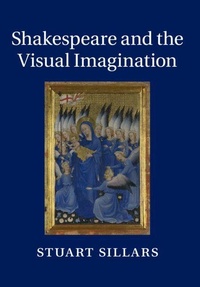
Shakespeare and the Visual Imagination
Published on 6. August 2015
Book
Hardback
333 pages
978-1-107-02995-8 (ISBN)
Description
Shakespeare's knowledge of the practices of visual art, its fundamental concepts and the surrounding debates is clear from his earliest works. This book explores this relationship, showing how key works develop visual compositions as elements of dramatic movement, construction of ideas, and reflections on the artifice of theatre and language. The Taming of the Shrew, Love's Labour's Lost, Richard II and A Midsummer Night's Dream are explored in detail, offering new insights into their forms, themes, and place in European traditions. The use of emblems is examined in Titus Andronicus and As You Like It; studies of Venus and Adonis, some sonnets and The Rape of Lucrece reveal different but related visual aspects; a later chapter suggests how the new relation between seeing and soliloquy in The Rape of Lucrece is developed in other plays. Extensively illustrated, the book explores Shakespeare's assimilation and exploration of visual traditions in structure, theme and idea throughout the canon.
Reviews / Votes
'Sillars' concern is with the concept of visual art as much as it is with art objects themselves. The argument that the theatre itself has a specific visual identity and that Shakespeare uses visual ideas to explore that identity is an especially fresh approach and one that works to complicate the depictions of art objects in the plays. This is a remarkable and important book and one that demonstrates compendious knowledge of both the literary and visual traditions and casts a genuinely new light on Shakespeare's works.' Dympna C. Callaghan, Syracuse University 'Stuart Sillars uncovers striking parallels between Shakespeare's writing and the rich visual imagery of the period. This beautifully illustrated book offers substantial new insights to anyone interested in either mode of representation, or the relations between them.' Catherine Belsey, Swansea University 'Clearly organised, logically structured, and beautifully illustrated, Stuart Sillars' Shakespeare and the Visual Imagination is a well-documented and insightful study ... enlarging the perspective on the Shakespearean canon and opening up new ways of engaging his plays and poems.' American, British and Canadian Studies '... this is a major contribution to our understanding of Shakespeare's relationship with the visual culture of his age. Through its focus on art, rhetoric, and intermedial exchange, this beautifully produced and carefully argued book enriches our sense of the metatheatrical and metapoetic - as well as the visual - across the Shakespearean canon.' Richard Meek, Renaissance QuarterlyMore details
Language
English
Place of publication
Cambridge
United Kingdom
Target group
Professional and scholarly
Illustrations
29 Plates, color; 83 Halftones, unspecified
Dimensions
Height: 260 mm
Width: 183 mm
Thickness: 23 mm
Weight
857 gr
ISBN-13
978-1-107-02995-8 (9781107029958)
Copyright in bibliographic data and cover images is held by Nielsen Book Services Limited or by the publishers or by their respective licensors: all rights reserved.
Schweitzer Classification
Other editions
Additional editions
Stuart Sillars
Shakespeare and the Visual Imagination
E-Book
05/2016
Cambridge University Press
€82.99
Available for download
Stuart Sillars
Shakespeare and the Visual Imagination
E-Book
08/2015
Cambridge University Press
€68.99
Available for download
Person
Stuart Sillars is Professor of English at the University of Bergen, Norway. His publications include Shakespeare and The Victorians (2013), Shakespeare, Time and the Victorians (Cambridge, 2012), The Illustrated Shakespeare, 1709-1875 (Cambridge, 2008) and Painting Shakespeare: The Artist as Critic, 1720-1820 (Cambridge, 2006).
Content
1. Likeness, device, composition: Shakespeare's visual surroundings; 2. Allusion and idea in The Taming of the Shrew; 3. Visual exchange in the Poems; 4. Love's Labour's Lost and visual composition; 5. Richard II and the politics of perspective; 6. Visual identities in A Midsummer Night's Dream; 7. Emblem, tradition and invention; 8. Imagination beyond image: ethopoeia and metatheatre; 9. Defining the visual in Shakespeare; Notes; Select bibliography; Index.