

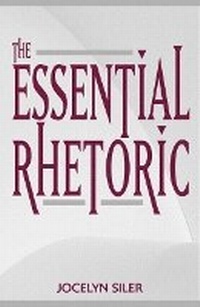
The Essential Rhetoric
Published on 15. August 1999
Book
Paperback/Softback
83 pages
978-0-205-28781-9 (ISBN)
Description
The Essential Rhetoric offers readers a brief yet comprehensive guide to writing. Unlike brief style guides and error-correction manuals, this text focuses on rhetorical concepts and presents writing as a process with discernible steps. It is the first book of its kind to bring both current research on writing and contemporary ideas about writing to a general audience. In addition, The Essential Rhetoric pares the writing process down to its essentials and focuses on problem-solving throughout.
More details
Language
English
Place of publication
United States
Publishing group
Pearson Education (US)
Target group
Professional and scholarly
Dimensions
Width: 214 mm
Thickness: 7 mm
Weight
145 gr
ISBN-13
978-0-205-28781-9 (9780205287819)
Copyright in bibliographic data and cover images is held by Nielsen Book Services Limited or by the publishers or by their respective licensors: all rights reserved.
Schweitzer Classification
Content
I.WRITING: AN INTRODUCTION.
1.Why Write?
2.Writing Begins with Reading.
The Critical Reading Process.
Prereading.
Holistic Reading.
Reading for Meaning.
Formulating a Response.
3.The Rhetorical Situation.
The Elements of the Rhetorical Situation.
Conventional Genres.
Conventional Genres.
Analyzing the Writing Situation.
Writing Collaboratively.
II.COMPOSING AND REVISING.
4.Developing Written Texts.
The Writing Process.
Prewriting and Research.
Focusing on a Controlling Idea.
Drafting.
Revision.
Problem-Solving Strategies for Developmental Revision.
Common Problems with Development.
5.Organizing Written Texts.
Introduction.
Problem-Solving Strategies for Organizational Revision.
6.Focusing on Style.
Problem-Solving Strategies for Stylistic Revision.
III.STRATEGIES FOR RESEARCH AND WRITING UNDER PRESSURE.
7.Research and Writing.
Library Research.
The Internet.
Evaluating Specialized Sources.
Documenting Sources.
8.Writing under Pressure.
Evaluating the Rhetorical Situation.
Strategies During the Examination.
Index.
1.Why Write?
2.Writing Begins with Reading.
The Critical Reading Process.
Prereading.
Holistic Reading.
Reading for Meaning.
Formulating a Response.
3.The Rhetorical Situation.
The Elements of the Rhetorical Situation.
Conventional Genres.
Conventional Genres.
Analyzing the Writing Situation.
Writing Collaboratively.
II.COMPOSING AND REVISING.
4.Developing Written Texts.
The Writing Process.
Prewriting and Research.
Focusing on a Controlling Idea.
Drafting.
Revision.
Problem-Solving Strategies for Developmental Revision.
Common Problems with Development.
5.Organizing Written Texts.
Introduction.
Problem-Solving Strategies for Organizational Revision.
6.Focusing on Style.
Problem-Solving Strategies for Stylistic Revision.
III.STRATEGIES FOR RESEARCH AND WRITING UNDER PRESSURE.
7.Research and Writing.
Library Research.
The Internet.
Evaluating Specialized Sources.
Documenting Sources.
8.Writing under Pressure.
Evaluating the Rhetorical Situation.
Strategies During the Examination.
Index.