

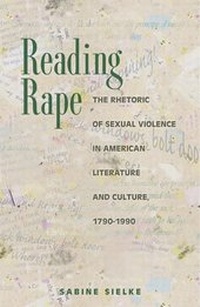
Reading Rape
The Rhetoric of Sexual Violence in American Literature and Culture, 1790-1990
Published on 24. February 2002
Book
Hardback
256 pages
978-0-691-00500-3 (ISBN)
Description
Reading Rape examines how American culture talks about sexual violence and explains why, in the latter twentieth century, rape achieved such significance as a trope of power relations. Through attentive readings of a wide range of literary and cultural representations of sexual assault - from antebellum seduction narratives and "realist" representations of rape in nineteenth-century novels to Deliverance, American Psycho, and contemporary feminist accounts - Sabine Sielke traces the evolution of a specifically American rhetoric of rape. She considers the kinds of cultural work that this rhetoric has performed and finds that rape has been an insistent figure for a range of social, political, and economic issues. Sielke argues that the representation of rape has been a major force in the cultural construction of sexuality, gender, race, ethnicity, class, and indeed national identity. At the same time, her acute analyses of both canonical and lesser-known texts explore the complex anxieties that motivate such constructions and their function within the wider cultural imagination.
Provoked in part by contemporary feminist criticism, Reading Rape also challenges feminist positions on sexual violence by interrogating them as part of the history in which rape has been a convenient and conventional albeit troubling trope for other concerns and conflicts. This book teaches us what we talk about when we talk about rape. And what we're talking about is often something else entirely: power, money, social change, difference, and identity.
Provoked in part by contemporary feminist criticism, Reading Rape also challenges feminist positions on sexual violence by interrogating them as part of the history in which rape has been a convenient and conventional albeit troubling trope for other concerns and conflicts. This book teaches us what we talk about when we talk about rape. And what we're talking about is often something else entirely: power, money, social change, difference, and identity.
Reviews / Votes
"With its insightful readings of a broad array of texts, unusual juxtapositions of less canonical works, and controversial engagement with a range of feminist and cultural studies texts, this book is certain to draw considerable interest from within and outside of the academy."-Valerie Smith, Princeton University "Reading Rape is a fascinating work of literary and cultural analysis that will help to shape our debates about rape and representation for some time to come."-Michael Awkward, University of PennsylvaniaMore details
Language
English
Place of publication
New Jersey
United States
Target group
Professional and scholarly
College/higher education
Product notice
Trade binding
Illustrations
3 Fotos bzw. Rasterbilder
3 halftones
Dimensions
Height: 229 mm
Width: 152 mm
Weight
510 gr
ISBN-13
978-0-691-00500-3 (9780691005003)
Copyright in bibliographic data and cover images is held by Nielsen Book Services Limited or by the publishers or by their respective licensors: all rights reserved.
Schweitzer Classification
Other editions
Additional editions
Sabine Sielke
Reading Rape
The Rhetoric of Sexual Violence in American Literature and Culture, 1790-1990
E-Book
02/2009
1st Edition
Princeton University Press
€188.95
Available for download
Person
Sabine Sielke is Professor of American Literature and Culture and Director of the North American Program at the Universitat Bonn. Her publications include Fashioning the Female Subject and four edited volumes: Theory in Practice, Gender Matters, Engendering Manhood, and Making America.
Content
Acknowledgments vii Introduction:What We Talk about When We Talk about Rape 1 CHAPTER ONE Seduced and Enslaved:Sexual Violence in Antebellum American Literature and Contemporary Feminist Discourse 12 "Rape Crisis "or "Crisis in Sexual Identity"? The Feminist Rhetoric of Rape 13 "Guilty Passions" and" Foul Words": The Powers of Seduction and the Racialization of Sexual Violence 15 The Deployment of Sexual Violence and the" Cult of Secrecy": Historicizing the Feminist Rhetoric of Rape 27 CHAPTER TWO The Rise of the (Black) Rapist and the Reconstruction of Difference; or, "Realist" Rape 33 "Black Claws into Soft White Throat" and Other Bestialities: Rapist Rhetoric, Rivalry, and Homosocial Desire in Thomas Nelson Page's Red Rock, Thomas Dixon's The Clansman, and Frank Norris's McTeague 35 "A Tender Lamb Snatched from the Jaws of a Hungry Wolf": Inversions of Rapist Rhetoric in Frances E. W. Harper's Iola Leroy 50 "The One Crime" and "the Real 'One Crime '": Rape, Lynching, and Mimicry in Sutton E.Griggs's The Hindered Hand 54 "A Thing Not to Be Faced": Rape as Robbery in Upton Sinclair's The Jungle 59 "Unconscious Penetration": Manners, Money, and the Primitive Man in Edith Wharton's The House of Mirth 64 "The Kind We Can't Resist": The Lesson of William Vaughn Moody's A Sabine Woman 68 CHAPTER THREE Rape and the Artifice of Representation: Four Modernist Modes 75 "Soiled! Despoiled! Handled! Mauled! Rumpled! Rummaged! Ransacked!": Styles and Hyperboles of Seduction, Rape, and Incest in Djuna Barnes's Ryder 77 "That Little Hot Ball inside You That Screams": Rape's Resistance to Representation, the Resistance to Rape, and the Transgression of Boundaries in William Faulkner's Sanctuary 86 "Not What One Did to Women": Enacting Projections and Constructing the Racial Border in Richard Wright's Native Son 103 Fighting "Forced Relationship": Rape and Manslaughter in Ann Petry's The Street 116 CHAPTER FOUR Voicing Sexual Violence, Repoliticizing Rape: Post-Modernist Narratives of Sexuality and Power 139 "Mankind's Greatest Crime, Man's Inhumanity to Man": Chester Himes's A Case ofRape 145 "Plain Black (Gender) Trouble": Intraracial Rape, Incest, and Other Family Feuds 150 "Phantom Men" and" Zipless Fucks": Rape Fantasies and the Fictions of Female Desire 159 "An Obscene Posture That No One Could Help": Sodomy, Male Anxiety, and the" Crisis of Homo/Heterosexual Definition" in James Dickey's Deliverance 171 AFTERWORD: Challenging Readings of Rape 179 Notes 191 Work Cited and Consulted 211 Primary Texts 211 Secondary Sources 213 Index 233