

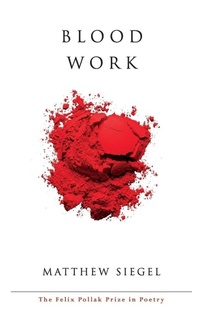
Blood Work
Published on 30. March 2015
Book
Paperback/Softback
80 pages
978-0-299-30404-1 (ISBN)
Description
Matthew Siegel's disquieting first book of poems, Blood Work, explores the inner workings of a life lived in vulnerability. The narrative voice here is vulnerable to his sickness-Crohn's disease-as well as the "sickness" of loving. These poems are raw, exposed, and deeply authentic attempts to reconcile all that is difficult to look at in one life. They capture a constant striving for more: more understanding, more unfolding, more opening, in spite of a difficult and complex world; yet there are moments of quiet humor and lightness, reminding us not to take life too seriously.
Though there is plenty of darkness in Blood Work, it is ultimately a hopeful statement. The relief comes in the form of small moments of pleasure and letting go, where we're brought to see the simple things: dewed grass beneath a streetlight, flowers tossed under the house and recovered, or sour strawberries at the farmers' market.
Though there is plenty of darkness in Blood Work, it is ultimately a hopeful statement. The relief comes in the form of small moments of pleasure and letting go, where we're brought to see the simple things: dewed grass beneath a streetlight, flowers tossed under the house and recovered, or sour strawberries at the farmers' market.
More details
Series
Language
English
Place of publication
Wisconsin
United States
Product notice
Paperback (trade)
Unsewn / adhesive bound
Dimensions
Height: 198 mm
Width: 124 mm
Thickness: 6 mm
Weight
90 gr
ISBN-13
978-0-299-30404-1 (9780299304041)
Copyright in bibliographic data and cover images is held by Nielsen Book Services Limited or by the publishers or by their respective licensors: all rights reserved.
Schweitzer Classification
Person
Matthew Siegel is a poet and essayist living in San Francisco, USA. He was a Wallace Stegner Fellow at Stanford University, USA and his works have appeared in Indiana Review, The Rumpus, Tusculum Review, and Southern Humanities Review.