

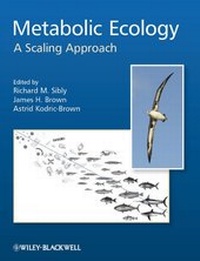
Metabolic Ecology
A Scaling Approach
2nd Edition
Published on 10. April 2012
Book
Hardback
392 pages
978-0-470-67153-5 (ISBN)
Unfortunately, price unknown
Article exhausted; check different version
Description
Most of ecology is about metabolism: the ways that organisms use energy and materials. The energy requirements of individuals - their metabolic rates - vary predictably with their body size and temperature. Ecological interactions are exchanges of energy and materials between organisms and their environments. So metabolic rate affects ecological processes at all levels: individuals, populations, communities and ecosystems. Each chapter focuses on a different process, level of organization, or kind of organism. It lays a conceptual foundation and presents empirical examples. Together, the chapters provide an integrated framework that holds the promise for a unified theory of ecology.
The book is intended to be accessible to upper-level undergraduate, and graduate students, but also of interest to senior scientists. Its easy-to-read chapters and clear illustrations can be used in lecture and seminar courses. Together they make for an authoritative treatment that will inspire future generations to study metabolic ecology.
The book is intended to be accessible to upper-level undergraduate, and graduate students, but also of interest to senior scientists. Its easy-to-read chapters and clear illustrations can be used in lecture and seminar courses. Together they make for an authoritative treatment that will inspire future generations to study metabolic ecology.
Reviews / Votes
"If you want a thorough, up-to-date coverage of research based upon the MTE and its many applications, this book is a must-read." (Ecology, 1 January 2013)"Intended to be accessible to upper-level undergraduates, the book should be widely-read by anyone who seeks a more powerful science of ecology." (British Ecological Society Bulletin, 1 December 2012)
"The book is copiously illustrated, and the complex mathematics limited and treated discreetly so the nonmathematician can follow the logic. A necessary read for ecologists. Summing Up: Highly recommended. Upper-division undergraduates and above." (Choice, 1 November 2012)
More details
Edition
2. Auflage
Language
English
Place of publication
Hoboken
United Kingdom
Publishing group
John Wiley and Sons Ltd
Target group
College/higher education
Professional and scholarly
Dimensions
Height: 25.2 cm
Width: 19.1 cm
Thickness: 2.2 cm
Weight
1026 gr
ISBN-13
978-0-470-67153-5 (9780470671535)
Schweitzer Classification
Other editions
Additional editions
Book
04/2012
2nd Edition
Wiley
€102.50
Shipment within 10-20 days
E-Book
03/2012
Wiley-Blackwell
€69.99
Available for download
E-Book
03/2012
Wiley-Blackwell
€69.99
Available for download
Persons
Richard Sibly is Professor in the School of Biological Sciences at the University of Reading where he teaches Behavioural Ecology and Population Biology. He researches metabolic ecology questions with members of Jim Brown's Lab at the University of New Mexico and also works to promote the use of Agent Based Models (ABMs) more widely in ecology.
James H. Brown is Distinguished Professor of Biology at the University of New Mexico, Albuquerque. He led the development of the Metabolic Theory of Ecology on which this book is largely based. He has a long history of research in biogeography and macroecology, taking a large-scale statistical approach to questions about abundance, distribution, and diversity.
Astrid Kodric-Brown is Professor of Biology at the University of New Mexico, Albuquerque. Her research interests include the behavioral ecology of freshwater fishes, especially the evolution of mate recognition systems and their role in speciation in pupfishes (Cyprinodon); the allometry of sexually-selected traits; and community structure and conservation of desert fishes.
James H. Brown is Distinguished Professor of Biology at the University of New Mexico, Albuquerque. He led the development of the Metabolic Theory of Ecology on which this book is largely based. He has a long history of research in biogeography and macroecology, taking a large-scale statistical approach to questions about abundance, distribution, and diversity.
Astrid Kodric-Brown is Professor of Biology at the University of New Mexico, Albuquerque. Her research interests include the behavioral ecology of freshwater fishes, especially the evolution of mate recognition systems and their role in speciation in pupfishes (Cyprinodon); the allometry of sexually-selected traits; and community structure and conservation of desert fishes.
Content
Notes on contributors, vii
Preface, xiv
Introduction: Metabolism as the basis for a theoretical unification of ecology, 1
JAMES H. BROWN, RICHARD M. SIBLY, AND ASTRID KODRIC-BROWN
PART I FOUNDATIONS, 7
1 Methodological tools, 9
ETHAN P. WHITE, XIAO XIAO, NICK J. B. ISAAC, AND RICHARD M. SIBLY
2 The metabolic theory of ecology and its central equation, 21
JAMES H. BROWN AND RICHARD M. SIBLY
3 Stoichiometry, 34
MICHAEL KASPARI
4 Modeling metazoan growth and ontogeny, 48
ANDREW J. KERKHOFF
5 Life history, 57
RICHARD M. SIBLY
6 Behavior, 67
APRIL HAYWARD, JAMES F. GILLOOLY, AND ASTRID KODRIC-BROWN
7 Population and community ecology, 77
NICK J.B. ISAAC, CHRIS CARBONE, AND BRIAN MCGILL
8 Predator-prey relations and food webs, 86
OWEN L. PETCHEY AND JENNIFER A. DUNNE
9 Ecosystems, 99
KRISTINA J. ANDERSON-TEIXEIRA AND PETER M. VITOUSEK
10 Rates of metabolism and evolution, 112
JOHN L. GITTLEMAN AND PATRICK R. STEPHENS
11 Biodiversity and its energetic and thermal controls, 120
DAVID STORCH
PART II SELECTED ORGANISMS AND TOPICS, 133
12 Microorganisms, 135
JORDAN G. OKIE
13 Phytoplankton, 154
ELENA LITCHMAN
14 Land plants: new theoretical directions and empirical prospects, 164
BRIAN J. ENQUIST AND LISA PATRICK BENTLEY
15 Marine invertebrates, 188
MARY I. O'CONNOR AND JOHN F. BRUNO
16 Insect metabolic rates, 198
JAMES S. WATERS AND JON F. HARRISON
17 Terrestrial vertebrates, 212
WILLIAM KARASOV
18 Seabirds and marine mammals, 225
DANIEL P. COSTA AND SCOTT A. SHAFFER
19 Parasites, 234
RYAN F. HECHINGER, KEVIN D. LAFFERTY, AND ARMAND M. KURIS
20 Human ecology, 248
MARCUS J. HAMILTON, OSKAR BURGER, AND ROBERT S. WALKER
PART III PRACTICAL APPLICATIONS, 259
21 Marine ecology and fisheries, 261
SIMON JENNINGS, KEN H. ANDERSEN, AND JULIA L. BLANCHARD
22 Conservation biology, 271
ALISON G. BOYER AND WALTER JETZ
23 Climate change, 280
KRISTINA J. ANDERSON-TEIXEIRA, FELISA A. SMITH, AND S. K. MORGAN ERNEST
24 Beyond biology, 293
MELANIE E. MOSES AND STEPHANIE FORREST
25 Synthesis and prospect, 302
JAMES H. BROWN, RICHARD M. SIBLY, AND ASTRID KODRIC-BROWN
Glossary, 306
References, 309
Index, 361
COMPANION WEBSITE
This book is accompanied by a companion website: www.wiley.com/go/sibly/metabolicecology
With figures and tables from the book for downloading, together with updates and additional resources
Preface, xiv
Introduction: Metabolism as the basis for a theoretical unification of ecology, 1
JAMES H. BROWN, RICHARD M. SIBLY, AND ASTRID KODRIC-BROWN
PART I FOUNDATIONS, 7
1 Methodological tools, 9
ETHAN P. WHITE, XIAO XIAO, NICK J. B. ISAAC, AND RICHARD M. SIBLY
2 The metabolic theory of ecology and its central equation, 21
JAMES H. BROWN AND RICHARD M. SIBLY
3 Stoichiometry, 34
MICHAEL KASPARI
4 Modeling metazoan growth and ontogeny, 48
ANDREW J. KERKHOFF
5 Life history, 57
RICHARD M. SIBLY
6 Behavior, 67
APRIL HAYWARD, JAMES F. GILLOOLY, AND ASTRID KODRIC-BROWN
7 Population and community ecology, 77
NICK J.B. ISAAC, CHRIS CARBONE, AND BRIAN MCGILL
8 Predator-prey relations and food webs, 86
OWEN L. PETCHEY AND JENNIFER A. DUNNE
9 Ecosystems, 99
KRISTINA J. ANDERSON-TEIXEIRA AND PETER M. VITOUSEK
10 Rates of metabolism and evolution, 112
JOHN L. GITTLEMAN AND PATRICK R. STEPHENS
11 Biodiversity and its energetic and thermal controls, 120
DAVID STORCH
PART II SELECTED ORGANISMS AND TOPICS, 133
12 Microorganisms, 135
JORDAN G. OKIE
13 Phytoplankton, 154
ELENA LITCHMAN
14 Land plants: new theoretical directions and empirical prospects, 164
BRIAN J. ENQUIST AND LISA PATRICK BENTLEY
15 Marine invertebrates, 188
MARY I. O'CONNOR AND JOHN F. BRUNO
16 Insect metabolic rates, 198
JAMES S. WATERS AND JON F. HARRISON
17 Terrestrial vertebrates, 212
WILLIAM KARASOV
18 Seabirds and marine mammals, 225
DANIEL P. COSTA AND SCOTT A. SHAFFER
19 Parasites, 234
RYAN F. HECHINGER, KEVIN D. LAFFERTY, AND ARMAND M. KURIS
20 Human ecology, 248
MARCUS J. HAMILTON, OSKAR BURGER, AND ROBERT S. WALKER
PART III PRACTICAL APPLICATIONS, 259
21 Marine ecology and fisheries, 261
SIMON JENNINGS, KEN H. ANDERSEN, AND JULIA L. BLANCHARD
22 Conservation biology, 271
ALISON G. BOYER AND WALTER JETZ
23 Climate change, 280
KRISTINA J. ANDERSON-TEIXEIRA, FELISA A. SMITH, AND S. K. MORGAN ERNEST
24 Beyond biology, 293
MELANIE E. MOSES AND STEPHANIE FORREST
25 Synthesis and prospect, 302
JAMES H. BROWN, RICHARD M. SIBLY, AND ASTRID KODRIC-BROWN
Glossary, 306
References, 309
Index, 361
COMPANION WEBSITE
This book is accompanied by a companion website: www.wiley.com/go/sibly/metabolicecology
With figures and tables from the book for downloading, together with updates and additional resources