

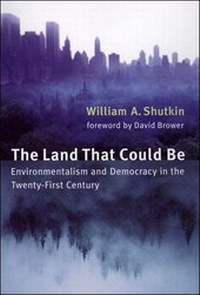
The Land That Could be
Environmentalism and Democracy in the Twenty-first Century
Published on 3. March 2000
Book
Hardback
340 pages
978-0-262-19435-8 (ISBN)
Description
In this book, environmentalist and lawyer William Shutkin describes a new kind of
environmental and social activism spreading across the nation, one that joins the pursuit of
environmental quality with that of civic health and sustainable local economies. In the face of
challenges posed by often corrosive market forces and widespread social disaffection, this civic
environmentalism is creating nothing less than a new public discourse and dynamic social vision
grounded in environmental action.Shutkin points the way to vibrant, sustainable communities through
four inspiring examples of civic environmentalism in action: the redevelopment of contaminated urban
land for agriculture in inner-city Boston, mass-transit-based development and waterfront restoration
in Oakland, protection of open space and conservation-based development in rural Colorado, and
smart-growth and sustainability strategies in suburban New Jersey. The book's underlying message is
that the nation's environmental health is a critical factor in its success as a vital democracy.
Social health, democratic community, and environmentalism, Shutkin shows, are one.From the author's
preface:"This book asserts that environmentalism is as much about protecting ordinary places as it
is about preserving wilderness areas; as much about promoting civic engagement as it is about
pursuing environmental litigation; and as much about implementing sound economic development
strategies as it is about negotiating global climate change treaties. Ultimately, I believe,
environmentalism is nothing less than about our conception of ourselves as a social and political
community -- what the bald eagle, our national symbol, really means."
environmental and social activism spreading across the nation, one that joins the pursuit of
environmental quality with that of civic health and sustainable local economies. In the face of
challenges posed by often corrosive market forces and widespread social disaffection, this civic
environmentalism is creating nothing less than a new public discourse and dynamic social vision
grounded in environmental action.Shutkin points the way to vibrant, sustainable communities through
four inspiring examples of civic environmentalism in action: the redevelopment of contaminated urban
land for agriculture in inner-city Boston, mass-transit-based development and waterfront restoration
in Oakland, protection of open space and conservation-based development in rural Colorado, and
smart-growth and sustainability strategies in suburban New Jersey. The book's underlying message is
that the nation's environmental health is a critical factor in its success as a vital democracy.
Social health, democratic community, and environmentalism, Shutkin shows, are one.From the author's
preface:"This book asserts that environmentalism is as much about protecting ordinary places as it
is about preserving wilderness areas; as much about promoting civic engagement as it is about
pursuing environmental litigation; and as much about implementing sound economic development
strategies as it is about negotiating global climate change treaties. Ultimately, I believe,
environmentalism is nothing less than about our conception of ourselves as a social and political
community -- what the bald eagle, our national symbol, really means."
More details
Series
Language
English
Place of publication
Cambridge, Mass.
United States
Publishing group
MIT Press Ltd
Target group
College/higher education
Professional and scholarly
US School Grade: College Graduate Student and over
Dimensions
Height: 229 mm
Width: 152 mm
Thickness: 0 mm
Weight
454 gr
ISBN-13
978-0-262-19435-8 (9780262194358)
Copyright in bibliographic data and cover images is held by Nielsen Book Services Limited or by the publishers or by their respective licensors: all rights reserved.
Schweitzer Classification